Your dog speaks to you all day long.
Not with words.
Not with sentences.
But with eyes, posture, ears, tail, breath.
The problem isn’t that dogs don’t communicate.
It’s that we don’t always know how to listen.
Understanding dog body language isn’t about turning into a behavior expert overnight. It’s about noticing the small shifts — the subtle signals that happen before the bark, before the growl, before the zoomies, before the retreat under the table.
Because long before a dog reacts…
They signal.
The Whole Body Speaks
It’s tempting to focus on just one thing — the tail, for example. We’ve all heard it: wagging means happy.
But it’s not that simple.
A wagging tail can mean excitement, yes. It can also signal nervous energy or even agitation. The speed, height, and stiffness of the wag matter.
A loose, sweeping wag that moves through the whole body often signals relaxed happiness. A high, tight wag paired with a rigid stance may indicate arousal or tension.
Context is everything.
That’s the rule.
Always read the whole dog — not just one moving part.
The Eyes Tell the Truth
Soft, relaxed eyes — blinking naturally, maybe slightly squinting — usually indicate comfort.
Wide eyes with visible whites (sometimes called “whale eye”) often signal stress or discomfort. If your dog turns their head away but keeps their eyes fixed on something, they may be feeling uneasy.
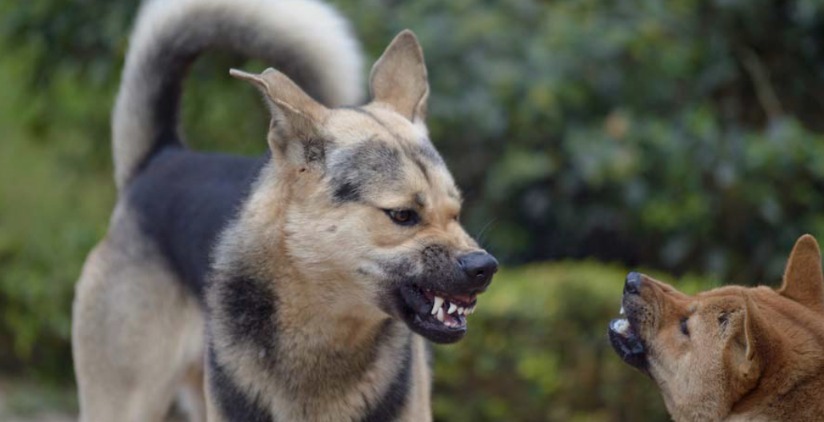
Dogs don’t glare for no reason.
If their gaze hardens, something in the environment has changed for them.
Ears: The Emotional Radar
Forward ears can mean curiosity or alertness.
Pinned-back ears can signal fear, submission, or anxiety.
But remember — ear shape varies by breed. A dog with naturally upright ears communicates differently than one with floppy ears. Watch how your dog carries their ears when relaxed. That’s your baseline.
Body language is about change from normal.
Not a fixed position.
The Mouth and Face
A relaxed dog often has a soft mouth — slightly open, tongue resting naturally.
Tension shows up around the lips. Lip licking, yawning, or sudden sniffing at the ground can be calming signals — ways your dog tries to self-soothe or diffuse tension.
These gestures are often missed because they look small.
But they’re not random.
If your dog yawns during a stressful interaction, they’re not tired.
They’re communicating.
Posture and Movement
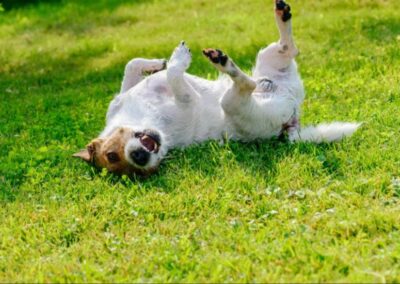
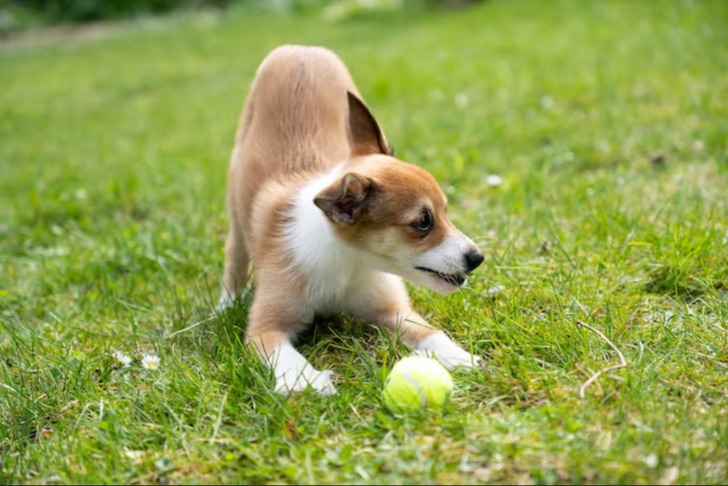
A loose, wiggly body usually means comfort. Play bows — front legs stretched forward, rear in the air — are invitations to fun.
A stiff, frozen body is the opposite.
Freezing is one of the most important warning signs to recognize. Many bites happen after a dog has frozen and that signal was ignored.
Movement tells a story.
Leaning into you? Likely seeking comfort or connection.
Turning away? Possibly needing space.
Cowering low with tail tucked? Fear.
Your dog’s body will rarely jump straight from relaxed to aggressive. There are steps in between.
Our job is to notice them.
Why Reading Signals Matters
Misunderstanding body language can put dogs in situations they’re not comfortable with.
A child hugs a dog who is stiff and lip licking.
A stranger reaches toward a dog whose tail is high and rigid.
Two dogs approach each other, and one freezes while the other continues forward.
When early signals are missed, escalation becomes more likely.
But when signals are respected, trust grows.
You become the person who listens.
And dogs relax around people who listen.
Building a Stronger Bond
Learning your dog’s body language isn’t just about preventing problems.
It’s about deepening connection.
When you notice the small tail sway that means they’re content…
When you pause because you see subtle stress signals…
When you give them space before they feel forced to demand it…
You’re telling them something powerful:
I see you.
Dogs don’t expect perfection.
They just want to feel understood.
And once you start paying attention, you’ll realize something beautiful:
They’ve been talking to you all along.
Not with words.
But with everything they are.