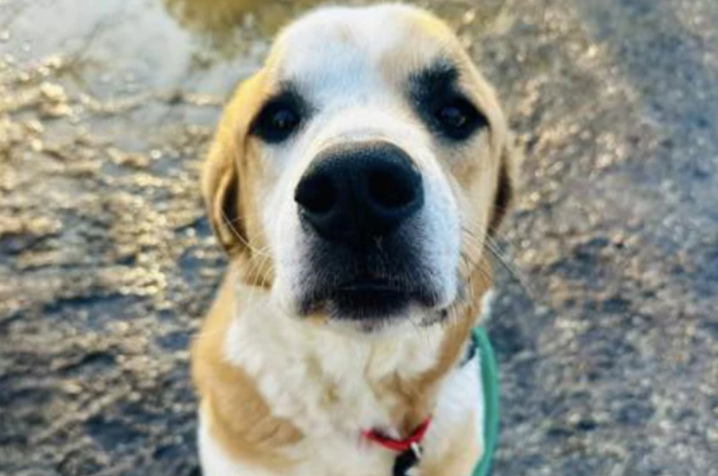
Fin isn’t just another face in a kennel—he’s a soul with a story, and a poignant one at that. This gentle hound‑Great Pyrenees mix went from a life filled with warmth, routine, and love to the stark, fluorescent lights of a shelter—and the emotional toll shows in every slow blink and lowered head.
Shelters are meant to be safe havens, but for a dog like Fin who once knew the comfort of a home, they can feel more like a reminder of what’s been lost.
Found by rescuers after his owner surrendered him during a housing crisis, Fin arrived at his new temporary home at a Pennsylvania animal rescue with a calm temperament, friendly nature, and a history of living with families, children, and other animals. Yet somewhere between his past and an uncertain future, the sparkle in his eyes dimmed.
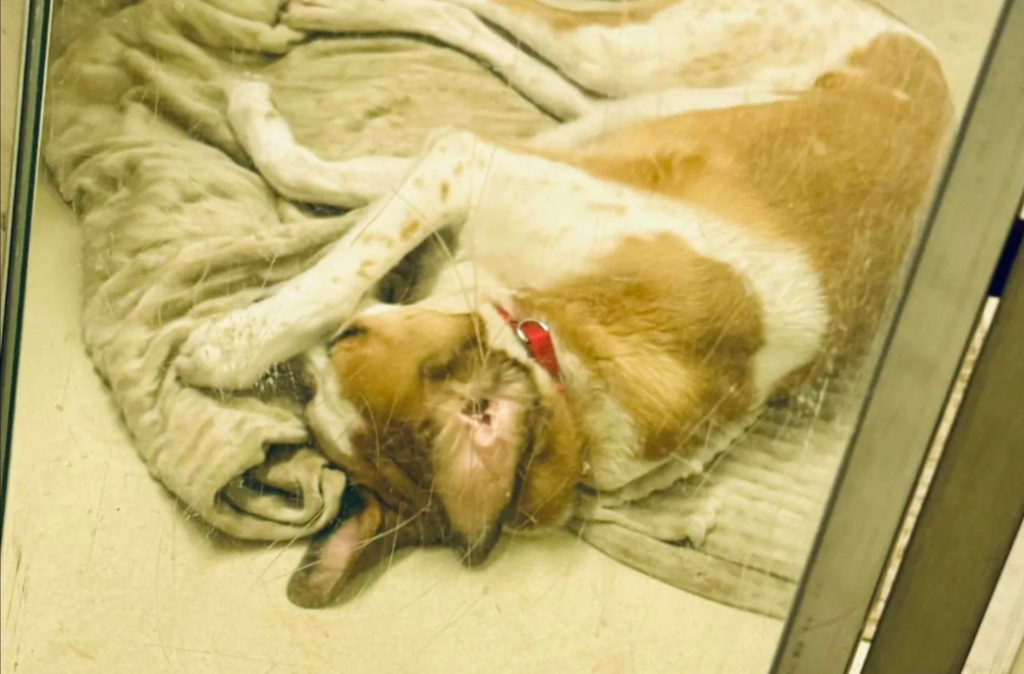
Staff at the shelter describe moments so heartbreaking they’ve left volunteers and visitors tearing up—most notably when Fin was seen curling up in his kennel as the lights went out, gently covering his face with his paw as if trying to hide from the reality of his new situation.
That quiet gesture—something so human in its symbolism—is what has captivated people online. Images and videos shared on social media have drawn thousands of clicks, likes, and comments, portraying Fin not as a “shelter dog” but as a living, feeling being adapting to a new life one difficult night at a time.
People around the world have expressed empathy and sadness at his plight, sparking discussions about how animals cope with change and loss.
The shelter describes Fin as an amazing dog—loving, smart, fun and sweet—traits that still shine through when he gets a chance to interact with humans.
He doesn’t deserve to be overlooked, they say; what he needs most isn’t just a home, but a patient and understanding family willing to give him the time he needs to adjust to life after losing everything he once knew.
Fin’s story hits a nerve because it reflects something universal: loss—especially unexpected loss—can shake even the strongest among us.
While humans can put into words how they feel when their world changes, dogs are left to express theirs through behavior, body language, and moments like the one captured on camera. It’s a reminder that every shelter animal has a unique emotional world, shaped by experiences both good and bad.
Animal advocates stress that shelters, while crucial for animal safety, cannot replace the emotional security of a real home. Even the most compassionate, well‑run facility can’t replicate a familiar routine, a favorite couch, or the sound of a loved one calling a dog to dinner.
That’s why stories like Fin’s resonate so deeply: they push us to think not just about adoption statistics but about the emotional lives of animals caught in the middle of human circumstances beyond their control.
Fin’s experiences are far from unique. Across the U.S. alone, millions of dogs cycle through shelters each year, many because of circumstances beyond their control—owners moving, financial hardship, or simply being misunderstood.
Shelter workers do everything in their power to care for them, but what these animals need most is a permanent place to call home.
Every photo shared, every comment made, brings attention not just to Fin but to countless shelter dogs waiting for their second chance. For Fin, that chance might be a family who sees past the sadness and offers love.
For the people touched by his story, it’s a reminder that compassion toward animals reflects the best of who we are.