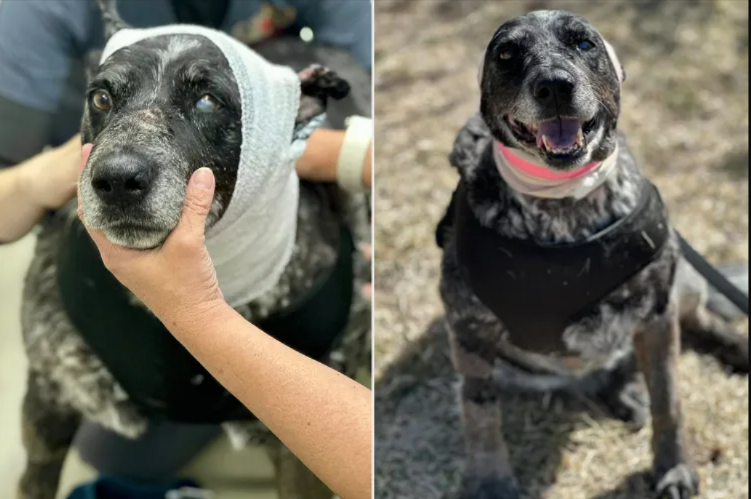
She’s 12 years old.
Half-blind.
A senior dog most people would assume belongs on a soft bed, napping through quiet afternoons.
But when danger showed up at her home, Honey didn’t hesitate.
On a quiet night in New Mexico, a bear—fresh out of hibernation and searching for food—made its way onto a rural property where Honey lived with her family and dozens of farm animals.
The intruder moved toward the chicken coop, driven by hunger and instinct.
What happened next was anything but instinctive.
It was choice.
Honey moved first.
Despite her age and limited vision, she confronted the bear multiple times, refusing to let it reach the animals she had spent her life living beside.
Surveillance footage later confirmed what her family could hardly believe—she had repeatedly engaged the much larger predator in the dark.
There was no training for this moment.
Only instinct, loyalty, and something deeper that didn’t hesitate.
By morning, the cost of that choice became clear.
Honey was found injured in the driveway, barely recognizable beneath severe swelling and wounds that told the story of a brutal encounter.
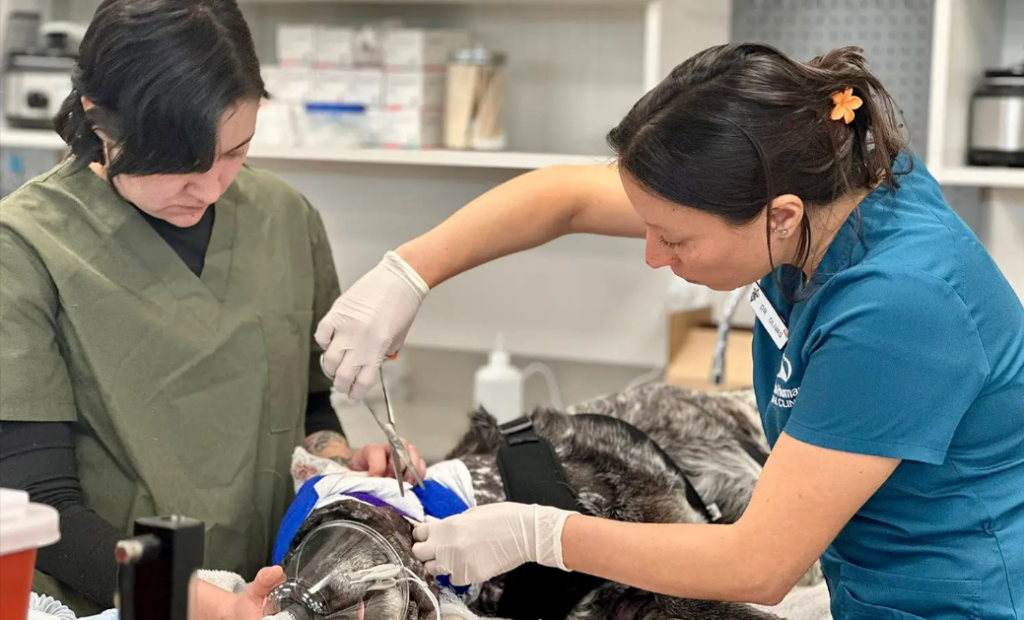
Her family rushed her for emergency veterinary care, knowing instantly that this wasn’t a minor injury—it was life-threatening.
Veterinarians discovered devastating trauma, including deep puncture wounds and extensive tissue damage from the fight.
The kind of injuries that make recovery uncertain even for younger, stronger dogs.
And yet Honey was still there.
Still fighting.
What makes her story stand out isn’t just survival—it’s what she protected.
Not one chicken was harmed.
Not a single farm animal was lost.
The bear left the property without achieving its goal, driven away by a dog who, by every physical measure, should not have been able to stop it.
Her family didn’t describe her as lucky.
They described her as something else entirely.
A protector.
A presence that, even in vulnerability, refused to step aside when it mattered most.
Veterinarians and rescuers who treated her called the injuries catastrophic, but they also pointed to something harder to quantify: resilience.
Honey had already survived serious illness earlier in life and even an encounter that left her partially blind.
Those earlier battles didn’t make her weaker.
They seemed to shape something steadier.
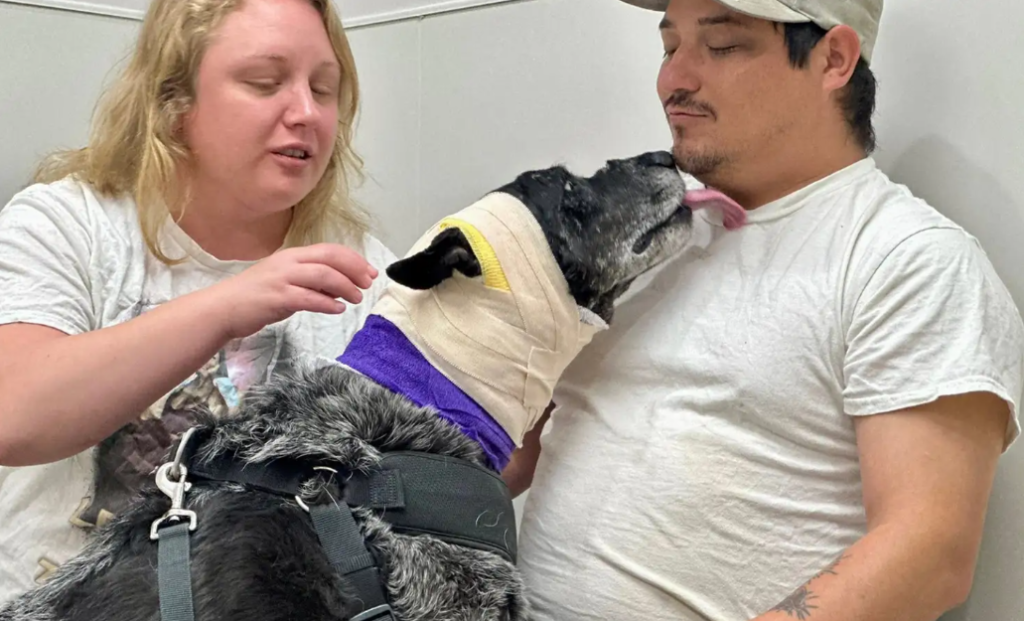
Recovery has been slow, careful, and supported by medical teams and a community that quickly rallied around her story.
Each day brings small signs of progress—less swelling, more awareness, moments where she lifts her head and responds to the people caring for her.
Nothing dramatic.
Just survival, continuing.
Stories like Honey’s are difficult because they sit in contradiction.
A small, aging dog.
A massive predator.
An outcome that shouldn’t have gone the way it did.
And yet it did.
But beneath the extraordinary moment is something more grounded.
A dog who knew her space.
A dog who recognized danger.
A dog who didn’t calculate odds—only responsibility.
And that’s what people keep coming back to.
Not the scale of the fight.
But the simplicity of the decision.
Because in the end, Honey didn’t fight like a hero.
She just refused to leave what she was responsible for unprotected.
And somehow, against everything expected… that was enough.