She didn’t understand what “left behind” meant at first.
Not really.
At the shelter, days blend together in noise, movement, and unfamiliar faces. Some dogs arrive scared. Some arrive hopeful.
And some arrive confused—waiting for a door that never opens again.
This shelter dog was one of the last kind.
She had once known a home. A place where footsteps meant safety, where voices meant food, where routine meant she belonged.
But then everything changed in the way dogs never get to prepare for.
One day, she was simply left.
No long goodbye she could understand. No explanation she could hold onto. Just absence where presence used to be.
When she first arrived at the shelter, she waited the way dogs often do when they expect something familiar to return.
Every sound near the gate made her look up. Every passing shadow made her hopeful for a second too long.
But days turned into weeks.
And weeks began to teach her something she didn’t want to learn: not every door opens back to the life you knew.
Still, she kept watching.
That’s what made her different.
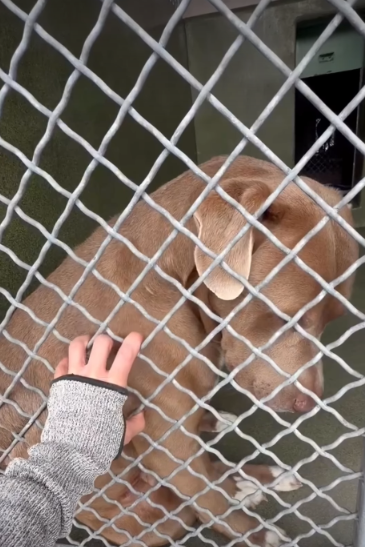
She wasn’t the loudest dog in the kennel. She wasn’t the one demanding attention or pressing against the bars.
Instead, she was the one who stayed quietly alert, as if she believed patience alone might change her situation.
Shelter staff noticed it in small ways. The way she lifted her head every time someone passed her kennel.
The way her body would lean forward just slightly, as if ready to be chosen but unsure if she was allowed to hope yet.
Dogs like her often get overlooked—not because they aren’t worthy, but because shelters move fast. People look for energy, excitement, immediate connection.
But quiet dogs carry their stories differently. They don’t announce their heartbreak. They wait for someone willing to notice it.
And then, one day, someone did.
It wasn’t a dramatic moment. No sudden burst of recognition. Just a pause in front of her kennel that lasted a little longer than the rest.
That pause matters more than people realize.
Because in shelters, time is everything. Seconds decide attention. Attention decides chance. And chance decides whether a dog stays behind or moves forward.
This time, the pause became something more.
A conversation. A connection. A decision.
When she was finally taken out of the kennel, she didn’t rush into excitement. She didn’t immediately trust the change in environment.
That kind of adjustment doesn’t happen instantly for dogs who have learned to expect loss.
Instead, she stayed close.
Careful. Observant. Quietly trying to understand if this new moment would last longer than the last one did.
At the shelter exit, she hesitated for just a second—almost like she was checking if this door would close on her too.
It didn’t.
And that was the beginning of something different.
In a new home, everything starts small. A step into a room. A place to lie down without interruption. A meal that isn’t rushed by uncertainty.
Slowly, those small moments begin to stack into something bigger: trust.
Not blind trust. Earned trust.
The kind that comes only after a dog realizes they are no longer waiting to be left behind again.
Stories like hers are easy to scroll past because they don’t always come with dramatic rescues or cinematic reunions.
But they matter precisely because they reflect something quieter—and more common than most people want to admit.
Dogs don’t forget being left behind.
But they do remember when someone finally stays.