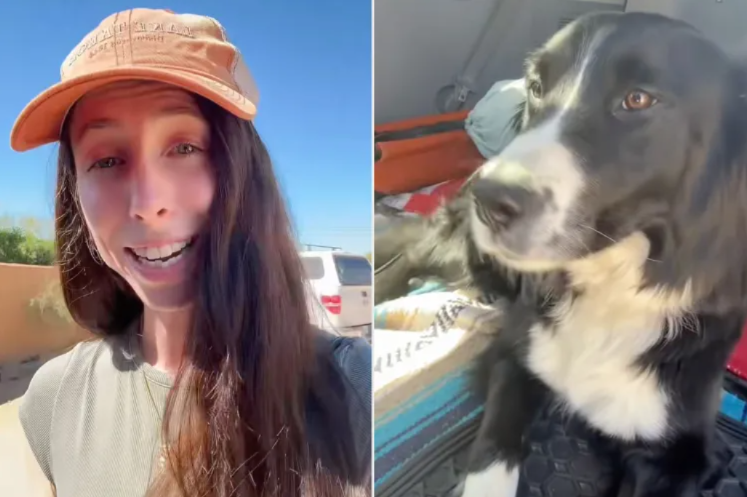
She had no idea what she was walking into.
To her, it was just another day. Another outing. Another place filled with new smells, new sounds, and something interesting waiting just ahead.
That’s the thing about curious dogs.
They don’t recognize danger the way humans do.
And for Liv—a playful, energetic dog who loved exploring off-leash—that curiosity was exactly what worried her owner the most.
Because where they lived, the threat wasn’t obvious.
It was silent.
Hidden.
And potentially deadly.
Rattlesnakes.
Out on the trails, in dry brush, under rocks—places a curious dog might wander without hesitation.
And for dogs like Liv, who approach the world with “zero self-preservation instincts,” that kind of environment isn’t just risky.
It’s unforgiving.
So her owner made a decision.
Not to limit her freedom.
But to prepare her for it.
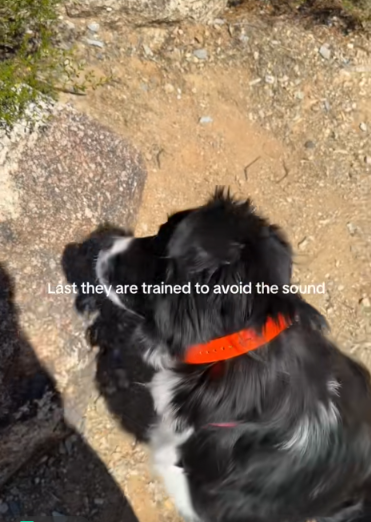
She signed Liv up for rattlesnake aversion training.
The session itself didn’t look like a typical training class.
There were no tricks. No treats for sitting or staying.
This was different.
This was about survival.
The goal wasn’t to teach obedience.
It was to create instinct.
To teach Liv, on a deeper level, that snakes are something to avoid—not investigate.
Because untrained dogs often do the opposite. They’re drawn to the movement, the sound, the unfamiliar scent. And that curiosity can lead them dangerously close.
So the training focuses on something more powerful than commands.
Association.
Dogs are exposed to the sight, sound, and smell of a rattlesnake—a full sensory experience designed to make the lesson stick.
And while the process can be uncomfortable to watch, it’s meant to create a clear, lasting reaction:
Avoid.
Immediately.
No hesitation.
For Liv, the session didn’t take long.
About 30 minutes.
But within that short time, something shifted.
At the beginning, she was exactly who her owner described—curious, fearless, ready to approach anything new.
By the end?
She chose distance.
She recognized the threat.
And more importantly—she avoided it.
That’s the outcome the training is designed for.
Not perfection.
Not obedience.
But instinctive decision-making in a moment where seconds matter.
Of course, the process isn’t without debate.
Some methods use aversive techniques to create that strong association, and not every dog owner is comfortable with it.
But for many, especially those living in high-risk areas, the decision comes down to one question:
What gives their dog the best chance of staying alive?
Because rattlesnake encounters aren’t rare in certain regions.
And when they happen, they escalate fast.
Dogs don’t step back and assess.
They step forward.
For Liv’s owner, the choice became simple.
Peace of mind.
That’s what the training provided.
Not a guarantee—but a layer of protection.
A way to let her dog explore, run, and enjoy the outdoors with a little less risk attached to every step.
And that’s what makes this story resonate.
It’s not about fear.
It’s about preparation.
Because loving a dog doesn’t always mean holding them back.
Sometimes, it means teaching them what you can’t always be there to control.
Teaching them that some things in the world…
Aren’t meant to be chased.
And for a dog like Liv, that lesson might be the one that saves her life.