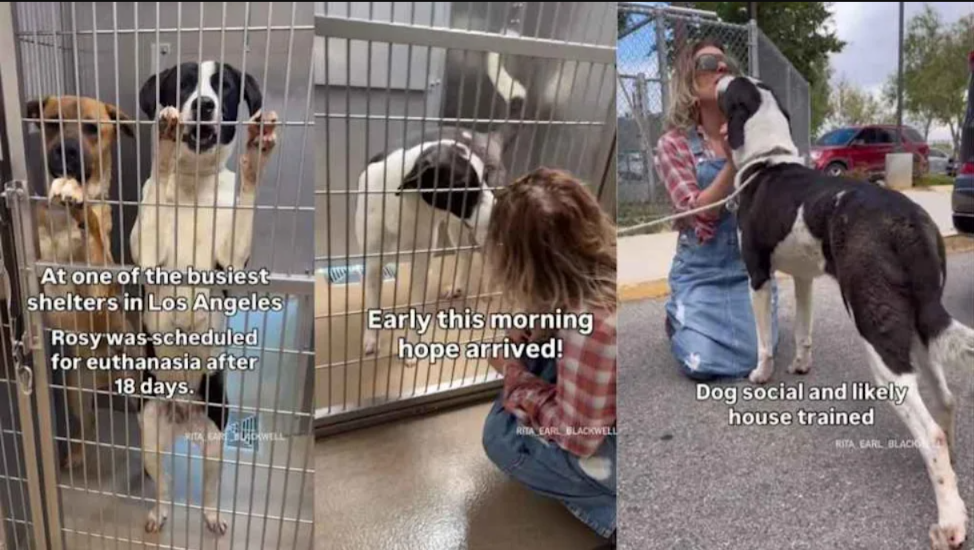
She was out of time.
That was the reality written across her file, even if no one said it out loud when they walked past her kennel.
A shelter dog. One of many. Sitting quietly behind metal bars, waiting in a system where waiting doesn’t always end in good news.
She had a deadline hanging over her—one of those cruel realities shelters sometimes face when space runs out and intake keeps coming.
Dogs like her don’t always leave because someone chose them.
Sometimes they leave because there is simply no more room to wait.
But this time, someone refused to let her story end there.
Volunteers noticed her—not just as another name on a list, but as a dog who was still trying. Still engaging.
Still responding to people even in an environment that can wear hope down over time.
That matters more than people realize.
Because shelters are loud places emotionally, even when they look calm on the surface. Dogs hear everything. Smell everything.
Feel everything. And yet, even in that environment, she kept showing up as herself.
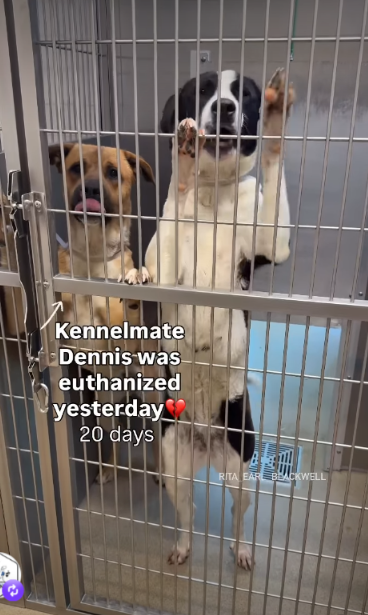
Not shut down.
Not withdrawn.
Just… waiting.
And then the clock tightened.
This is the part of the story where things usually go one of two ways.
Either the dog gets overlooked one more time…
Or someone steps in.
In her case, someone stepped in.
A rescue connection was made just in time, moving quickly to pull her from the euthanasia list before her window closed.
It wasn’t a dramatic cinematic moment—it was coordination, urgency, and people refusing to accept that “out of time” had to mean the end.
Because sometimes rescue work is like that.
Quiet decisions made under pressure.
Messages sent.
Calls made.
A plan formed in hours, not days.
And then—just in time—her situation changed.
She was secured by a rescue partner, removed from immediate danger, and given what she had almost lost completely:
a tomorrow.
What makes stories like this hit so hard isn’t just the relief. It’s the contrast.
One moment, a dog is categorized as “limited time.”
The next, she is alive because someone refused to let that label define her ending.
And once she was safe, something important happened.
She didn’t look broken.
She didn’t look like a dog who understood how close she came to not making it.
She looked like what she always was underneath the urgency:
a dog still capable of connection, still capable of trust, still capable of becoming someone’s companion.
That’s the part that stays with people who work in rescue.
The realization that “last chance” dogs don’t look like tragedies waiting to happen.
They look like every other dog who just needs a different outcome.
Now, instead of counting down time inside a shelter, she’s part of a system built to give her what she should have had all along—stability, care, and a path toward adoption that isn’t racing against a clock.
Her story didn’t end where it was supposed to.
It bent.
It shifted.
It was interrupted by people who saw her as more than a deadline.
And that’s what rescue work really is at its core.
Not changing who the dog is.
But changing what happens next.
Because for her, the most important moment wasn’t when she ran out of time.
It was when someone decided she deserved more of it.