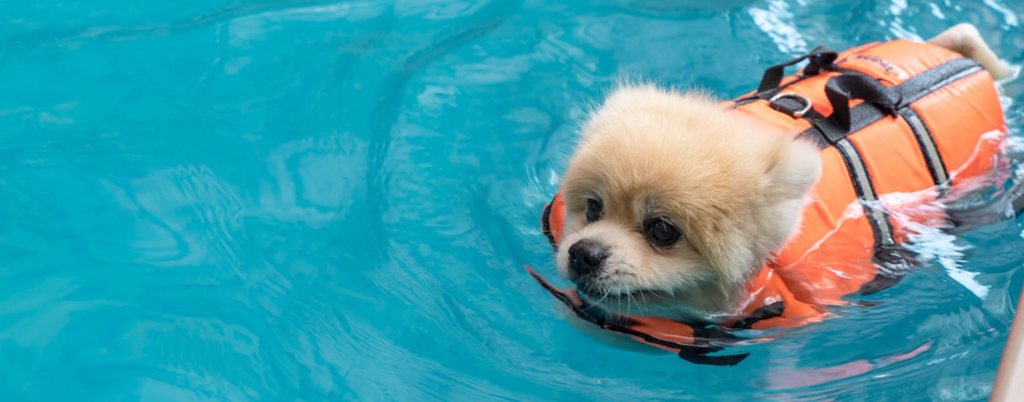
A lot of people assume dogs naturally know how to swim.
After all, we even call one style the “doggy paddle.”
But the truth is more complicated than that.
Some dogs absolutely love water and take to swimming immediately.
Others panic the second their paws lose contact with the ground. And some breeds simply are not physically built for strong swimming at all.
That’s why introducing dogs to water safely matters far more than most owners realize.
Swimming can be incredible exercise for dogs.
It’s low-impact, mentally stimulating, great for burning energy, and especially helpful for older dogs or dogs recovering from joint strain because the water reduces pressure on their bodies.
But like any activity involving water, it also comes with real risks if dogs are pushed too quickly or left unsupervised.
One of the biggest misconceptions is assuming instinct equals skill.
While many dogs instinctively paddle when placed in water, that does not automatically mean they know how to swim efficiently, stay calm, or safely exit a pool, lake, or shoreline.
Some dogs exhaust themselves quickly, especially if panic kicks in.
Breed plays a huge role too.
Retrievers, Newfoundlands, Portuguese Water Dogs, and many sporting breeds are often naturally comfortable in water because they were historically bred for water-related work.
But flat-faced breeds like Bulldogs and Pugs can struggle significantly because their body structure and breathing mechanics make staying afloat more difficult.
Dogs with short legs, dense bodies, or poor stamina may also tire rapidly.
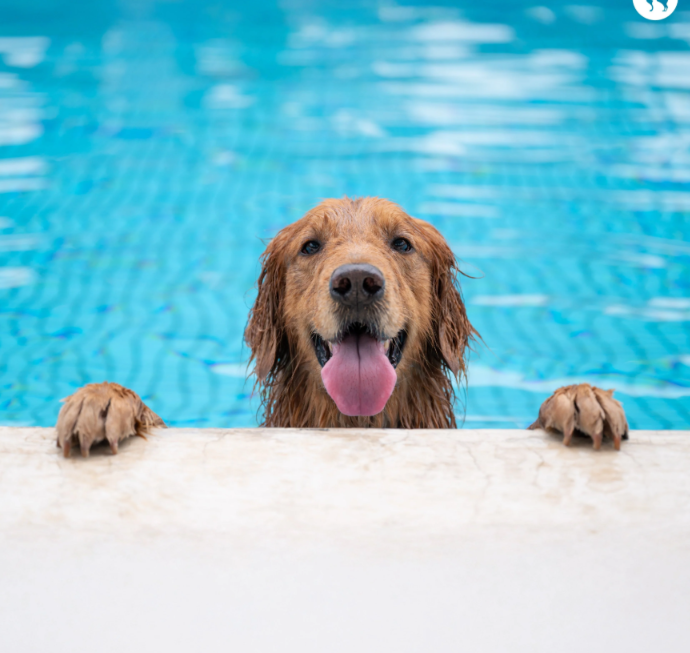
That’s why experts strongly recommend controlled introductions instead of tossing dogs directly into deep water.
The safest approach usually starts shallow.
Let the dog approach the water voluntarily. Keep sessions short, calm, and positive. Use praise, toys, or treats to build confidence instead of forcing interaction.
Many trainers recommend entering the water yourself first so the dog feels encouraged to follow naturally.
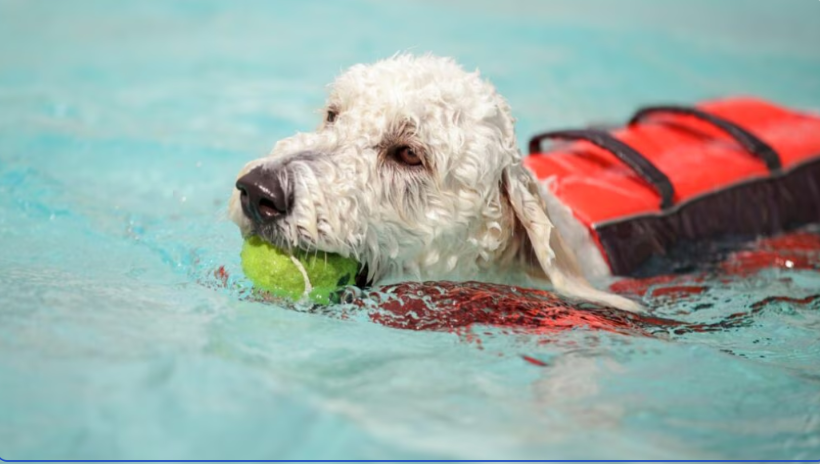
And yes — life jackets are absolutely encouraged.
Even strong swimmers benefit from canine flotation devices, especially around boats, rough water, currents, or unfamiliar environments.
A properly fitted life vest gives dogs additional buoyancy and provides owners with a handle for easier assistance if needed.
Another major issue owners underestimate is exit awareness.
Dogs may know how to get into water but not how to get out.
Pool owners especially are encouraged to teach dogs where stairs or ramps are located by repeatedly guiding them to the exit point during practice sessions.
Without that understanding, tired dogs may panic and repeatedly attempt to climb smooth pool walls instead of finding a safe exit.
Open water introduces additional hazards.
Strong currents, hidden debris, sharp rocks, blue-green algae, fishing hooks, and sudden drop-offs can all create dangerous situations very quickly.
Saltwater ingestion can also lead to dehydration and illness, while stagnant water may contain harmful bacteria or parasites.
Then there’s fatigue — something dogs often ignore completely.
Many water-loving dogs will keep swimming long after their muscles are exhausted simply because they’re excited.
Owners need to watch carefully for slower paddling, sinking hips, heavy breathing, or repeated attempts to climb onto people or objects for support.
And after swimming, care still matters.
Experts recommend rinsing dogs off to remove chlorine, salt, algae, or bacteria from their coat and skin.
Ears should also be dried thoroughly, especially for floppy-eared breeds prone to infections after moisture exposure.
Despite the risks, swimming can become one of the most joyful activities a dog experiences.
Many dogs gain enormous confidence through water play. Nervous dogs sometimes become more adventurous.
High-energy dogs burn off stress. Senior dogs often rediscover movement they struggle with on land.
But the best swimming experiences happen when owners remember one important thing:
Water should never feel like survival.
It should feel safe.
Because the happiest swimming dogs are not the ones thrown into the deep end.
They’re the ones who learned to trust the water one calm step at a time.