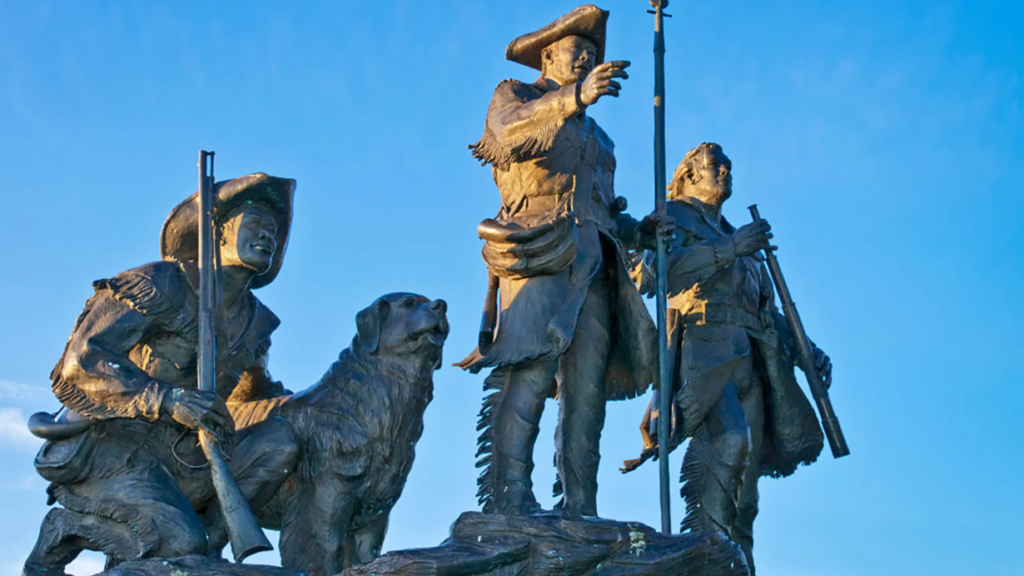
When people talk about the legendary Lewis and Clark Expedition, they usually remember the explorers, the maps, and the incredible journey that helped shape American history.
What many people don’t realize is that the expedition had another member.
One with four paws.
His name was Seaman, and while he rarely appears in history books, he proved to be every bit as courageous and dependable as the men he traveled beside.
In 1803, Meriwether Lewis purchased a large black Newfoundland dog for about $20 before setting off on what would become one of the most famous expeditions in American history.
Lewis named him Seaman, and from the very beginning, the dog was far more than a companion. He became an essential member of the Corps of Discovery.
The mission was anything but easy. Lewis and William Clark, along with dozens of explorers, would travel nearly 8,000 miles across rivers, forests, mountains, and vast stretches of untamed wilderness in search of a route to the Pacific Ocean.
The journey lasted more than two years and pushed every member of the expedition to their physical and mental limits.
Seaman faced every challenge right alongside them.
The enormous Newfoundland quickly earned a reputation as an invaluable working dog. His powerful build made him well suited for the demanding conditions of the frontier, while his intelligence and loyalty repeatedly proved their worth.
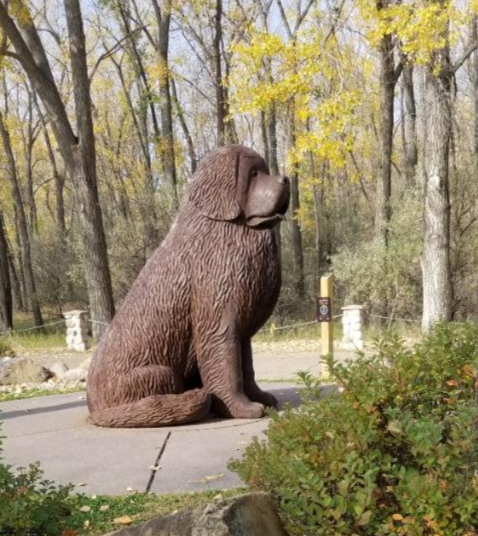
One of Seaman’s most important jobs was standing guard over the camps at night. In a wilderness filled with danger, he often alerted the expedition to approaching wildlife or unfamiliar visitors before the men noticed anything themselves.
His keen senses provided an extra layer of security that the explorers came to rely on.
He also helped during hunting trips.
Newfoundlands are natural water dogs, and Seaman regularly retrieved ducks and other game from rivers and lakes, helping the expedition secure valuable food supplies. Every successful hunt mattered during a journey where resources were often scarce.
But life on the expedition wasn’t always routine.
Seaman survived encounters that easily could have ended his life.
At one point, he was chased by a massive buffalo that nearly trampled him. On another occasion, he was attacked by a beaver while swimming.
The injury was serious enough that members of the expedition performed a minor surgical procedure to remove part of a stick lodged in his body after the attack.
He recovered.
And continued the journey.
The dangers extended beyond wildlife.
Throughout the expedition, Seaman crossed rushing rivers, endured freezing temperatures, battled insects, and navigated rough mountain terrain. Yet he remained by Lewis’s side through every obstacle.
His presence also helped build relationships with some of the Native American tribes the expedition encountered.
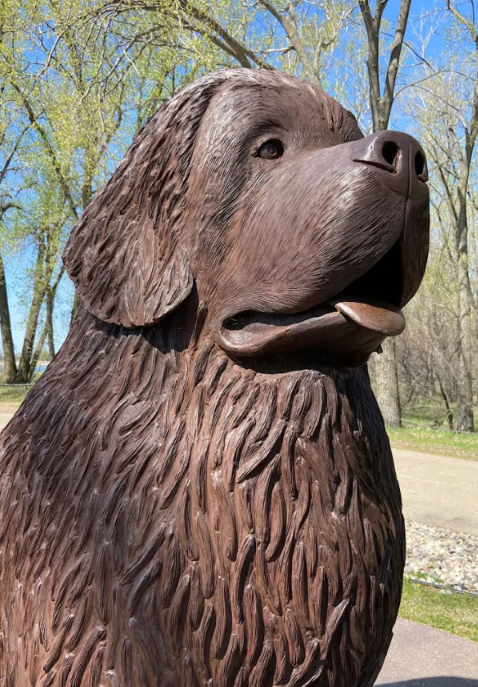
Many tribal members were fascinated by Seaman’s enormous size and gentle temperament. Some had never seen a Newfoundland before and admired the remarkable dog who had traveled so far alongside the explorers. In several recorded encounters, visitors offered to purchase or trade for Seaman, but Lewis always refused.
To him, Seaman wasn’t property.
He was family.
Lewis’s journals frequently mention the loyal dog, documenting his adventures with the same care given to many human members of the expedition. Those entries reveal just how highly Lewis regarded his faithful companion.
After more than two years of hardship, the Corps of Discovery finally completed its historic journey in 1806.
Against all odds, Seaman finished every mile.
He returned home having traveled thousands of miles across some of the harshest landscapes in North America, accomplishing something few dogs—or people—could ever imagine.
Although the explorers became household names, Seaman’s remarkable contributions gradually faded into the background of history.
Yet his story continues to inspire dog lovers today.
It serves as a powerful reminder that dogs have always played extraordinary roles alongside humans—not just as pets, but as partners, protectors, and trusted friends.
Seaman never sought recognition.
He never knew he would become part of one of America’s greatest adventures.
He simply stayed beside the person he loved, no matter where the trail led.
More than two centuries later, his loyalty remains one of the most remarkable examples of the bond between humans and dogs.
History may remember Lewis and Clark for discovering new frontiers.
But those who know Seaman’s story understand that they never made the journey alone.