When people think of military dogs, they often picture powerful German Shepherds or Belgian Malinois charging into dangerous situations alongside soldiers.
But one of the greatest canine heroes in history weighed just four pounds.
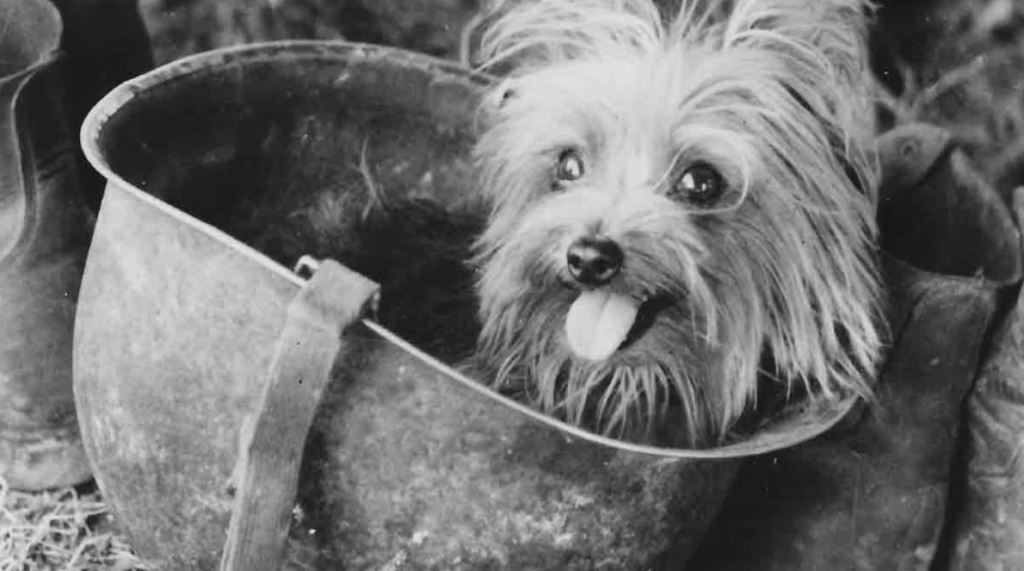
Her name was Smoky, a tiny Yorkshire Terrier whose courage, intelligence, and compassion earned her a remarkable place in history. Not only did she serve alongside American troops during World War II, but she’s also widely recognized as the world’s first recorded therapy dog—a title she earned by bringing comfort to wounded soldiers when they needed it most.
Smoky’s incredible journey began in the jungles of New Guinea in 1944.
An American soldier named Ed Downey discovered the little Yorkie abandoned inside a foxhole. No one knew where she had come from or how such a tiny dog had ended up in the middle of an active war zone.
A short time later, Downey sold Smoky to Corporal William A. Wynne, a U.S. Army Air Forces photographer who immediately recognized there was something special about the little dog. Before the war, Wynne had experience training dogs, and it didn’t take long for Smoky’s remarkable intelligence to shine through.
Despite standing only seven inches tall, Smoky quickly proved she had the heart of a giant.
Over the next 18 months, she accompanied Wynne throughout the Pacific Theater, surviving more than 150 Japanese air raids and participating in 12 combat and reconnaissance missions. While many dogs would have been overwhelmed by the constant explosions, aircraft, and uncertainty of war, Smoky adapted with incredible resilience.
She wasn’t simply along for the ride.
Smoky became an important member of the unit.
Wynne trained her to respond to more than 200 hand signals and commands, allowing her to perform tasks that amazed everyone around her. One of her most famous contributions came during the Allied campaign in the Philippines.
Military engineers needed to thread a communications wire through a narrow pipe buried beneath an airfield runway. The pipe stretched about 70 feet but measured only eight inches across—far too small for a person to crawl through.
Without another solution, soldiers would have needed to dig up the runway, delaying operations for days while exposing themselves to enemy attacks.
Instead, they tied the communication wire to Smoky’s collar.
The tiny Yorkie calmly crawled through the entire length of the pipe in just a few minutes.
Her simple but brilliant mission saved countless hours of dangerous work, protected valuable aircraft, and reduced the risk to dozens of soldiers.
But perhaps Smoky’s greatest contribution had nothing to do with combat.
As wounded soldiers filled military hospitals throughout the Pacific, Wynne began bringing Smoky to visit them.
The cheerful little Yorkie performed tricks, greeted patients, and offered quiet companionship to men recovering from devastating injuries.
Her visits lifted spirits in ways medicine alone couldn’t.
Long before therapy dogs became common in hospitals, schools, and nursing homes, Smoky was already demonstrating the extraordinary emotional healing animals can provide. Many historians now recognize her as the world’s first documented therapy dog because of these groundbreaking hospital visits.
Smoky’s popularity continued to grow throughout the war.
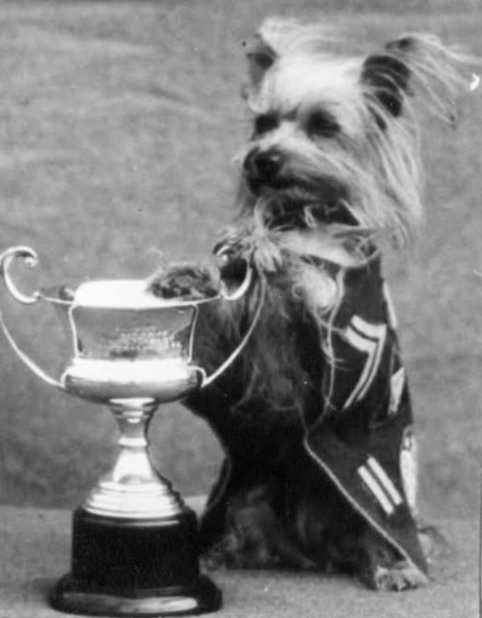
She entertained troops with hundreds of tricks and even won the title of “Champion Mascot in the Southwest Pacific Area.” Her tiny size, fearless attitude, and unwavering loyalty made her a favorite wherever she went.
When World War II finally came to an end, military regulations required service members to leave animals behind.
Wynne couldn’t bear the thought of abandoning Smoky.
Determined to bring her home, he secretly carried her aboard the transport ship inside a specially made bag intended for his oxygen mask.
Thanks to his quick thinking, Smoky safely returned to the United States.
Her work didn’t stop there.
For years after the war, Smoky and Wynne continued visiting veterans’ hospitals, where she comforted recovering servicemen with the same warmth and joy she had shared overseas. She also appeared on television, delighted audiences with her impressive tricks, and became an ambassador for the incredible bond between humans and dogs.
Smoky passed away in 1957 at the age of 14, but her legacy continues to inspire generations.
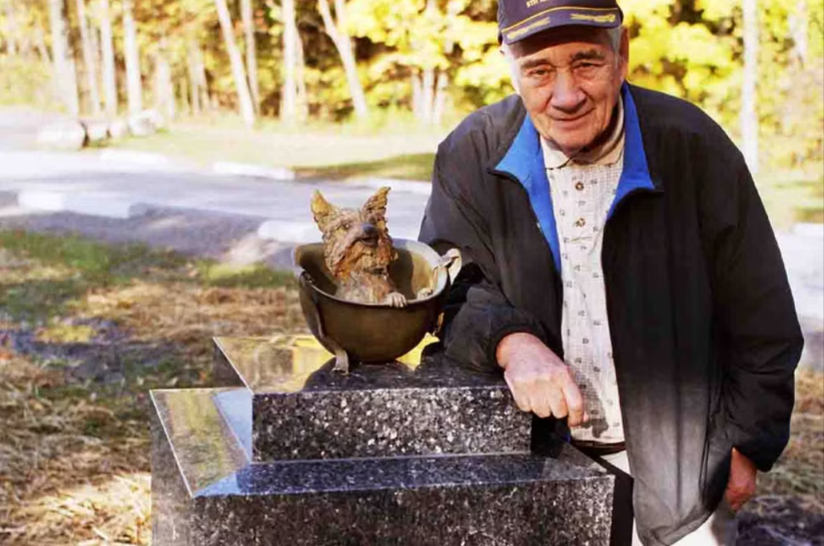
Today, a memorial honoring her stands in Ohio, where visitors can see a bronze statue of the tiny Yorkshire Terrier sitting proudly inside a World War II helmet. The monument also pays tribute to the countless animals who have served alongside military personnel throughout history.
Smoky’s story reminds us that heroes don’t always fit the image we expect.
She never wore a uniform.
She never carried a weapon.
Yet her courage saved lives, her intelligence solved impossible problems, and her gentle heart brought hope to countless wounded soldiers during one of history’s darkest conflicts.
More than 80 years later, therapy dogs continue helping people recover from illness, trauma, and emotional hardship around the world.
That extraordinary legacy can be traced back to one fearless little Yorkie who proved that even the smallest companion can make the biggest difference.