What if teaching your dog good manners didn’t have to involve frustration, raised voices, or endless repetition?
Instead, imagine your dog happily offering the behavior you want because they’ve learned that good choices lead to something wonderful.
That’s the basic idea behind positive reinforcement training—a reward-based approach that makes learning more enjoyable for dogs while helping strengthen the bond they share with their humans.
And the best part? You don’t need to be a professional trainer to start.
What Exactly Is Positive Reinforcement?
Positive reinforcement is all about making a desired behavior more likely to happen again by giving your dog something they value immediately after they do it.
That reward might be a small treat, enthusiastic praise, a favorite toy, a belly rub, or even the opportunity to do something your dog loves.
For example, suppose you’re teaching your dog to sit.
You ask for a sit. Your dog puts their bottom on the floor. Immediately, you mark the behavior with a word like “yes!” or a clicker and follow it with a reward.
Your dog begins to make a connection:
“When I sit, good things happen.”
With enough successful repetitions, sitting becomes a behavior your dog is increasingly likely to offer when asked.
The important part is that the reward actually needs to strengthen the behavior. Simply handing out treats isn’t automatically training.
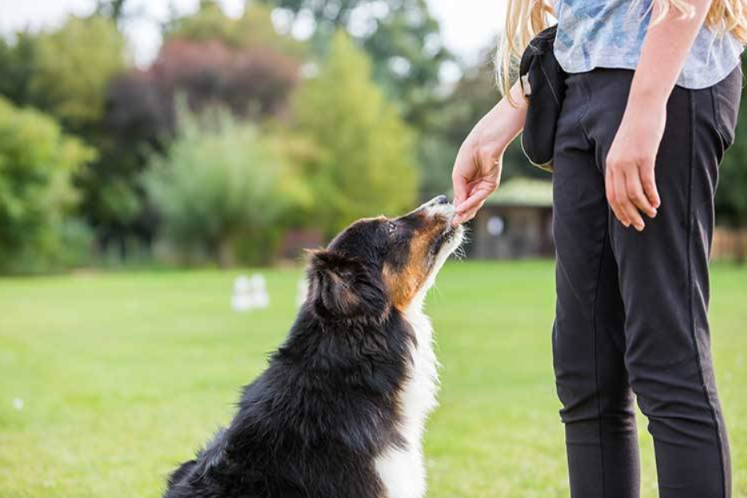
Timing Can Make or Break Training
Dogs are constantly moving, looking, sniffing, sitting, standing, barking, and exploring. That means there’s a lot going on between the behavior you want and the moment you reach for a treat.
If the reward arrives too late, your dog may accidentally associate it with something else.
Imagine asking your dog to sit, but they stand back up before you deliver the treat. Your dog might think the reward was for standing rather than sitting.
That’s why timing matters so much.
A marker word such as “yes” or a clicker can help. The marker identifies the precise moment your dog performs the behavior you want, while the reward can follow immediately afterward.
Find the Reward Your Dog Actually Wants
Here’s a secret many dog parents discover quickly: not every reward is equally exciting to every dog.
One dog may do almost anything for a tiny piece of chicken. Another may be more interested in chasing a toy. Some dogs are thrilled by praise, while others would happily trade a treat for the chance to run around outside.
Your dog gets the final vote.
Pay attention to what motivates them in different situations. A reward that works beautifully in your quiet living room may not be powerful enough when your dog is surrounded by exciting smells at the park.
And motivation can change from moment to moment. A dog that just finished dinner may have little interest in another food reward, while a dog that has been active and hasn’t eaten recently may be extremely enthusiastic about treats.
Start Small—and Make Success Easy
One of the biggest mistakes people make is expecting too much too soon.
If you’re teaching a brand-new behavior, begin somewhere calm with very few distractions. Ask for something your dog can reasonably accomplish, reward the success, and gradually increase the challenge.
For example, if you’re teaching your dog to come when called, don’t begin by calling them away from an irresistible squirrel.
Start indoors.
Then try the backyard.
Then a quiet outdoor area.
As your dog becomes more reliable, slowly introduce distractions.
This gives your dog a much better chance of succeeding instead of repeatedly practicing the wrong behavior.
Keep Training Short and Fun
Dogs don’t need marathon training sessions.
In fact, short sessions can be much more productive. Pick one skill, practice for a few minutes, take a break, and finish while your dog is still having fun.
Think of training as a game rather than homework.
If your dog starts losing interest, becoming frustrated, or wandering away, that may be your signal to wrap things up.
Ending on a successful repetition can leave your dog excited to play again next time.
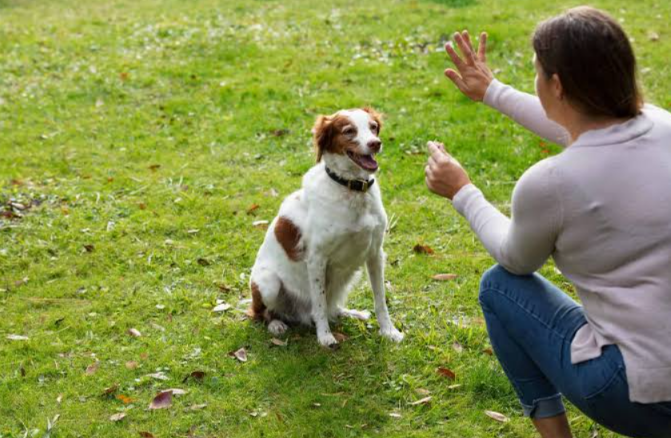
Reward the Behavior You Want to See
Positive reinforcement isn’t just about teaching commands such as “sit,” “stay,” or “down.”
It can also help encourage everyday behaviors you want your dog to repeat.
Maybe your dog calmly waits instead of jumping on guests.
Maybe they choose to lie quietly while you work.
Maybe they look at you instead of pulling toward another dog.
Those moments are opportunities to communicate:
“Yes! That’s exactly what I want.”
When good choices consistently lead to worthwhile rewards, your dog has a reason to keep making those choices.
Don’t Forget: Your Dog Is Learning From You All Day
Training doesn’t only happen when you have treats in your hand.
Dogs learn from consequences throughout their daily lives. If jumping gets attention, jumping may continue. If sitting politely earns attention, sitting may become the preferred strategy.
That means you can turn ordinary moments into training opportunities.
Reward calm behavior.
Praise polite greetings.
Celebrate good choices.
Give your dog opportunities to succeed.
Most importantly, remember that training is a conversation. Your dog is learning what works, and you’re learning how your dog communicates, what motivates them, and which situations make certain behaviors easier or harder.
Positive reinforcement works best when it is clear, timely, consistent, and genuinely rewarding for the individual dog.
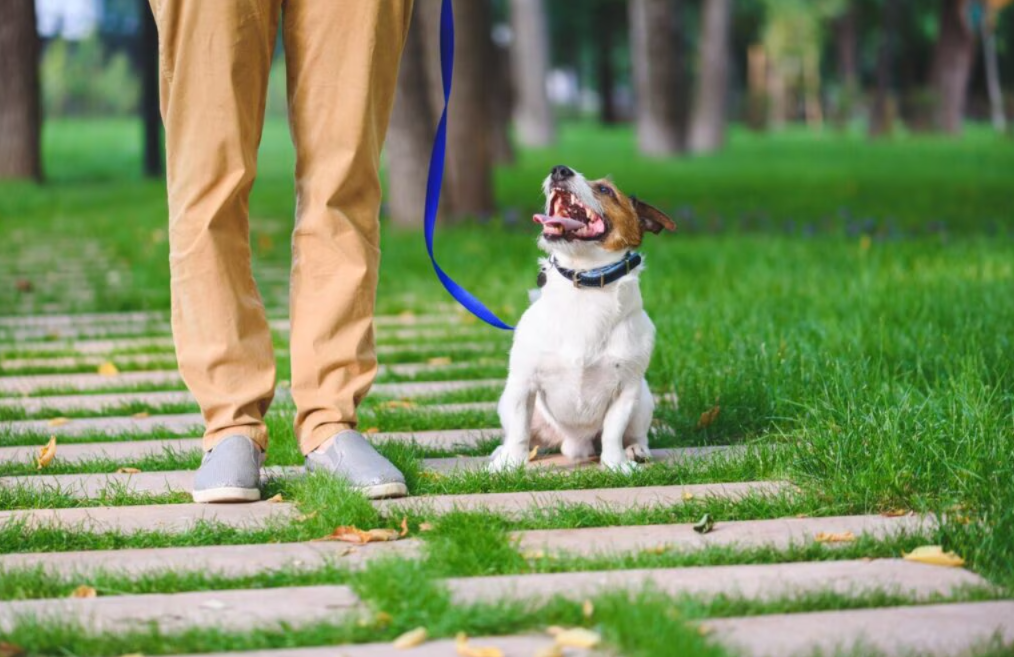
And when training feels less like a battle and more like a game, both ends of the leash have a reason to look forward to the next lesson.