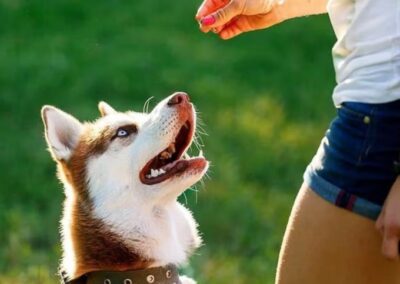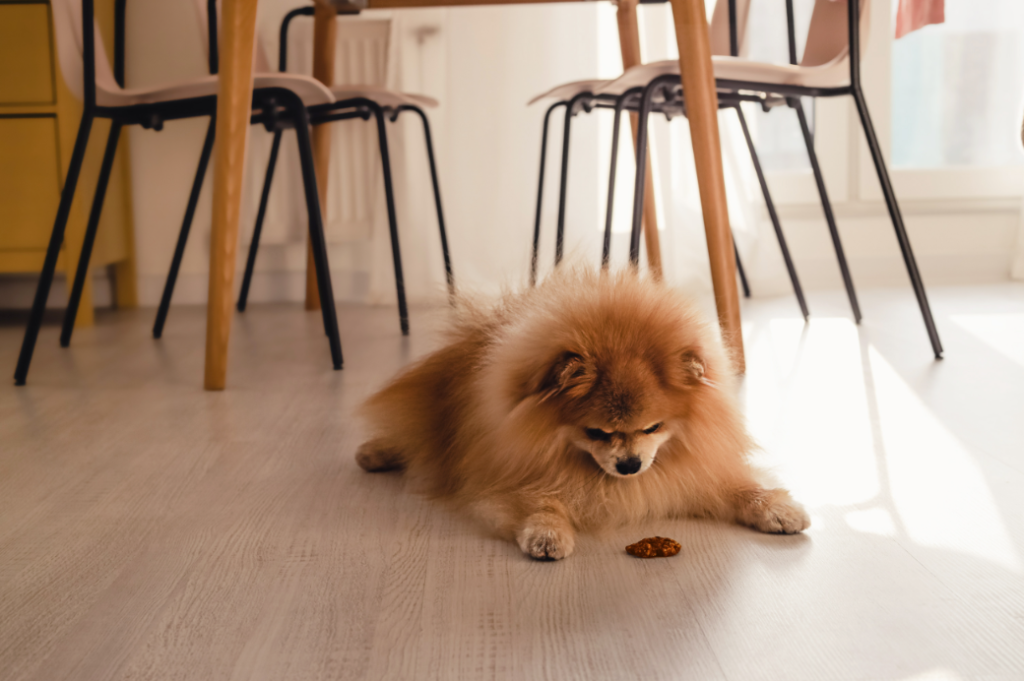
Your dog sees something on the ground.
You see trouble.
Maybe it’s a chicken bone.
Maybe it’s a piece of garbage.
Maybe it’s something you can’t even identify.
Your dog, however, sees only one thing:
A snack.
And before you can react, they’re already heading for it.
That’s why one of the most useful commands you can teach your dog is also one of the simplest:
“Leave it.”
It’s not just a cute training trick.
It can become an important safety skill.
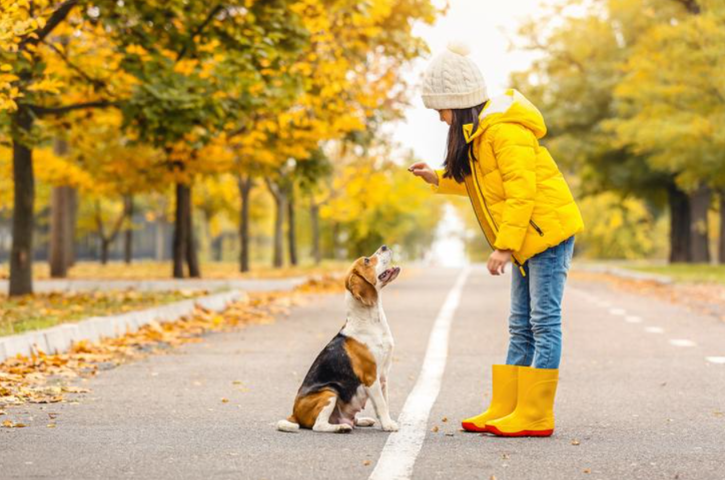
Your Dog Needs To Learn That Not Everything Is Theirs
Dogs investigate the world with their noses and mouths.
That means anything lying on the floor, sidewalk, or ground can suddenly become irresistible.
The problem is that some of those things can be dangerous.
A dropped pill can be toxic.
A cooked bone can create a choking hazard.
Something spoiled or contaminated can make your dog seriously ill.
You won’t always have time to reach your dog before they grab something.
So the real goal isn’t simply teaching your dog to obey the words “leave it.”
You want to build self-control.
You want your dog to see something tempting…
…and choose to ignore it.
That takes practice.
Start With Something Your Dog Really Wants
Begin somewhere quiet with very few distractions.
Put a treat inside your closed fist.
Naturally, your dog will probably investigate.
They may sniff.
They may lick.
They may paw at your hand.
Let them.
You’re waiting for one important moment:
The moment they stop trying.
As soon as your dog backs away or loses interest, praise them.
Then give them a treat from your other hand.
The lesson is simple:
Ignoring the temptation gets rewarded.
Repeat this until your dog starts figuring out the game.
Eventually, they should begin backing away from your closed hand without needing to be physically stopped.
That’s progress.
Now Make It A Little Harder
Once your dog understands the idea, place the treat on your open palm.
If they move toward it, simply close your hand.
Wait.
The second they stop trying, reward them from your other hand.
Eventually, your dog should learn something incredibly valuable:
They don’t automatically get something just because they see it.
They wait for permission.
That distinction matters.
Move The Lesson To The Floor
Now the real training begins.
Put a low-value treat on the floor and cover it with your hand.
When your dog stops trying to get it, reward them with a different, better treat.
This part is important.
You don’t want your dog thinking:
“I leave that treat alone because eventually I get that treat.”
You want them thinking:
“I leave that alone because something even better comes from my human.”
Gradually remove your hand.
If your dog dives toward the treat, cover it again.
Don’t let them practice grabbing it.
When they successfully ignore the uncovered treat, reward them immediately.
Then increase the difficulty.
Use your foot instead of your hand.
Practice while standing.
Keep your dog on a leash so they can’t suddenly grab the treat and turn your training session into a victory for them.
Then Add The Words
Here’s where many dog owners rush.
Don’t.
First teach the behavior.
Once your dog is consistently ignoring the temptation, introduce the words “leave it.”
Say the cue before presenting the temptation.
When your dog ignores it, praise and reward.
After enough repetitions, those two words begin to mean something.
And that’s exactly what you want.
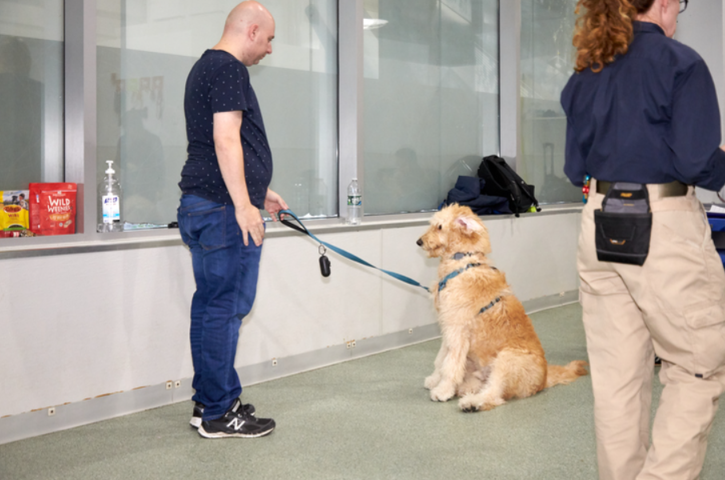
Take It Into The Real World
Your living room isn’t the real test.
The sidewalk is.
The park is.
The backyard is.
The places where your dog encounters exciting smells, strange objects, food, people, and other animals are where this skill really matters.
Start with easy distractions.
Place several low-value treats along the ground and walk your leashed dog past them.
Say “leave it.”
When your dog ignores one, reward them with something better.
Then move to the next.
Don’t make the exercise too difficult too quickly.
As your dog improves, practice in different locations.
Eventually, replace the treats with other objects your dog finds interesting.
The goal is for “leave it” to mean more than food.
It should become a general instruction to ignore something you don’t want them touching.
Don’t Set Your Dog Up To Fail
One final rule matters enormously:
Don’t give the command when you already know your dog won’t listen.
If your dog is completely overwhelmed by a distraction, go back a step.
Make the challenge easier.
Build the behavior again.
Every successful repetition strengthens the habit.
And every failed repetition can give your dog another opportunity to practice ignoring you.
The goal isn’t to have a dog that reluctantly obeys.
The goal is to have a dog that sees something tempting…
looks at you…
…and waits.
Because sometimes the difference between “That looks delicious” and “I’m leaving it alone” can be the difference between a harmless moment and an emergency.
And that’s why “leave it” deserves a permanent place in every dog’s vocabulary.