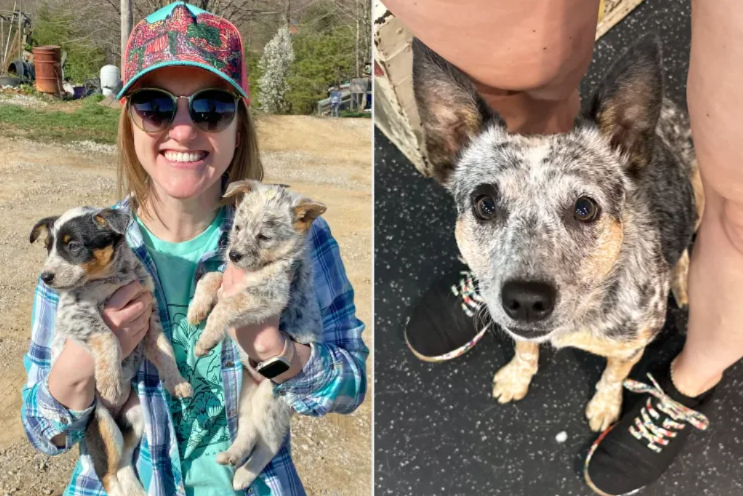
At first, Pips seemed like any other puppy.
Small.
Adorable.
Full of energy.
And the runt of her litter.
That’s exactly why Dr. Michael Squires and his wife, Dr. Carlee Squires, fell for her.
The couple adopted Pips and her sister, Ruth, from West Virginia, never realizing that the tiny blue heeler had been born deaf.
Then they started noticing something strange.
Pips didn’t bark like her sister.
And when she did bark, the sound was different.
But the moment that really got their attention came one evening.
Michael went outside and called the dogs inside.
One by one, they came running.
Except Pips.
She was asleep in the driveway.
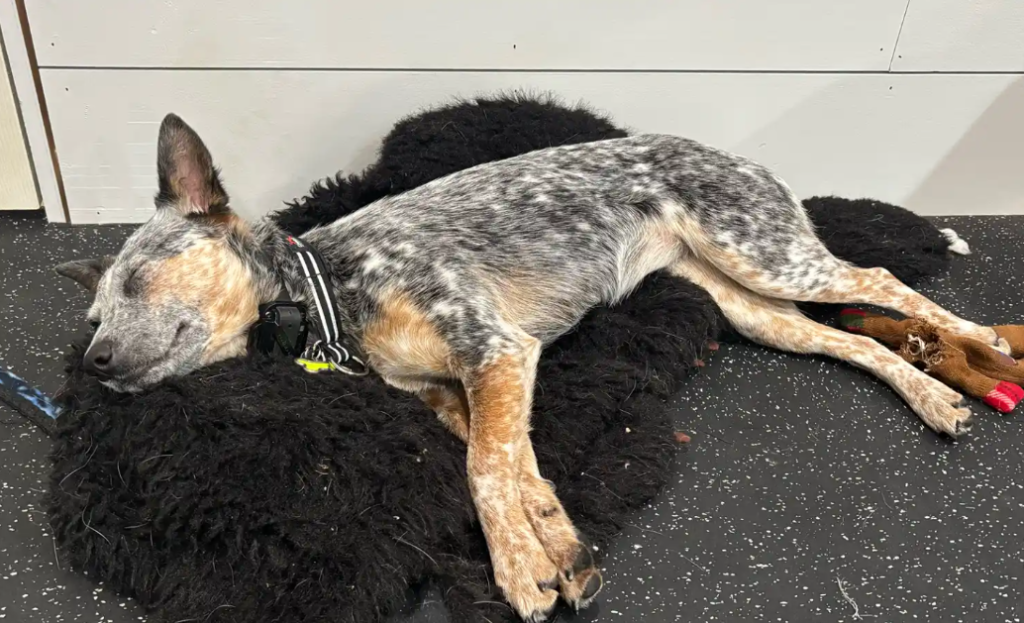
Michael yelled.
He clapped.
He whistled.
Nothing.
Pips didn’t even flinch.
That’s when two audiologists suddenly found themselves facing a very different kind of hearing challenge.
Their puppy couldn’t hear them.
But that didn’t mean she couldn’t learn.
And it certainly didn’t mean she couldn’t live a wonderful life.
The Squires began researching how to communicate with a deaf dog. Their professional experience with hearing loss gave them a unique perspective, but they also understood something even more important:
Pips didn’t need to be “fixed.”
They needed to change the way they communicated with her.
So they did.
Instead of relying on spoken commands, the family began using hand signals and visual cues.
If Pips was across the room, they might flip a light on and off to get her attention.
If she was focused elsewhere, they could gently touch her to let her know someone was nearby.
She also learned that a vibrating collar meant it was time to look at her people.
Once she made eye contact, the hand signals took over.
Come.
Sit.
Place.
Pips learned them.
And she learned them well.
The family even took Pips and Ruth to obedience training, where Pips continued learning visual commands.
Of course, living with a deaf dog requires some extra thought.
The family is careful not to startle Pips when she’s sleeping. They may gently touch her paw or nudge the chair she’s resting on before waking her.
But once she’s awake?
Look out.
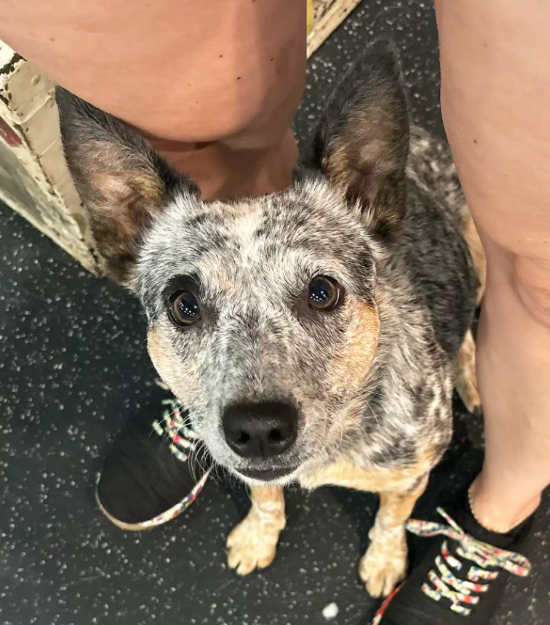
Pips is ready to go.
She loves playing fetch.
She has plenty of energy.
And she happily explores the family’s enormous 80-acre property alongside the other dogs.
In other words…
Pips isn’t sitting around thinking about what she can’t do.
She’s too busy enjoying what she can.
And that’s perhaps the most important lesson in her story.
A disability doesn’t erase a dog’s personality.
It doesn’t erase their curiosity.
It doesn’t erase their ability to love, play, learn or become a treasured member of a family.
Sometimes, all it takes is for someone to stop asking, “What’s wrong with this dog?”
And start asking:
“What does this dog need from me?”
That’s exactly what Pips got.
She got people willing to adjust.
People willing to learn.
People willing to communicate in a different way.
And most importantly…
She got a family that never saw her deafness as a reason to love her any less.
Today, Pips is a lively little blue heeler who runs, plays, hikes and chases balls with the rest of her family.
She can’t hear them call her name.
But she knows where she belongs.
And perhaps that’s all any dog really wants.
To be understood.
To be wanted.
And to have someone who says, in whatever language is necessary:
“You’re one of us.”
Pips was born without hearing.
But she was never missing the ability to live a big, happy life.
She just needed the right people to show her how.