There’s something unmistakably pure about the bond between a child and a dog—but every so often, a moment comes along that makes that bond feel even more extraordinary.
This is one of those moments.
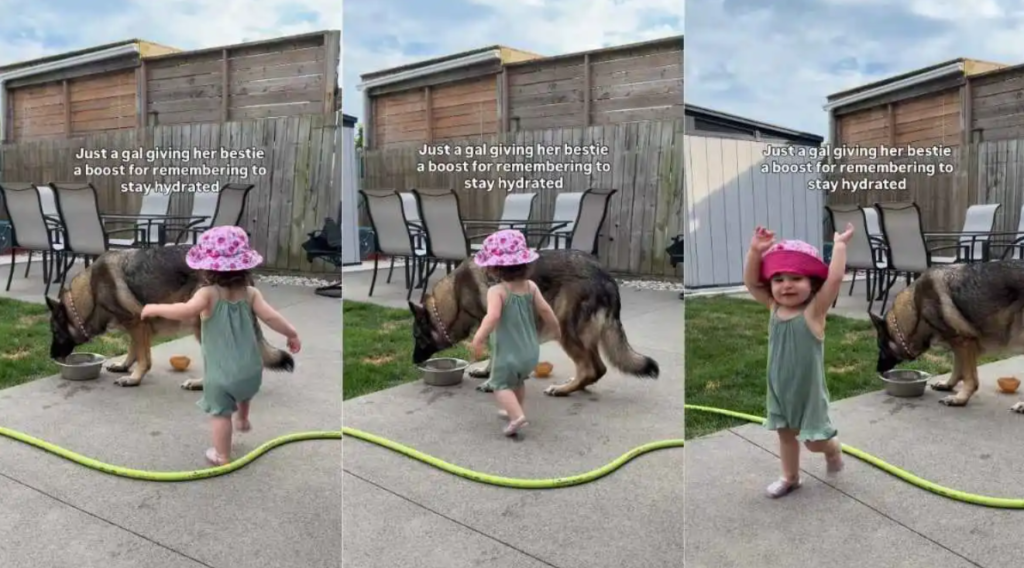
A large, gentle dog and a tiny girl share an interaction so simple it almost disappears at first glance.
But if you pause for a second, you realize it says everything about trust, affection, and the quiet language they’ve built together.
The scene is unassuming. The dog is simply standing nearby, calm and comfortable in the presence of her little human.
There’s no chaos, no overstimulation—just a peaceful moment unfolding in real time.
Then the girl steps closer.
She raises her small hand and gently pats the dog on the back.
Not rushed. Not exaggerated. Just soft, deliberate taps—the kind of touch that carries meaning far beyond its size.
And the dog?
She waits for it.
There’s a pause, almost like anticipation. Not impatience, but understanding. As if she knows this is part of something important between them.
Her posture stays relaxed, but her attention is fully there, tuned into the tiny human beside her.
Then comes the second pat.
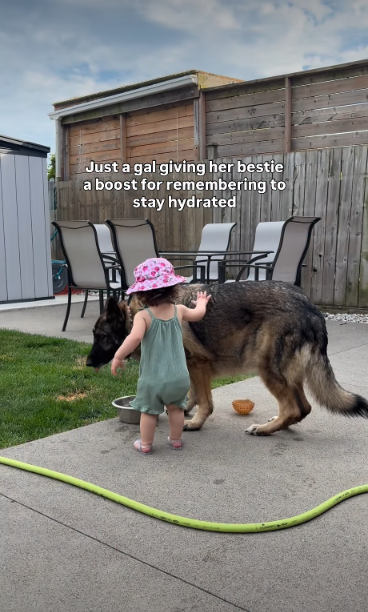
And the dog leans into it slightly, as if acknowledging the gesture in the only way she can. Not through noise or movement, but through stillness and presence.
It’s a small exchange, but it feels deeply intentional. The kind of interaction that doesn’t happen by accident—it develops over time, through repetition, familiarity, and trust.
Children often express affection in ways that are instinctive and unfiltered. They don’t overthink timing or technique. A pat is simply a pat.
A moment of care, offered freely.
Dogs, in return, read those gestures differently than we do. They don’t interpret them as trivial. They interpret them as connection.
And this big dog—this patient, steady presence—seems to understand exactly what is being offered.
A shared moment of approval.
A quiet “I see you.”
A simple acknowledgment that everything is okay in this space between them.
What makes it even more striking is how natural it all feels. There’s no training visible here, no structured command, no reinforcement cues. Just lived-in familiarity.
The kind that forms when a dog becomes part of a child’s everyday world, not as an accessory, but as a companion.
She doesn’t rush away after the pats. She lingers. She stays close enough to be present, but not so close that it disrupts the dog’s calm.
And the dog, in turn, remains exactly where she is—anchored, patient, comfortable in the rhythm of being gently acknowledged.
It’s easy to overlook interactions like this because they’re not dramatic. There’s no rescue, no surprise twist, no moment of crisis or transformation.
But there is something else happening here that might matter even more.
A relationship built on consistency.
On small gestures repeated over time until they become language.
On trust that doesn’t need to be announced—it just exists.
The girl gives affection the way children do: openly, simply, without expectation.
And the dog receives it the way only a deeply bonded animal can: with calm acceptance and quiet appreciation.
Together, they’ve created something that doesn’t need explanation.
Just back pats.
And a big dog who understands that those tiny hands are speaking love in the clearest way they know how.