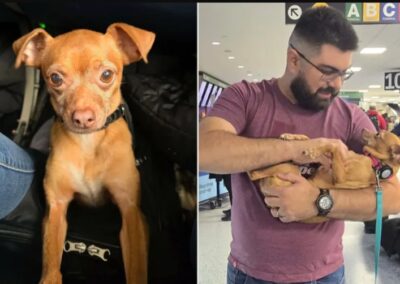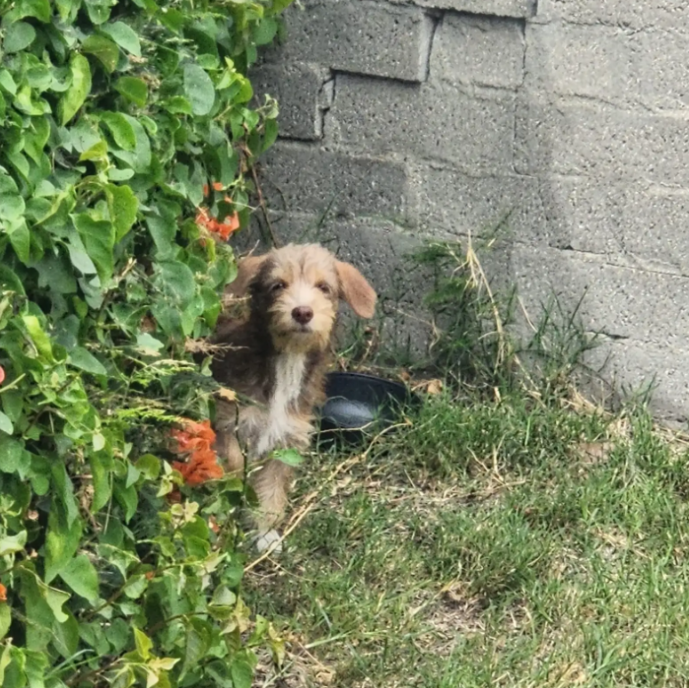
When she first arrived, the shaking didn’t stop.
Not for visitors.
Not for food.
Not even for gentle voices trying to comfort her.
This small rescue dog wanted nothing to do with the world around her.
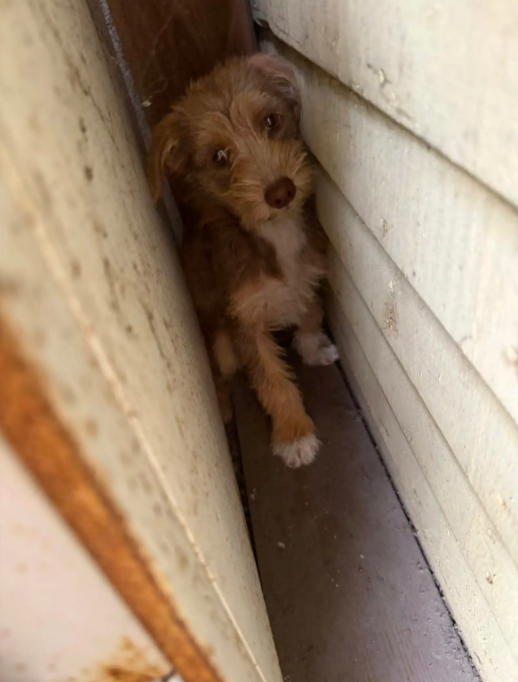
She would retreat into the safest corner she could find, pressing herself back as far as possible, hoping distance alone might make her invisible.
Everything felt like a threat.
Every sound felt too close.
Every movement felt uncertain.
For rescuers, it was clear she wasn’t aggressive—she was terrified.
The kind of fear that comes from not knowing what kind of life comes next, or what the last one may have taken from you.
In the beginning, even basic care was difficult. Approaching her kennel meant watching her freeze, shake, and try to disappear into herself.
Attempts at interaction were met with avoidance, not because she didn’t need help, but because she wasn’t yet ready to believe help was safe.
So they stopped pushing.
Instead, they started waiting.
And one person decided to do something different.
Rather than forcing interaction, this caretaker began simply existing nearby. No pressure. No expectations. Just quiet presence.
Sitting at a distance where the dog could see them without feeling trapped by them.
At first, nothing changed.
The dog still shook.
Still hid.
Still watched every movement with suspicion.
But something subtle began to shift over time.
Fear didn’t disappear—but it started to compete with curiosity.
A moment where she didn’t immediately retreat.
A second longer of eye contact.
A hesitant shift forward when food was placed closer than usual.
Small signs, but meaningful ones.
Because trust in dogs like her doesn’t arrive in big moments. It arrives in fractions of seconds that slowly build into something new.
The breakthrough didn’t come with fanfare.
It came quietly.
One day, instead of shrinking away completely, she stayed in place when the caretaker approached.
Her body was still tense, still uncertain—but she didn’t retreat as far as she used to.
That single choice marked a turning point.
From there, progress began to stack.
Gentle feeding sessions.
Short moments of calm interaction.
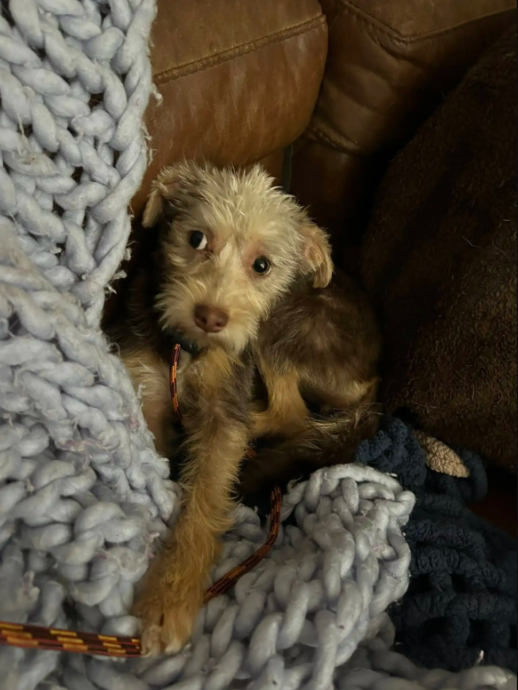
The first time she accepted a treat without immediately backing away.
Each step told a story of a nervous system learning that not every approach leads to harm.
Eventually, something even more meaningful happened.
She began to seek proximity on her own terms.
Not rushing.
Not fully relaxed.
But choosing to stay.
For rescue workers, these moments are everything. They don’t look dramatic from the outside. There’s no transformation montage, no sudden switch from fear to confidence.
Just slow rewiring of experience.
The dog learns that presence can be safe.
That voices can be soft.
That humans can stay consistent.
And with consistency, fear starts to loosen its grip.
Over time, what was once a dog that shook at every interaction becomes a dog that can sit quietly in the same room.
A dog that can take food without panic. A dog that begins to understand that the world is no longer defined only by what it has survived.
And at the center of it all is not a single heroic moment.
But patience.
The kind that doesn’t demand trust—but earns it.
Step by step.
Until a dog who once hid from everyone finally decides, in her own time, that maybe she doesn’t have to hide anymore.