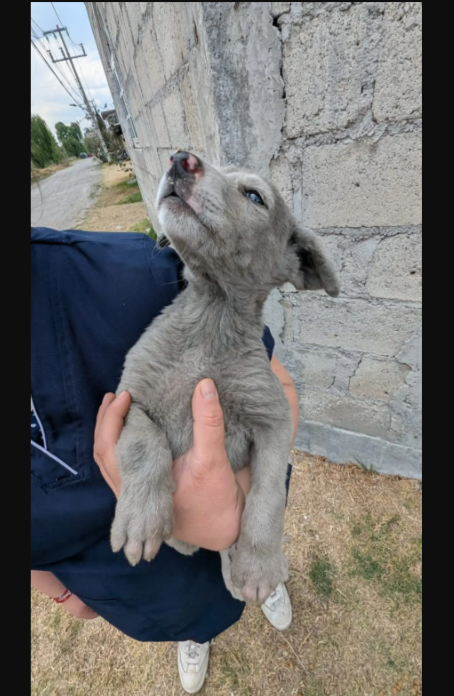
When rescuers first found him, he didn’t look like a puppy people would stop for.
He looked like survival.
A small gray stray, coated in dirt and exhaustion, carrying the kind of street-worn appearance that makes it hard to see what he might have once been before life got difficult.
But everything began to shift the moment he was brought in for his first bath.
At first, the puppy was cautious. Most strays aren’t immediately comfortable with handling, especially when they’ve spent time on their own without consistent human contact.
New environments, unfamiliar smells, and sudden touch can all feel overwhelming.
But this moment wasn’t about pressure.
It was about care.
Warm water was gently introduced, and slowly, the layers of dirt that had built up over time began to wash away.
With each pass, more of the puppy underneath started to appear — not just physically, but in presence too.
What stood out most to rescuers wasn’t just how dirty he was.
It was how different he looked as that dirt disappeared.
The transformation wasn’t dramatic in a cinematic sense. It was gradual, almost subtle, but deeply emotional for everyone watching it unfold in real time.
His features became clearer. His expression softened. The tension in his small body began to ease as the process continued.
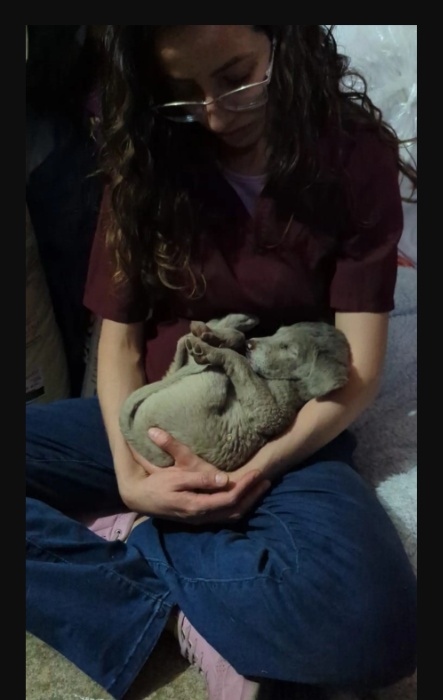
For many stray animals, grooming and bathing are often the first structured, gentle interactions they experience after rescue.
And while it may seem simple, it plays a significant role in helping reset their stress response.
Warm water, calm handling, and predictable touch can help signal to a frightened animal that they are no longer in danger.
Animal behavior specialists often note that physical care routines like bathing, when done gently, can support emotional regulation in newly rescued dogs by reducing stress hormones and introducing positive tactile experiences.
In this case, that shift was visible.
As the bath continued, the puppy became more settled, less reactive, and more willing to simply exist in the moment.
The initial uncertainty faded, replaced by a quiet acceptance of what was happening.
He wasn’t fighting anymore.
He was letting go.
And once the washing was complete, rescuers were left with a completely different-looking puppy than the one they had first brought in.
Cleaner, lighter, more visible — but also, in a way, more present.
It’s a transformation rescue workers see often: not just a physical change, but an emotional one that happens alongside it.
When the burden of neglect is washed away, even temporarily, the animal underneath starts to show itself again.
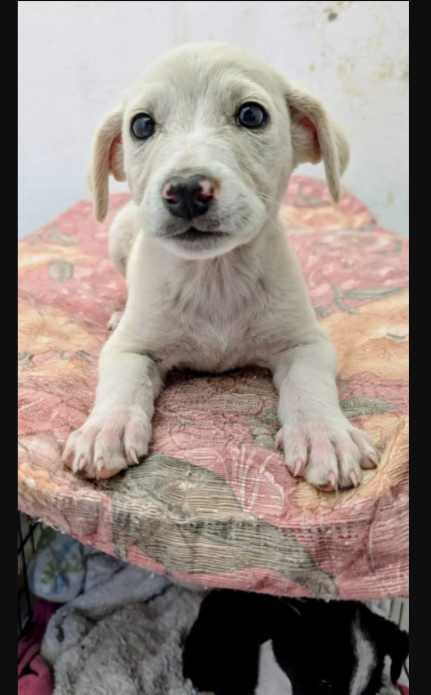
Sometimes for the first time in a long while.
That’s why moments like this resonate so strongly online.
Because it’s not really about soap or water.
It’s about what those things represent — safety, attention, and the beginning of care after a period of being unseen.
Viewers responding to similar rescue transformations often describe them as “before and after life begins,” and while that might sound dramatic, it captures something real about the shift that happens when a neglected animal is finally given attention and gentleness.
By the end of the bath, the gray stray puppy wasn’t just cleaner.
He was calmer.
More settled.
And, in a quiet way, already beginning to look like a dog who might finally be okay.
Not because everything was solved in a single moment.
But because someone finally stopped, reached out, and decided he was worth caring for.