Floodwaters don’t rise slowly when lives are at stake.
They surge. They trap. They turn ordinary places into danger zones in minutes.
And in the middle of one of those rising flood situations, a state trooper made a decision that would change everything for one abandoned dog left behind in the chaos.
The incident unfolded as floodwaters continued to climb, leaving little room for hesitation.
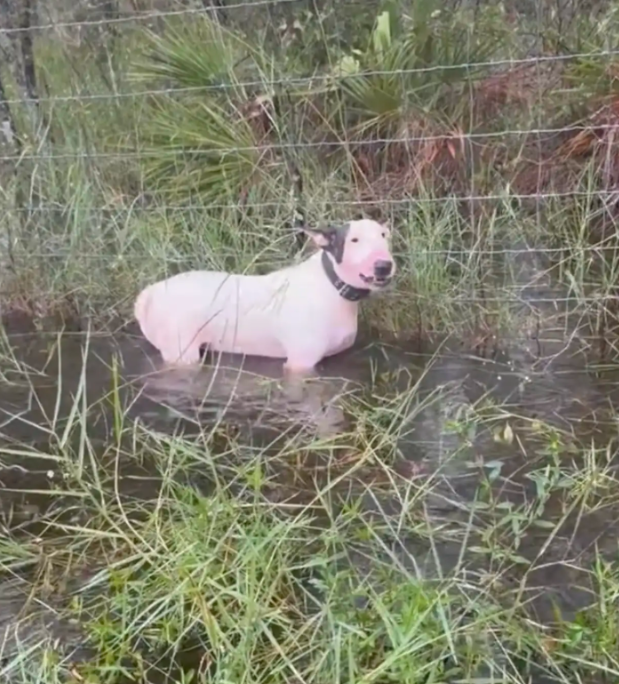
Amid the rushing water and unstable ground, the trooper spotted a dog who had been left stranded and unable to escape on his own.
No shelter nearby.
No safe direction to run.
Just water, pressure, and fear.
Without waiting for backup, the trooper waded directly into the rising floodwaters.
Step by step, he moved through conditions that were already dangerous for humans — let alone a panicked animal struggling to stay afloat.
The current was strong enough to make every movement difficult, but the urgency of the situation left no room for retreat.
Because the dog wasn’t just stuck.
He was running out of time.
Rescue in flood conditions is one of the most dangerous forms of emergency response.
Fast-moving water can hide debris, collapse footing, and overwhelm both rescuer and victim in seconds.
Yet first responders repeatedly risk their lives in exactly these conditions when animals or people are trapped.
Emergency agencies consistently warn against entering floodwater due to unpredictable currents and hidden hazards that can quickly become fatal.
Still, the trooper continued forward.
And eventually reached the dog.
What followed was a careful, controlled effort to bring the frightened animal back to safety.
In situations like this, dogs often respond with a mix of panic and confusion — not understanding why the environment has suddenly turned hostile or why familiar ground has disappeared beneath them.
But even in distress, animals often respond to calm human presence, especially when that presence is steady and deliberate rather than chaotic.
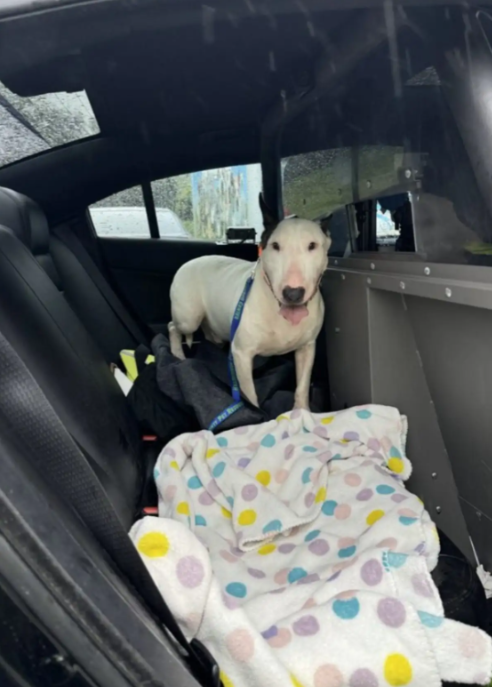
The trooper guided the dog through the water, maintaining balance and control while ensuring both of them could safely exit the danger zone.
Every step mattered. Every movement counted.
And slowly, the worst of it was behind them.
FHP Troopers rescued a dog left tied to a pole on I-75 near Bruce B Downs Blvd this morning. Do NOT do this to your pets please… pic.twitter.com/8cZJOfkJL2
— FHP Tampa (@FHPTampa) October 9, 2024
Once they reached safer ground, the tension of the moment didn’t disappear instantly — but it began to loosen.
That’s often how rescues like this unfold emotionally. The danger ends before the body realizes it, and relief arrives in waves rather than all at once.
For the dog, what likely mattered most wasn’t the flood itself, but what came after it: the fact that someone came.
That someone didn’t hesitate.
And that he wasn’t left behind.
Stories like this are part of a larger pattern seen in emergency rescues involving animals during floods and storms.
Across many documented cases, responders risk personal safety to extract stranded pets and wildlife from rapidly changing conditions, often using boats, helicopters, or direct entry into water when necessary.
These rescues highlight both the unpredictability of flood events and the strong human instinct to intervene when life — any life — is in danger.
In this case, that instinct was simple.
See the dog.
Get to the dog.
Bring him out.
No hesitation beyond that.
And once the water was behind them, what remained was a moment of stillness that contrasted sharply with everything that came before it.
A soaked, shaken dog.
A trooper who had stepped into danger without certainty.
And the quiet reality that, for a few critical minutes, one decision had made all the difference.
Because in rising floodwaters, survival often comes down to seconds.
And sometimes, those seconds belong to someone willing to step forward when everything else is pulling back.