Not all friendships between dogs happen quickly.
Some take time. A lot of time.
In this case, it took more than a year—and a very determined Dachshund puppy—to finally break through the quiet resistance of a senior dog who wasn’t entirely convinced about having a younger housemate.
When the puppy first arrived, he brought exactly what you’d expect: energy, curiosity, and an overwhelming desire to be friends with everyone, immediately.
He didn’t seem to understand the idea of personal space or slow introductions. To him, every moment was an opportunity for connection.
The senior Dachshund, however, had a very different approach.
She was older, more set in her ways, and far less interested in sharing her routine with a constant burst of enthusiasm.
Where the puppy saw companionship, she saw disruption. Where he saw playtime, she saw unnecessary noise.
And so began the long in-between stage that many multi-dog households recognize all too well: coexistence without full acceptance.
But the puppy didn’t give up.
Day after day, he tried again. Not in an overwhelming or aggressive way—but in that persistent, innocent manner only young dogs seem to master.
He would approach, pause, wait for a response, and try again. Sometimes he was ignored. Sometimes he was gently dismissed.
But he never seemed discouraged for long.
That’s what made the dynamic so interesting to watch.
There was no conflict, just imbalance—one dog eager to connect, the other carefully maintaining emotional distance.
And then, slowly, something began to shift.
It wasn’t a dramatic turning point. No sudden breakthrough moment where everything changed at once. Instead, it was subtle—almost easy to miss if you weren’t paying attention.
A little closer sitting distance. Less avoidance. Shared space without tension.
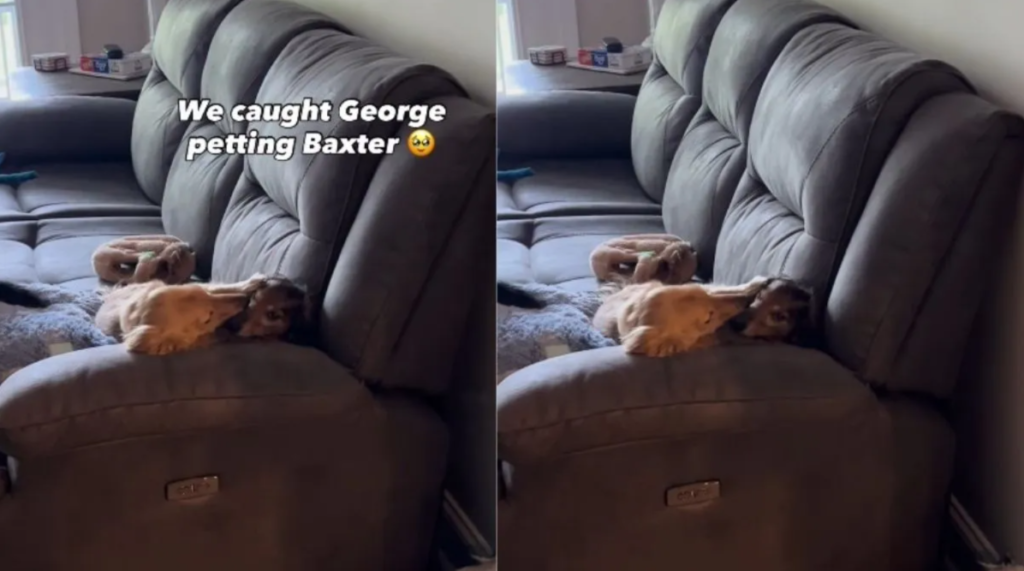
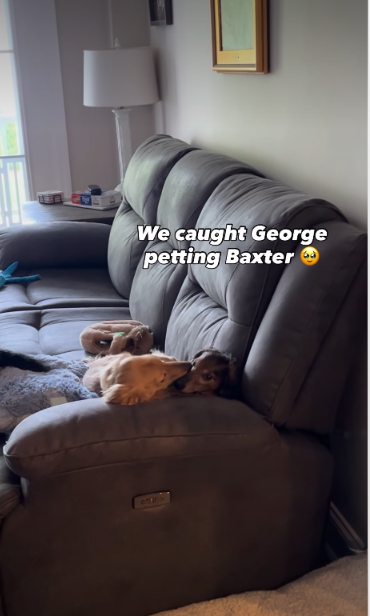
Then came the moment that signaled real progress: the two of them resting together on the couch.
Side by side.
Not just tolerating each other, but actively choosing proximity.
In the video, the puppy even reaches out with a small, gentle gesture—an instinctive touch that looks almost like he’s checking if this new reality is real.
The senior dog doesn’t move away. She doesn’t correct him. She simply stays.
And that silence says more than any interaction before it.
Because for dogs, acceptance isn’t always loud. It doesn’t always come with wagging tails or excited play. Sometimes it looks like stillness.
Like shared space. Like allowing someone else to exist close enough to be part of your world.
After more than a year of persistence, the puppy had finally reached that point—not by forcing it, but by wearing down resistance with consistency and patience.
It’s easy to think of dogs as instantly social, but relationships between them are shaped by personality, age, and experience.
Older dogs often prefer predictability. Puppies thrive on novelty. Bridging that gap takes time, and sometimes, a surprising amount of emotional negotiation.
In this case, the negotiation ended in something simple but meaningful.
Peace.
Not the kind that comes from separation, but the kind that comes from understanding.
The puppy still brings energy. The senior dog still values calm.
But now, there’s a shared rhythm between them that didn’t exist before—a quiet agreement that they can exist in the same space without friction.
And somewhere along the way, what started as persistence became something closer to trust.
Not fast. Not easy.
But real.