What started as a routine rescue intake for a stray dog quickly turned into a medical mystery no one saw coming.
A small, 5-year-old stray Chihuahua mix named Edward was brought to the Humane Society of Tampa Bay after a good Samaritan noticed he was struggling with a painful limp.
At first glance, it looked like a straightforward orthopedic case—something painful, but manageable.
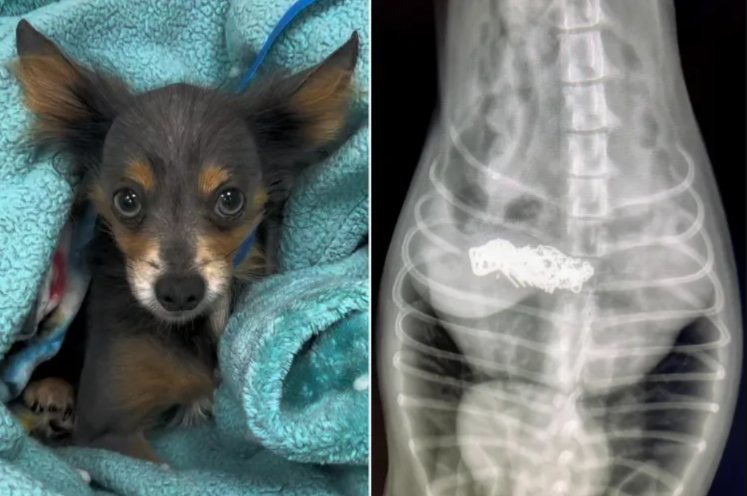
But once veterinarians ran X-rays, the situation became far more complicated.
The scans confirmed Edward did have a fractured leg. However, that wasn’t the only issue hiding beneath the surface.
The imaging also revealed something unexpected inside his digestive system: foreign objects that should not have been there.
One of those objects was small enough that it might pass naturally.
The other, however, was a serious concern—sitting in his stomach and posing a potential life-threatening risk if it moved deeper into his intestines.
Edward was rushed into emergency abdominal surgery.
During the procedure, veterinarians made a discovery that stunned even experienced staff: an 18-karat gold necklace.
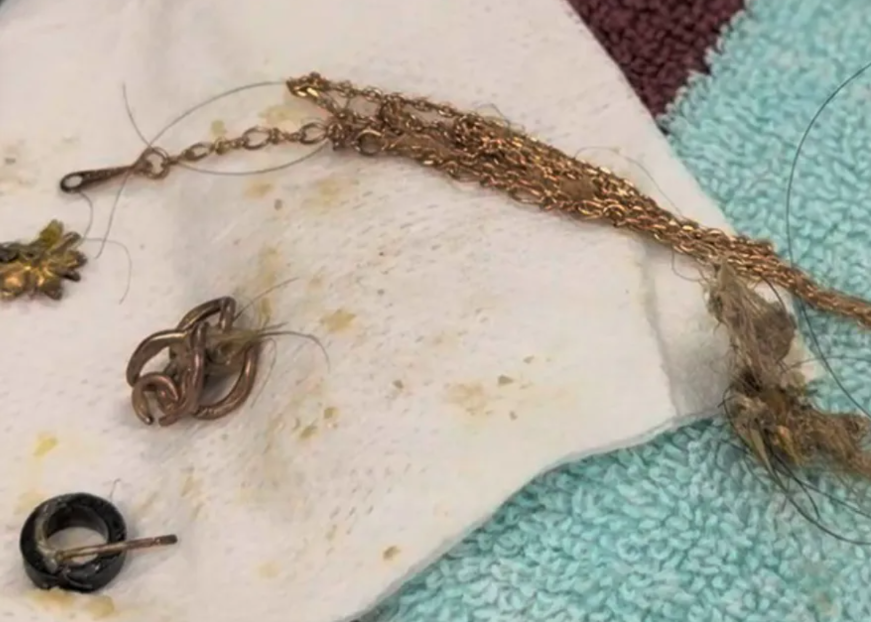
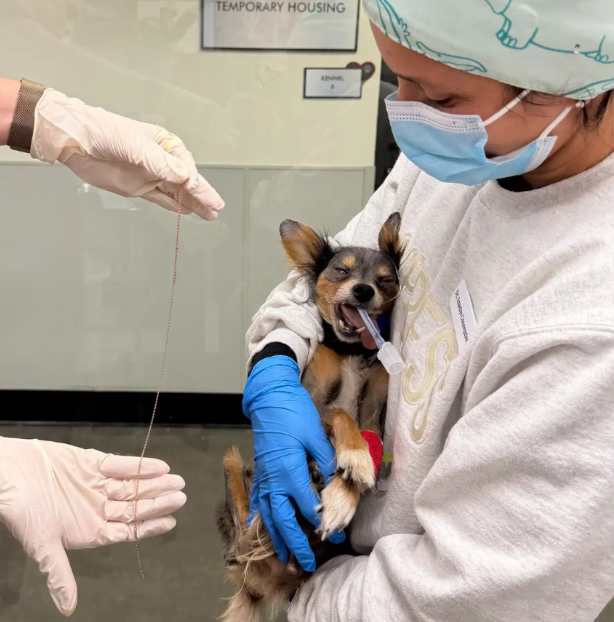
Carefully, the surgical team removed the chain from his stomach, ensuring no further damage was caused to his digestive tract.
It was a surprising moment in an already complex medical case—and a reminder of just how unpredictable stray animal rescues can be.
Edward’s condition required more than just one intervention.
Alongside the emergency surgery, he also underwent additional procedures, including dental extractions and neutering.
On top of that, veterinarians discovered he was dealing with anemia, meaning his body was already under significant strain before surgery even began.
Because of his weakened condition, doctors had to make careful decisions about what could be treated immediately and what needed to wait.
His fractured leg, for instance, may still require future intervention such as amputation, but only once his body is strong enough to handle another major procedure.
For now, the focus is recovery.
The priority is stabilizing Edward, managing his pain, and giving his body time to heal from multiple medical challenges at once.
Despite everything he has been through, reports from the veterinary team indicate that he is comfortable and able to move around—an encouraging sign for a dog who arrived in distress.
Cases like Edward’s are a stark reminder of the hidden dangers stray animals often face.
Ingested objects are one of the most common veterinary emergencies in dogs, ranging from small toys to household items—and in rare cases, even jewelry.
These foreign bodies can cause blockages, internal injuries, or poisoning, often requiring urgent surgical intervention.
What makes Edward’s story stand out isn’t just the unusual object found inside him—it’s the resilience he’s shown through multiple overlapping health issues and surgeries.
From a painful limp on the streets to emergency surgery and ongoing recovery, his journey is now one of careful healing and second chances.
And while the gold necklace may have been the most surprising discovery of the day, the real treasure in this story is something simpler: Edward getting the chance to recover, rest, and eventually move toward a healthier, safer life.