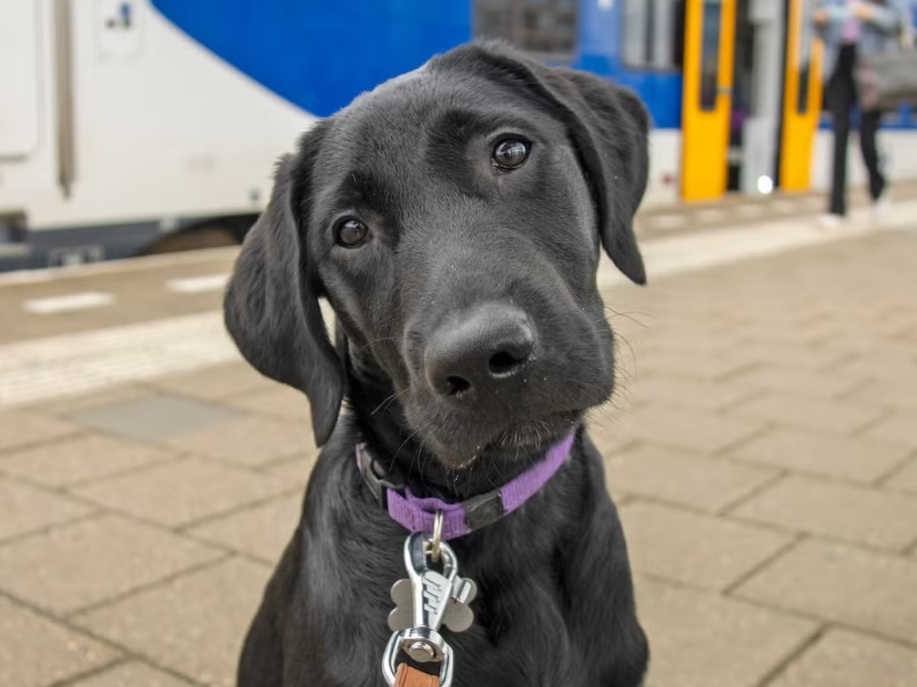
Not every service dog ends up in the job they were trained for.
But that doesn’t mean their story is a failure.
In fact, for one energetic Labrador puppy named Walsh, “flunking out” of service dog training turned out to be the beginning of something far better than anyone expected.
Walsh spent the first part of his life in a structured service dog training program, learning the discipline, focus, and obedience required for assistance work.
These programs are known for their high standards — only a small percentage of dogs actually complete the full certification process, as they must remain calm, highly responsive, and unfailingly focused in a wide variety of environments.
Walsh, however, had other ideas.
He was happy. Friendly. Easily excited by life.
And that enthusiasm — while adorable — made it difficult for him to maintain the level of control needed for service work.
So he was released from the program.
What might sound like a disappointment quickly turned into something much more meaningful.
Because waiting for him on the other side of that decision was someone he already knew.
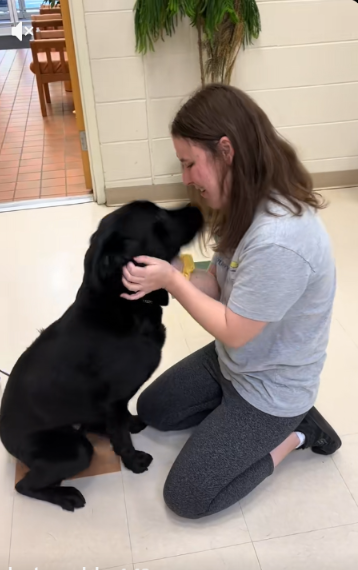
The person who had raised him during his early puppyhood stepped forward to adopt him, turning what is often a bittersweet goodbye in service dog programs into a joyful reunion.
In many training organizations, volunteer puppy raisers spend months building deep bonds with future service dogs before they are placed into advanced training.
For Walsh, that bond didn’t end when training began — it simply paused.
And then restarted in the best possible way.
At home, everything changed.
No strict training schedule. No performance expectations. Just life together.
And Walsh, true to his personality, brought all of his energy with him into his new role: beloved companion, full-time shadow, and constant source of joy.
Stories like his are surprisingly common in the service dog world.
Dogs who “don’t make the cut” often go on to live incredibly happy lives as pets, sometimes even retaining pieces of their training in unexpected ways — like helping with small tasks or staying unusually attentive to their humans’ routines.
But what stands out most here isn’t what Walsh couldn’t do.
It’s what he became.
A dog who was once evaluated for discipline is now valued for affection.
A pup once judged on precision is now loved for personality.
And a career that ended early opened the door to something simpler — but just as important.
Belonging.
Because not every dog is meant for a job.
Some are meant for a person.
And in Walsh’s case, the moment he left training wasn’t the end of his story.
It was the moment he finally found where he was always supposed to be.
Related posts:
 Scared of Humans, Burdened With Tumors — How One Dog Is Finally Healing
 Watch Giant Dog Make His Feelings Known About New Puppy Roommate
 The Heartfelt Story of a Dog Found in a Cage Who Finally Found Freedom and Family
 A Thousand Miles and Five Years Later: The Miraculous Return of Bella the Chihuahua