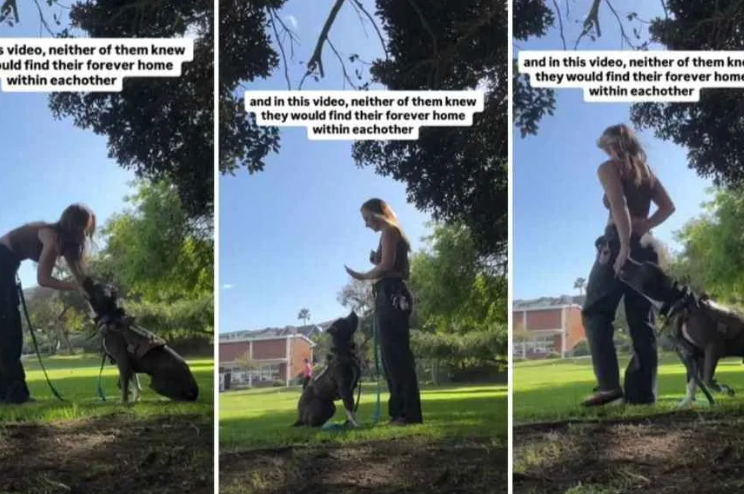
At first, it was only supposed to be temporary.
A foster arrangement.
A safe place for a rescue dog to stay until the “real” forever family came along.
That was the plan.
No long-term commitment. No emotional promises. Just helping a dog in need transition out of uncertainty and into safety for a little while.
But rescue dogs have a way of changing plans.
Especially the ones who decide, almost immediately, exactly where they belong.
From the beginning, the dog seemed unusually attached to her foster mom.
While many foster dogs take time to settle in, this one acted as if she had already made up her mind.
She followed closely from room to room, watched every movement carefully, and relaxed fastest whenever her foster mom was nearby.
It wasn’t clinginess in the dramatic sense.
It was recognition.
The kind that quietly builds before anyone admits it out loud.
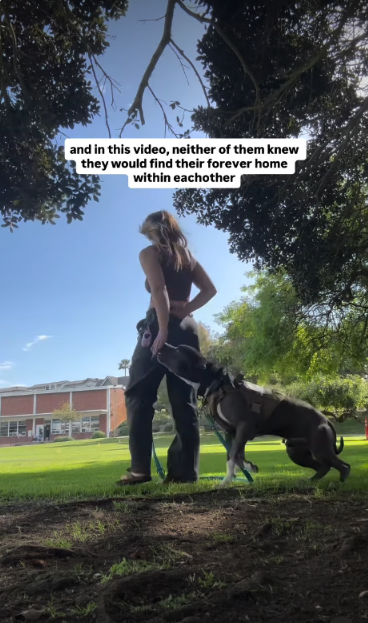
At first, the foster mom tried to stay practical. She reminded herself that fostering is about helping dogs move forward, not necessarily keeping them forever.
She focused on routines, decompression, and helping the dog feel secure enough to eventually transition into a permanent home.
But the dog kept making that emotional distance harder and harder to maintain.
She started greeting her foster mom with overwhelming excitement every morning, as though terrified the connection might disappear overnight.
She leaned into affection constantly, sought comfort nearby, and behaved less like a temporary guest and more like a dog who believed she had finally found her person.
And maybe she had.
The turning point didn’t happen in one giant cinematic moment.
It happened slowly, through everyday life.
Shared routines.
Quiet evenings.
Little habits forming naturally.
The dog learning where she liked to sleep.
The foster mom realizing she was already planning her days around the dog’s happiness without even thinking about it.
That’s the thing about “foster fails.”
They rarely feel like failures at all.
They feel like relationships quietly becoming permanent before anyone officially says so.
Eventually, the emotional truth became impossible to ignore:
This dog wasn’t waiting for another home anymore.
She was already acting like she had found it.
And deep down, her foster mom knew the same thing.
So the temporary arrangement became forever.
The rescue dog officially stayed.
No more uncertainty. No more wondering where she would end up next.
The dog who arrived needing a safe place to land had accidentally done something else entirely—she had created a family.
People outside the rescue world often underestimate how common stories like this really are.
Foster volunteers begin with the intention of helping “just one dog,” only to realize that certain animals connect in ways that don’t feel temporary at all.
Some dogs heal and move on.
Others walk into a home and somehow become part of it almost immediately.
This dog clearly knew which kind of story she wanted.
And honestly, dogs are often the first to recognize where they belong.
Long before humans are ready to admit it.
Now, instead of waiting for adoption applications or future meet-and-greets, the once-fostered rescue gets to spend her life exactly where she wanted to be from the start:
Beside the woman she had already decided was “Mom.”