She had no safe place to raise them.
No clean ground. No shelter. No guarantee that tomorrow would be any different from the harsh reality she was already living in.
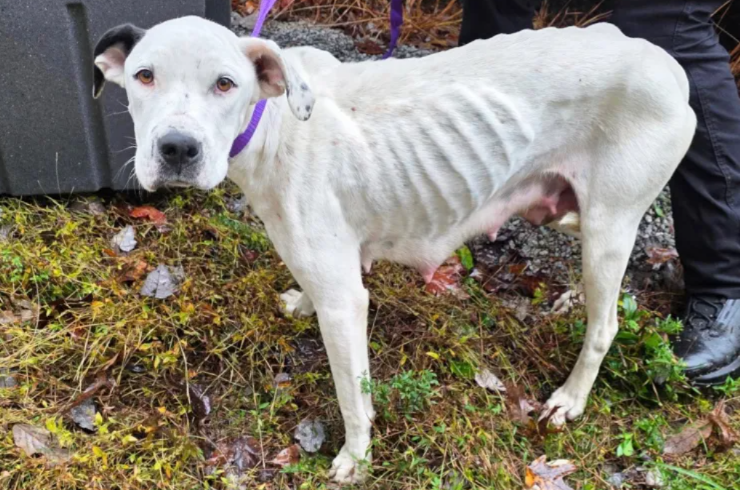
In a rural Tennessee dump site, rescuers made a devastating discovery: a young mother dog named Clementine, surrounded by her nine newborn puppies, trying to survive in conditions no animal should ever face.
The environment told its own story.
A landfill filled with debris, exposure, and danger—no warmth, no protection, and no reliable source of food.
Yet within that chaos, Clementine had done what mothers do instinctively: she created a small space for her puppies and stayed with them.
Even when she had nothing herself.
When Animal Rescue Corps teams arrived as part of a large emergency operation, they found not only Clementine and her litter, but other dogs also struggling in the same dumping area.
The situation wasn’t isolated—it was part of a wider pattern of neglect affecting multiple animals in the region.
For Clementine, the condition she was in reflected the toll of survival under extreme stress.
Malnutrition, illness, and exhaustion had taken hold, yet she remained alert and responsive when help finally reached her.
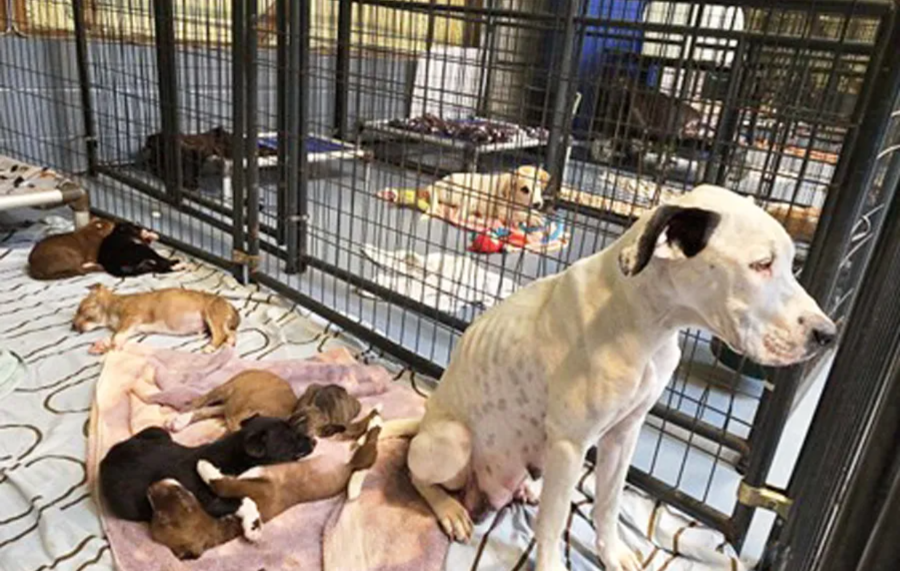
That detail mattered.
Because even in her weakened state, she didn’t retreat from rescuers. She didn’t show aggression or fear-driven resistance.
Instead, she allowed them near her puppies, as if recognizing—somewhere beneath the exhaustion—that this moment might be different.
That trust made the rescue possible.
One by one, the puppies were carefully gathered, while Clementine stayed close, watching every movement.
For a mother who had been surviving day by day in a landfill, the idea of surrendering control over her litter would normally be unimaginable.
But she didn’t resist the help being offered.
She accepted it.
The entire group—Clementine and her nine puppies—was transported out of the dump site and into emergency care, where immediate treatment began.
The first priorities were simple but critical: food, warmth, hydration, and medical attention for parasites and infections that are common in neglected environments like this.
For the puppies, it meant the first real chance at stability.
For Clementine, it meant something even more significant: she no longer had to carry survival alone.
Recovery in rescue settings is rarely instant. It begins with small changes that are easy to overlook but meaningful in context.
Resting without fear. Eating without urgency. Lying down without needing to stay constantly alert.
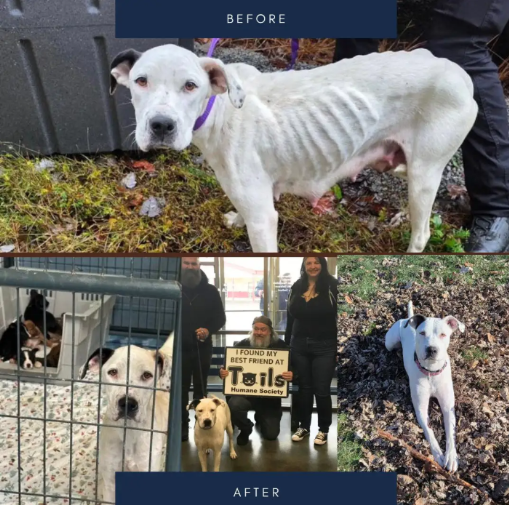
Those moments started to return.
Her body began responding to care. Her energy slowly stabilized.
And perhaps most importantly, the constant tension of protecting her litter in a dangerous environment was replaced by something she had not experienced in a long time: safety.
Her puppies, meanwhile, began to thrive under structured care, receiving the attention and nourishment they had been missing since birth.
The broader rescue effort also highlighted a difficult reality—dumped and abandoned dogs remain a recurring crisis in rural areas where resources are limited and oversight is stretched thin.
Operations like this one often involve multiple animals in distress, not just a single case.
But even in the face of that scale, individual stories still stand out.
Clementine’s is one of them.
Because she didn’t just survive abandonment.
She protected life through it.
And when help finally arrived, she didn’t just receive rescue.
She received the chance to see her puppies grow somewhere they would never have to start life in a landfill again.