When most people think about keeping their dog healthy, they think of annual checkups, vaccinations, medications, and emergency vet visits.
And while those things are incredibly important, many dog owners are discovering that health isn’t just about treating illness—it’s also about supporting the whole dog.
That’s where holistic care comes in.
Holistic care focuses on the complete well-being of a dog, including physical health, emotional balance, nutrition, mobility, and stress levels.
Rather than concentrating solely on symptoms, holistic approaches aim to improve a dog’s overall quality of life and help the body function at its best.
Many veterinarians today combine traditional medicine with carefully selected holistic therapies to create a more comprehensive approach to canine health.
The growing interest in holistic care isn’t about replacing veterinary medicine. Instead, it’s about adding more tools to help dogs feel their best.
What Does Holistic Care Mean?
At its core, holistic care looks at the entire picture.
For example, if a dog is experiencing joint discomfort, the solution may involve more than medication alone.
Nutrition, exercise, stress reduction, physical therapies, and environmental factors may all play a role in helping that dog feel better.
Every dog is different. A senior dog struggling with mobility has different needs than a young dog dealing with anxiety.
Holistic care recognizes these differences and seeks individualized solutions.

The Power of Canine Massage
Most dog owners know their pets love being touched, scratched, and petted. But massage goes far beyond simple affection.
Canine massage may help improve circulation, reduce muscle tension, support recovery from minor strains, and ease stress and anxiety.
Some practitioners also believe massage can support immune function and improve overall relaxation.
Many dogs quickly learn to enjoy massage sessions because they create both physical comfort and emotional connection.
An added benefit is the strengthening of the bond between dog and owner.
The simple act of slowing down and spending focused time together can be incredibly valuable.
Nutrition: The Foundation Of Wellness
If there is one area where holistic and traditional veterinarians often agree, it’s nutrition.
A balanced diet plays a major role in a dog’s overall health.
The right combination of protein, vitamins, minerals, and healthy fats supports everything from energy levels and muscle maintenance to skin, coat, and digestive health.
For dogs dealing with food sensitivities, allergies, digestive issues, or weight concerns, dietary adjustments can sometimes make a dramatic difference.
Proper nutrition isn’t a quick fix—it’s a long-term investment in your dog’s future health.
Acupuncture Is No Longer Just For Humans
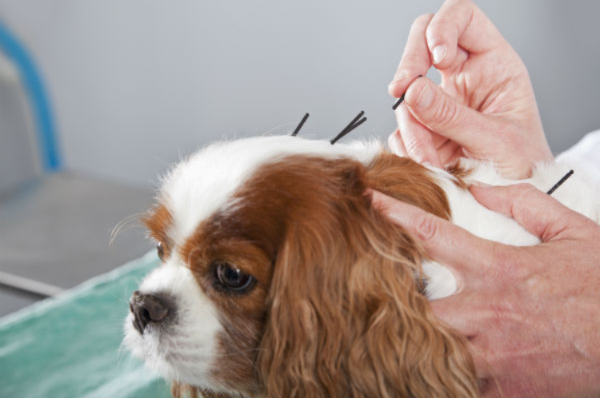
Acupuncture has been practiced for thousands of years and has become increasingly common in veterinary medicine.
The treatment involves placing very thin needles into specific points on the body to stimulate nerves, circulation, and natural healing responses.
Some veterinarians use acupuncture as part of treatment plans for dogs experiencing arthritis, mobility issues, chronic pain, allergies, or digestive problems.
Many owners are surprised by how calm dogs remain during treatment sessions. Some even relax enough to nap.

Acupressure: A Needle-Free Alternative
For owners who aren’t comfortable with acupuncture, acupressure offers a gentler alternative.
Based on similar principles, acupressure uses targeted pressure on specific points of the body instead of needles.
Practitioners believe it can help support healing, reduce anxiety, improve circulation, and promote relaxation.
Because it’s non-invasive, many dogs tolerate it exceptionally well.
Can Music Really Help Dogs?
Believe it or not, what your dog hears can affect how they feel.
Research has shown that certain types of music can have a calming influence on dogs.
Classical music, in particular, has been associated with reduced barking and increased relaxation in shelter environments.
Dogs exposed to soothing music often appear calmer and more settled than those exposed to louder, more aggressive sounds.
For dogs that struggle with anxiety, thunderstorms, or separation stress, a carefully chosen playlist may provide an unexpected source of comfort.
Aromatherapy For Anxious Dogs
Dogs experience the world through their noses, making scent an incredibly powerful influence on their emotions.
Some holistic practitioners use carefully selected essential oils to promote calmness during stressful events such as travel, fireworks, thunderstorms, or separation anxiety.
However, because dogs are highly sensitive to smells and some oils can be toxic, aromatherapy should only be used with veterinary guidance.
When used appropriately, scent-based therapies may help create a more relaxing environment.
Finding The Right Balance
Perhaps the biggest misconception about holistic care is that it must replace traditional veterinary medicine.
In reality, the most effective approach is often a combination of both.
A dog with arthritis might benefit from medication, weight management, massage, and acupuncture.
A dog with digestive issues might improve through a combination of veterinary treatment and nutritional adjustments.
Anxiety may respond best to behavior training, environmental changes, and calming therapies working together.
The goal isn’t choosing one side or the other.
It’s giving your dog every reasonable opportunity to feel better.
Because when it comes to our dogs, health isn’t simply about adding years to their lives—it’s about adding comfort, happiness, and vitality to every day they spend with us.