Some dogs don’t need a dramatic rescue story to make people stop scrolling.
They just need a look.
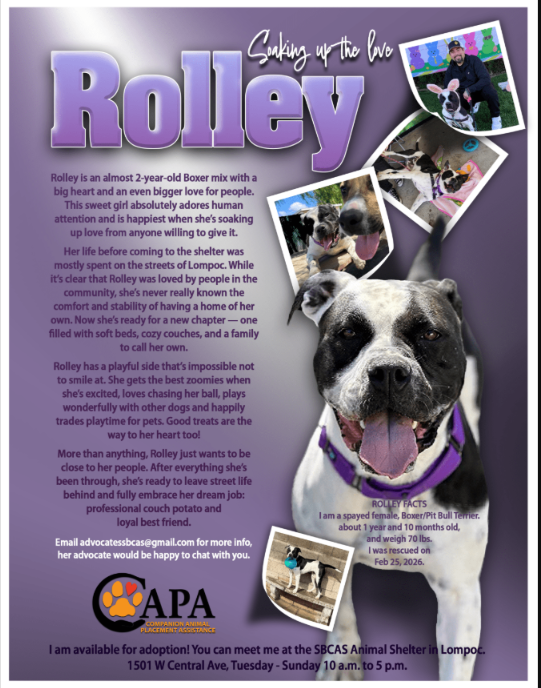
And Rolly is one of those dogs.
Every week, shelters and rescue networks quietly highlight dogs like him — animals waiting for someone to notice them not as “cases” or “statistics,” but as personalities full of life, quirks, and hope.
Rolly is one of those spotlight dogs who instantly stands out.
Not because he’s the loudest in the room.
But because he isn’t.
He’s the kind of dog who doesn’t demand attention the moment you walk in. Instead, he watches first. Studies you.
Waits for the right moment to show you who he is.
And when he does?
It sticks with you.
Dogs like Rolly often end up in rescue programs through no fault of their own.
Sometimes it’s a change in family circumstances. Sometimes it’s timing. Sometimes life simply shifts in a direction no one planned for.
What remains consistent, though, is what these dogs still carry with them:
Their ability to connect.
Shelter staff and volunteers often describe dogs like Rolly as “hidden gems.”
Not because they’re perfect — but because their personalities reveal themselves slowly, in layers.
A little tail wag when someone speaks gently.
A soft lean into a hand after a stressful day.
A quiet willingness to try again, even after everything unfamiliar they’ve been through.
That’s the part people don’t always see.
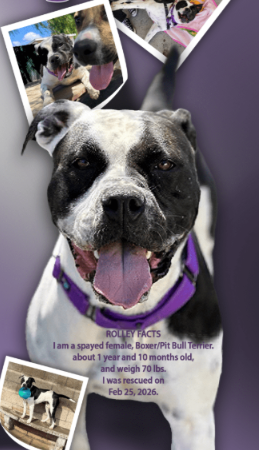
Behind every “Dog of the Week” feature is a real routine. Kennel walks. Feeding schedules. Short bursts of play. Long stretches of waiting.
And in between all of that, dogs like Rolly continue to hope that today might be different.
That someone might finally choose them.
Rescue advocates often say adoption isn’t about finding the “perfect” dog.
It’s about recognizing the right one.
Because perfection doesn’t exist in shelters. What exists instead are dogs with histories, personalities, habits, fears, and bursts of unexpected joy.
And when someone finally connects with one of them, something changes on both sides.
The dog stops being “available.”
They become home.
What makes Rolly’s kind of story so powerful is how ordinary it really is.
There’s no big headline moment.
No dramatic twist.
Just a dog waiting in a system filled with noise, hoping the right person slows down long enough to notice him.
And sometimes, that’s all it takes.
One person who doesn’t scroll past.
One moment of recognition.
One decision that changes everything for a life that had been quietly waiting in the background.
Rolly represents thousands of dogs just like him — each one carrying their own version of patience, resilience, and quiet optimism.
They don’t ask for much.
Just a chance to be seen as more than where they are right now.
And for the people who do see them?
It usually becomes a story they never forget.
Because once a dog like Rolly finds their person, it rarely feels like adoption.
It feels like they were always meant to meet.