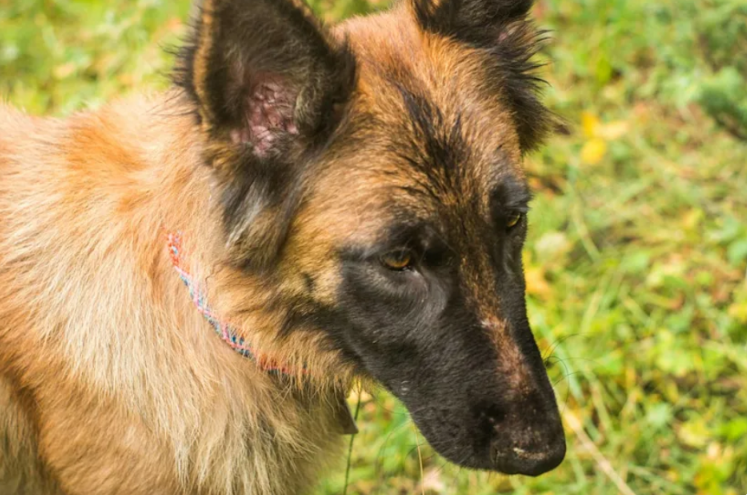
She was already running out of time.
A pregnant German Shepherd mix, sitting inside a crowded shelter, was facing an outcome no expectant mother should ever have to consider—euthanasia due to lack of space and limited options.
And yet, even in that overwhelming situation, she wasn’t forgotten.
Someone saw her.
And everything shifted.
At the shelter, her condition made it clear she was close to giving birth.
Her body carried the unmistakable signs of imminent labor, and the urgency of her situation meant there wasn’t much time to act.
In many overcrowded facilities, difficult decisions are made daily, often based not on health or temperament, but on capacity.
She was on that list.
But before that outcome could be carried out, a rescuer stepped in.
A young man, moved by her situation, made the decision to pull her from the shelter just in time.
It wasn’t a complicated plan or a large organization effort at first—it was a direct, immediate intervention driven by urgency and compassion.
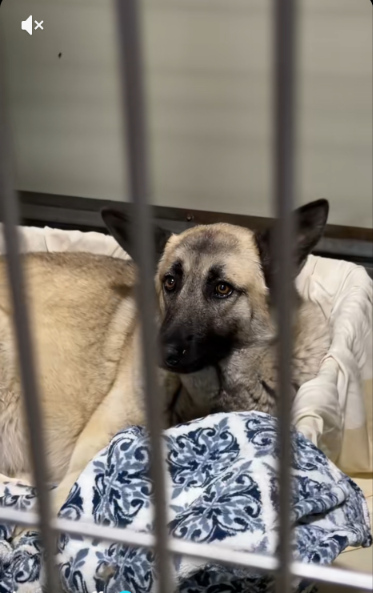
When he arrived, she was nervous and shut down, as many shelter dogs are when overwhelmed by stress and unfamiliar surroundings.
Her body language reflected uncertainty, likely the accumulation of everything she had already endured: abandonment, confinement, and pregnancy under pressure.
But leaving the shelter was only the first step.
The real work began afterward.
In her new environment, she initially struggled to relax. She kept her distance, staying in corners and observing cautiously.
For a pregnant dog in a completely new space, that reaction is not unusual.
Trust doesn’t reset instantly just because the location changes.
It has to be rebuilt.
Slowly.
Through consistency, calm handling, and time without pressure.
As she began to settle, her behavior started to shift in subtle but important ways. The tension in her posture softened.
Her movements became less guarded.
She started to recognize patterns—when food arrived, when humans entered the room, when nothing bad followed those moments.
Those small confirmations matter more than they seem.
Especially for a dog carrying puppies, where stress levels can impact both comfort and stability.
With continued care, she began to show signs of adjustment.
Not dramatic transformation, but steady progress—the kind that signals a dog is beginning to understand she is no longer in immediate danger.
Her rescuer’s role extended beyond simply getting her out of the shelter.
It became about preparing her for what comes next: giving birth in a safe environment, raising her litter, and eventually transitioning into a stable home where she can recover from the instability she came from.
Stories like this often hinge on timing.
Minutes can matter.
Hours can decide outcomes.
In this case, intervention came before it was too late.
And that made all the difference.
What stands out most isn’t just the rescue itself, but what it represents: how quickly a life can move from a list no one wants to be on… to a future that suddenly exists again because someone chose not to look away.
For this German Shepherd mix, the story didn’t end in a shelter kennel.
It continued somewhere safer.
Somewhere quieter.
Somewhere she finally had a chance to bring her puppies into the world without fear.