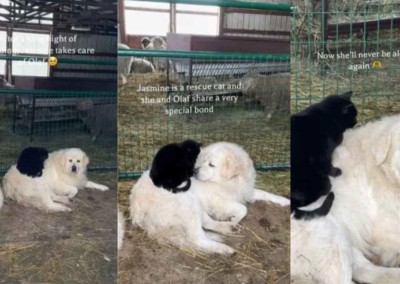
Rescue dogs have a way of changing our homes—but they also carry something with them that quietly changes us too.
It’s not always the dramatic transformation people expect. It’s not just about weight gain, shiny coats, or learning new routines.
Sometimes, the most powerful changes are the small behaviors that stay for life.
The little habits. The emotional echoes. The subtle ways a dog shows, again and again, that they’ve learned what safety feels like.
For many rescue dogs, those habits don’t fade with time.
They deepen.
One of the most common is what owners describe as “staying close.”
A rescue dog who has experienced instability or abandonment often develops a strong need to remain near their person.
They follow from room to room, not out of disobedience or curiosity, but because proximity equals security.
If you sit down, they sit near you.
If you move, they move too.
It becomes less of a behavior and more of a rhythm.
Another lifelong trait is sensitivity to emotional tone.
Rescue dogs often become highly attuned to shifts in their owner’s mood—softening when things feel calm, becoming alert when tension rises, and offering quiet presence when sadness appears.

It’s not that they understand human problems.
It’s that they understand emotional weather.
And they respond to it.
Many also develop what looks like “gentle dependency” on physical reassurance. Leaning into legs. Resting their head on a lap.
Nudging a hand for contact. These aren’t random affectionate gestures—they’re learned confirmations that nothing is being lost again.
Even after years in a safe home, some dogs still repeat these behaviors daily.
Not because they are anxious in the present.
But because comfort becomes a habit they never want to unlearn.
There are also quieter, less obvious behaviors that often stay with rescue dogs for life. Some remain cautious around sudden movements.
Others hesitate briefly before entering new spaces.
And many show heightened awareness in unfamiliar environments, scanning and assessing before relaxing.
These aren’t signs of ongoing trauma in every case.
They’re signs of experience.
A memory of what uncertainty once felt like—and a contrast to the stability they now have.
On the positive side, rescue dogs also carry forward behaviors that reflect deep emotional growth.
Once they feel safe, many become intensely affectionate, almost “clingy in love.”
They may bring toys to their humans, initiate contact more often, or choose to sleep as close as possible at night.
Not because they are afraid of being alone.
But because closeness has become meaningful.
Perhaps the most remarkable long-term change in rescue dogs is their ability to adapt emotionally to new definitions of family.
Over time, they stop reacting to life as something to survive and begin engaging with it as something to enjoy.
Walks become exploration instead of caution.
Rest becomes comfort instead of alertness.
Play becomes trust instead of uncertainty.
And even years later, those first moments of safety can leave a lasting imprint on how they interact with the world.
It’s also why rescue dogs often form such powerful bonds with their people.
They don’t just “like” their owners—they recognize them as the source of stability in a life that once lacked it.
That recognition shows up in everyday ways.
A glance from across the room.
A quiet follow into another space.
A soft lean that says, I’m here because you are.
And while every rescue story is different, they all share something in common: once a dog learns they are safe, they carry that knowledge forward for the rest of their life.
Not as a memory they revisit.
But as a way of living.
And that’s what makes their behavior so enduring.
It’s not just what they do.
It’s what they’ve learned the world can be.