A late-night chase through gardens, fences, and muddy ground ended in one place the suspect thought might save him:
A shallow river.
He was wrong.
What followed was a dramatic police pursuit that quickly turned into one of those moments officers don’t forget — not because of chaos, but because of how fast it ended once the dog unit arrived.
The man, a repeat offender linked to multiple thefts, had already tried everything to avoid capture.
He climbed out of a window. He scrambled across rooftops. He sprinted through backyards hoping distance and darkness would be enough.
But police weren’t relying on luck.
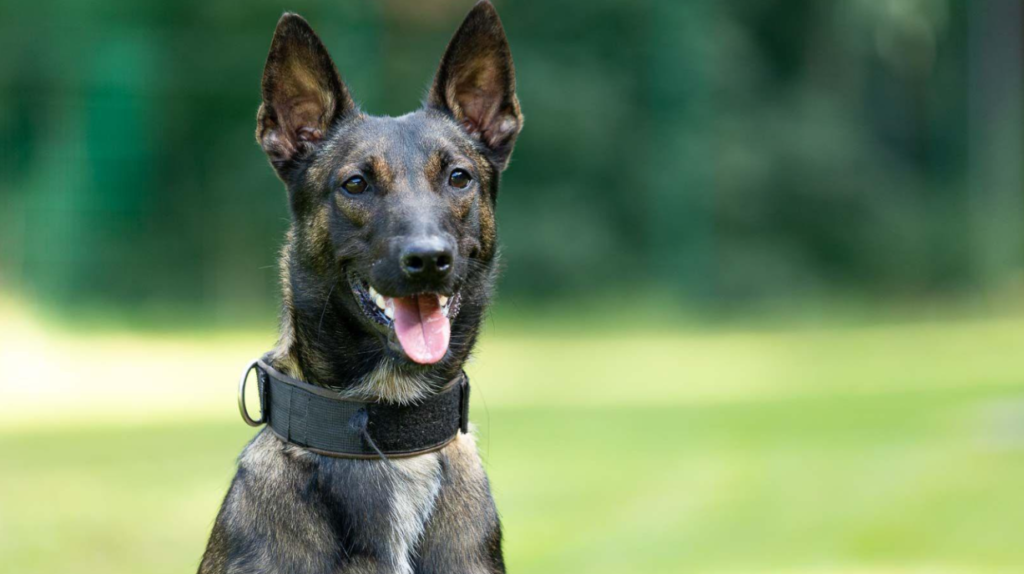
They brought a K9 unit.
And that changed the entire equation.
Once the officers reached the riverbank, the situation narrowed into something almost cinematic.
A handler stepped forward, scanning the shallow water where the suspect was trying to stay low and hidden.
Then came the release command.
The police dog — trained for tracking, pursuit, and apprehension — entered the river without hesitation.
Within moments, the chase collapsed into contact.
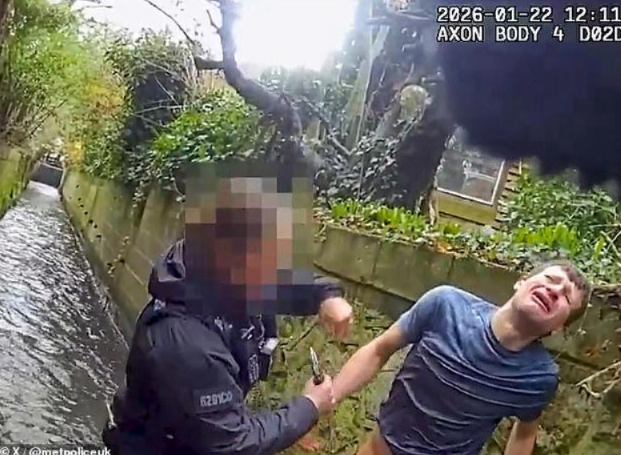
The dog closed the distance rapidly, locating the suspect in the water and engaging him as officers moved in from the bank.
The sudden confrontation caused the man to lose balance, and he was quickly brought under control in the shallow stream.
What makes incidents like this so striking isn’t just the arrest itself — it’s the speed.
Modern police dogs are trained for scent tracking under extreme conditions: water, dense vegetation, urban clutter, and night operations.
Once deployed, they can eliminate hiding advantages that human officers might miss.
In this case, the river didn’t provide cover. It only slowed the suspect down.
The dog didn’t hesitate.
Neither did the officers behind it.
Within minutes of entering the water, the situation shifted from active pursuit to full restraint and arrest, with the suspect taken into custody on-site.
Footage from similar K9 deployments often shows the same pattern: a suspect attempts a final escape route — often water, bushes, or tight terrain — only to be located almost immediately once the dog unit arrives.
Experts attribute this to the dog’s highly refined scent tracking ability, which remains effective even in wet or mixed environments.
But beyond the technical side, these moments also highlight something more fundamental about K9 policing:
Control through partnership.
Handlers and dogs operate as a single system. The officer reads the environment.
The dog reads the ground. Together, they close gaps that fleeing suspects rely on.
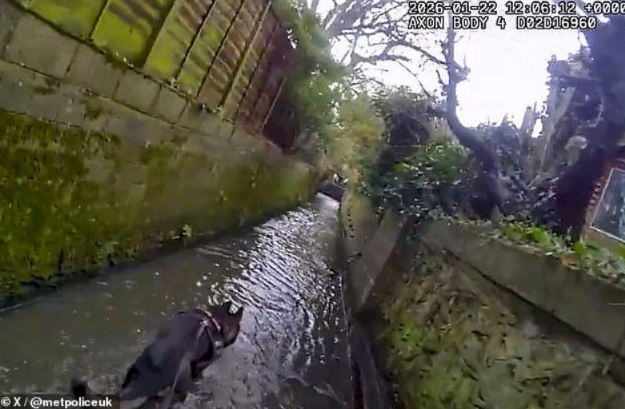
And when that system engages, distance stops mattering very quickly.
In this case, the river — which likely felt like a boundary or escape route — became just another terrain feature.
Not an exit.
Not protection.
Just another place where the chase continued until it was over.
After the arrest, the suspect was detained and later processed for multiple offenses linked to a wider pattern of theft and criminal activity.
Authorities credited the K9 unit for ensuring the situation was resolved quickly and without further escalation.
Stories like this tend to go viral for obvious reasons — the imagery is immediate, the sequence is fast, and the outcome is decisive.
But underneath that attention-grabbing surface is a consistent reality of modern policing:
When a trained dog is deployed in a pursuit, the window for escape narrows dramatically.
And for the people on the wrong side of that moment, it usually closes in the least forgiving place possible — right where they thought they were safest.