Some dogs wait for a home.
Others try to find one.
And then there are dogs like him—who decide waiting is no longer an option.
It started inside a shelter, where life is supposed to be safe, structured, and temporary.
But for this determined dog, “temporary” didn’t feel good enough.
Something inside him kept pushing forward, as if he already understood that his future wasn’t meant to be behind kennel walls.
So he made a choice.
He escaped.
Not out of panic. Not out of chaos.
But with purpose.
Once free from the shelter, he didn’t run aimlessly like a frightened stray might. Instead, he did something far more intentional—he went looking for a home.
Not just any home.
His home.
The idea sounds almost impossible at first. Dogs don’t exactly “plan” futures the way people do.
But anyone who has spent time around them knows something important: dogs remember safety.
They remember comfort. They remember where they feel like they belong.
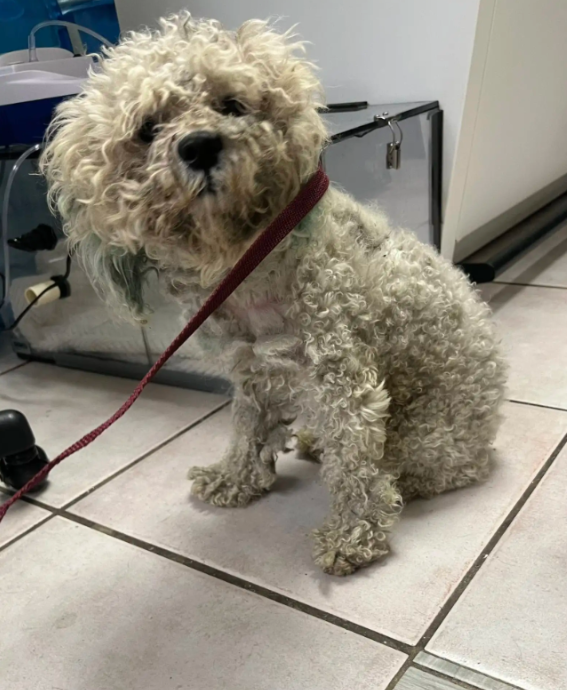
And sometimes, they act on it.
After breaking out of the shelter, this dog moved through the world with surprising clarity.
Instead of disappearing into confusion or hiding, he stayed focused on something only he seemed to understand.
He wasn’t just escaping confinement—he was searching for connection.
Somehow, that search led him beyond the shelter grounds and into the wider world where possibility still existed.
For shelter staff, discoveries like this are always a mix of shock and concern.
A dog escaping isn’t just a logistical problem—it’s a safety risk. But in this case, there was also something else: curiosity.
Because the behavior wasn’t random. It was directed.
And eventually, that direction led to something unexpected.
He was found again.
But the story didn’t end there.
Because what became clear through everything he did was simple: this wasn’t a dog trying to run away from something.
He was running toward something.
Toward stability.
Toward belonging.
Toward the idea of a home that felt right enough to search for on his own.
Once he was safely back in care, people began paying closer attention to what his behavior was really saying.
Not just “escape artist.” Not just “shelter challenge.” But a dog with a strong sense of attachment and determination—traits that, in the right environment, often translate into deep loyalty.
And that’s where the story begins to shift.
Because dogs like this don’t thrive under restriction alone. They thrive when they’re understood.
When their behavior isn’t treated as defiance, but as communication.
Somewhere along the way, someone did understand.
And that changed everything.
A plan was set in motion—not just to keep him contained, but to give him a real path forward. A home that wouldn’t just prevent escapes, but remove the need for them altogether.
A place where he wouldn’t have to search anymore.
Because he’d already arrived.
Now, instead of pacing shelter corridors or testing boundaries, his future looks different. Less about confinement.
More about connection. Less about preventing escape. More about building trust so deep he wouldn’t want to leave in the first place.
His story became more than a tale of a dog who broke out of a shelter.
It became a reminder that behavior always has meaning.
Sometimes “escape” isn’t rebellion.
It’s direction.
And sometimes, when a dog refuses to wait, it’s because he already knows something the world hasn’t caught up to yet:
Home isn’t just where you’re placed.
It’s where you decide to stay.