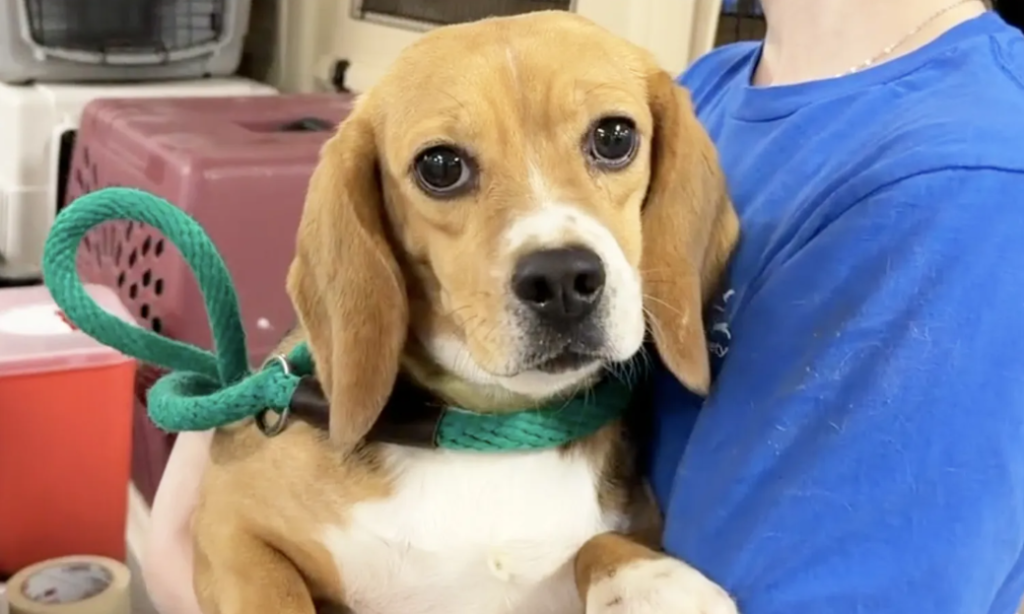
Forty-nine beagles are finally getting a chance to live the life they were always meant to have.
After spending years inside a Wisconsin breeding and research facility, the dogs are now stepping into a completely different world—one filled with grass, gentle hands, and the possibility of real homes.
For most of their lives, these beagles knew only confinement.
They were part of a large-scale operation at a biomedical breeding facility in Blue Mounds, Wisconsin, where dogs were raised for research purposes.
The environment they came from was tightly controlled, and for many of them, the outside world simply didn’t exist in any meaningful way.
Now, that world is changing.
Through a coordinated rescue effort led by animal welfare organizations, 49 beagles were removed from the facility and transferred to partner shelters, where they are beginning the long process of recovery and rehoming.
It’s not an instant transformation.
When the dogs first arrive, they don’t immediately become the playful, tail-wagging companions most people imagine when they think of beagles.
Instead, they decompress.
They observe.
They learn.
Many of them are experiencing grass under their paws for the first time.
Some are encountering leashes, toys, and human affection in a way that doesn’t feel threatening.
Others are still unsure whether gentle hands mean safety or something else entirely.
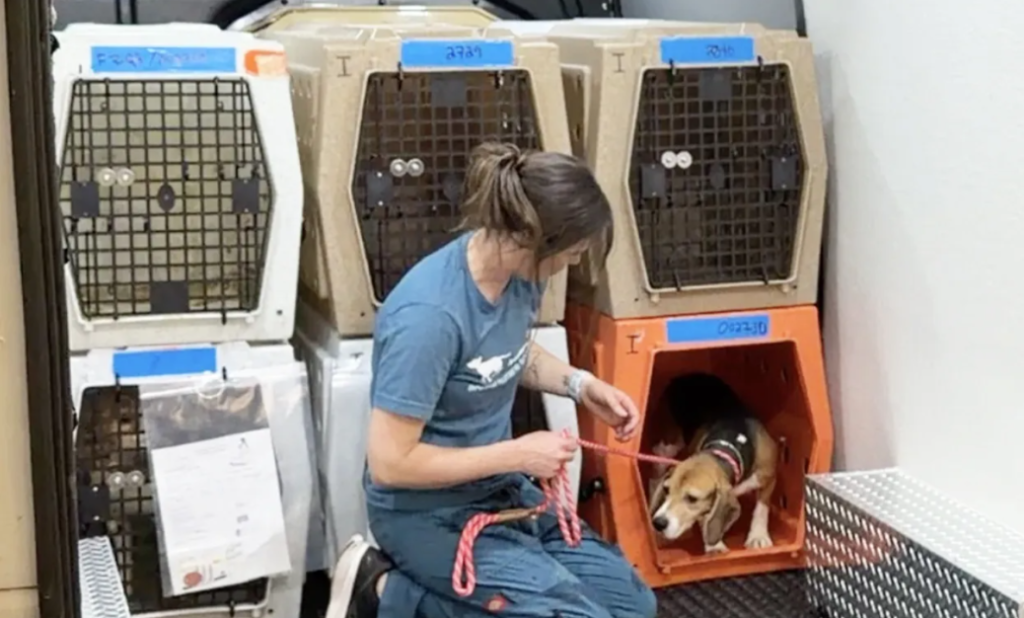
That’s why the first stage of their journey isn’t adoption—it’s rehabilitation.
Each dog is undergoing medical evaluations and behavioral assessments to understand their physical condition and emotional readiness for adoption.
Veterinarians and shelter staff are looking for everything from untreated medical issues to signs of stress, fear-based behavior, and socialization gaps.
These assessments help determine what each individual dog needs before they can be placed into a home.
And the truth is, each beagle will need something slightly different.
Some will adjust quickly.
Others will take months to fully understand what safety feels like.
But there is one shared trait rescuers keep noticing:
Curiosity.
Even after everything they’ve been through, beagles are naturally investigative dogs.
Shelter staff describe them as drawn to new smells, tentative but interested in human interaction, slowly beginning to engage with toys and soft voices.
It’s a small thing—but in rescue work, small things matter.
A wag that was hesitant yesterday becomes a full tail swing next week.
A dog that once froze in fear begins to approach a hand voluntarily.
A kennel that felt like a prison starts to feel like a pause before something better.
Rescue organizations involved in the effort—including groups like the Animal Humane Society, Tri-County Humane Society, and Ruff Start Rescue—are now focused on preparing the dogs for foster and adoptive homes where they can continue healing in quieter, more stable environments.
Foster families play a critical role in this transition.
They help the dogs learn basic routines: walking on grass, navigating stairs, interacting with household sounds like televisions and vacuum cleaners, and most importantly—learning that humans can be predictable and kind.
For many of these beagles, even simple domestic life is completely new.
A couch is unfamiliar.
A doorbell is strange.
A leash can still feel confusing.
But progress doesn’t happen all at once. It happens in layers.
One of the most powerful parts of rescues like this is how quickly the public responds.
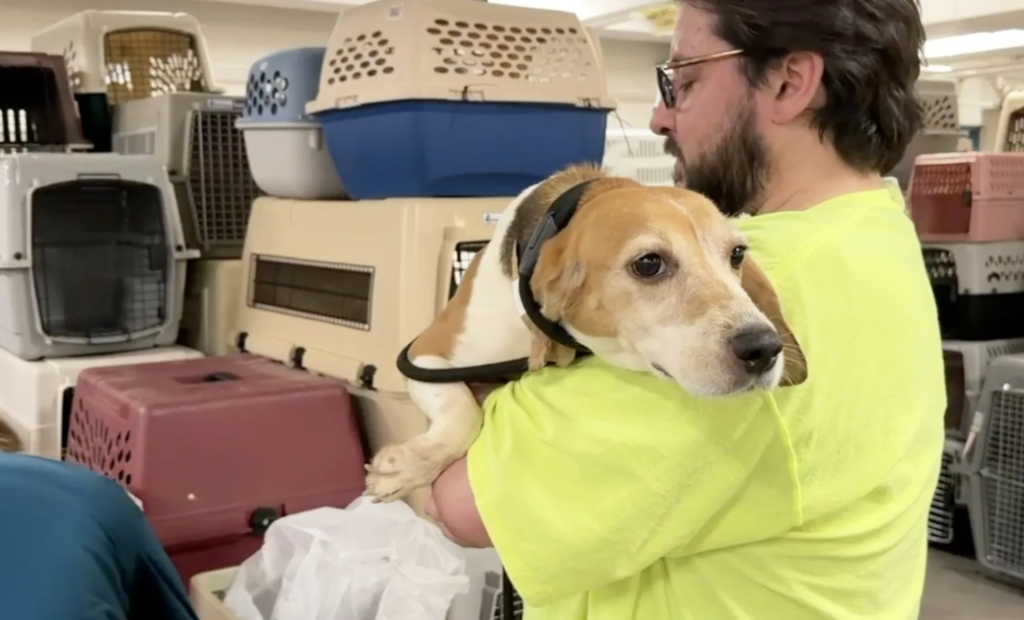
Within days of these dogs being transferred, adoption interest begins to build. Applications rise.
Foster homes open up. Communities step forward to make space for animals who have never truly had a place to belong.
And while the scale of this rescue is significant, it’s also part of a much larger movement.
Thousands of beagles have been released from similar facilities in recent years as pressure from animal welfare organizations and public advocacy continues to grow.
Each rescue carries the same underlying promise:
That what happened before does not define what comes next.
For these 49 beagles, the future is still being written.
It will be shaped by patience.
By consistency.
By people willing to understand that healing isn’t always immediate or linear.
But it will also be shaped by something simple and powerful:
Time spent in safety.
Because once a dog learns that the world isn’t only cages and fluorescent lights…
Everything else becomes possible.
A run through grass.
A nap in sunlight.
A home where footsteps don’t mean fear.
Just life.