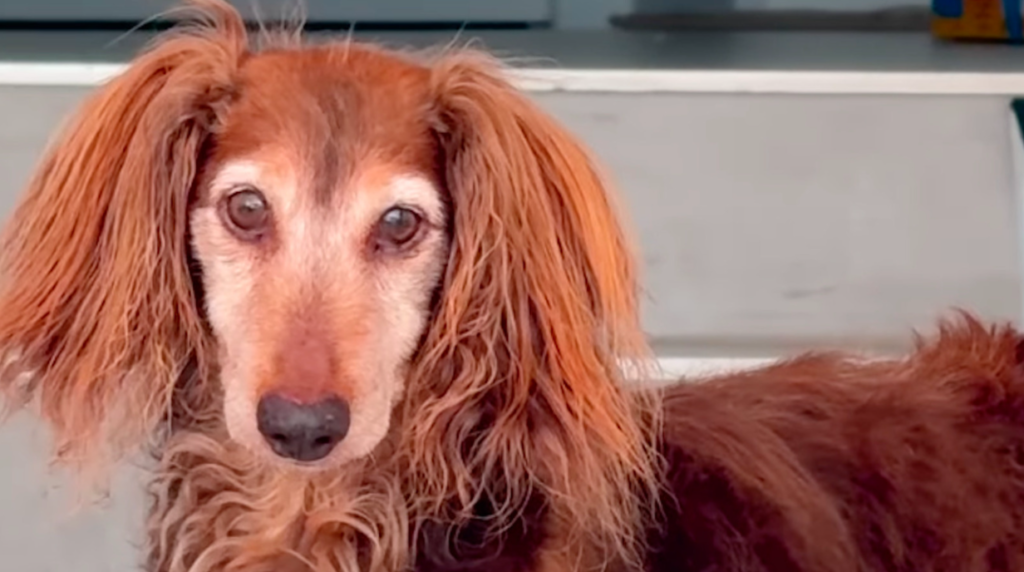
At 15 years old, Charlie has already experienced more change than any dog should have to endure.
The senior Dachshund was adopted by his family two years ago, giving him the loving home he deserved after spending time in a shelter.
But despite having a family who adores him, Charlie still struggles whenever his humans leave the house.
His separation anxiety can be heartbreaking.
When he’s alone, Charlie may bark excessively and become distressed. But as soon as his people return, the difference is remarkable.
The grumpy senior seems to transform into a happy, playful dog who simply wants to be close to the humans he loves.
His family has also gone above and beyond to make their home comfortable for their aging companion.
Because Charlie has short, stubby legs and is now an older dog, they’ve adapted his surroundings to better suit his needs. Their goal isn’t simply to give him a place to live.
They want him to enjoy his golden years.
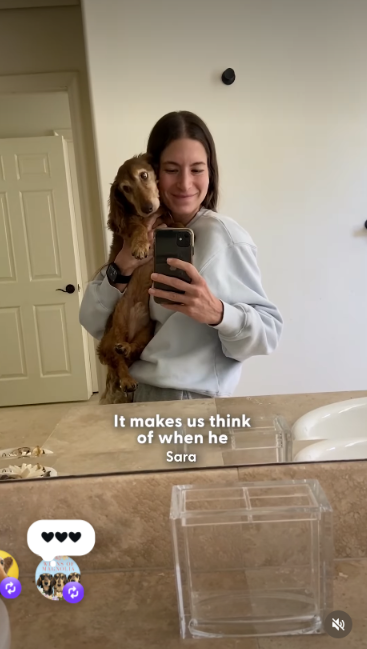
And judging by his personality, Charlie is doing exactly that.
His family describes him as the “perfect mix of grumpy old man and playful puppy,” which seems like a fitting description for a senior Dachshund who can be both hilariously stubborn and incredibly affectionate.
One look at Charlie’s happy moments makes it easy to understand why his family fell in love with him.
He may still cry when they’re gone, but when they’re together, his happiness is obvious.
That lingering anxiety may be connected to his earlier experiences. Dogs who have spent time in shelters or experienced major changes can struggle with being separated from the people they eventually learn to trust.
Separation anxiety can show up in different ways.
Some dogs bark constantly.
Others pace, become fixated on doors or appear unable to settle down when their humans leave.
And some dogs may experience anxiety more quietly, making their distress harder to recognize.
For that reason, paying attention to a dog’s behavior when nobody is home can be important. A camera with both audio and video can help families understand what their pets actually do after they leave.
Professional help may also be necessary when anxiety becomes severe or persistent. Separation anxiety doesn’t necessarily disappear simply because a dog has been in a new home for a long time.
For Charlie, however, his family is clearly committed to helping him feel safe and loved.
And that commitment is especially meaningful because Charlie is a senior dog.
Older dogs are sometimes overlooked by adopters who are searching for puppies or younger pets. But Charlie’s story shows how much love can still be waiting behind a gray muzzle.
Senior dogs have personalities that are already established. They can be affectionate, playful, funny and deeply devoted to their families.
They also deserve the opportunity to spend their later years surrounded by people who won’t give up on them.
Charlie may have some quirks.
He may be a little grumpy.
He may still bark when his humans leave.
And he may need a home designed around his aging body.
But none of that makes him less deserving of love.
If anything, those details make his story more meaningful.
After spending part of his life without a family, Charlie finally has people who understand him.
They’ve made room for his needs, accepted his imperfections and given him a safe place to grow old.
And when they’re home, Charlie gets to do what every dog should be able to do: enjoy being loved.
His story is a gentle reminder that rescue dogs don’t need to be perfect to deserve a second chance.
Sometimes, they just need someone willing to stay.