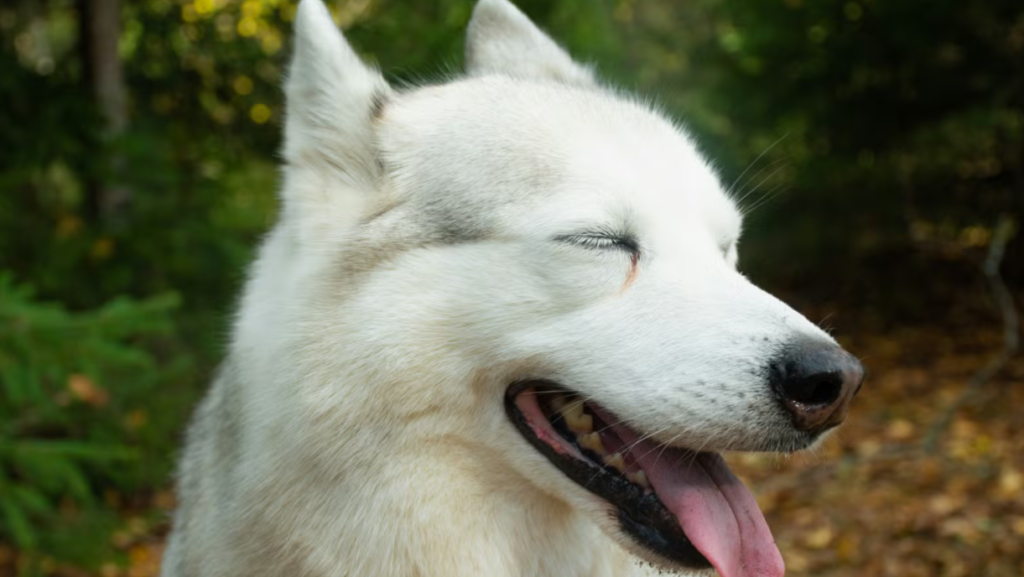
Sometimes, the best friendships happen between two souls who understand each other without saying a word.
That seems to be exactly what happened when Fenix, a Husky mix known for his joyful personality, met Ivy, a Pit Bull with something very important in common with him: both dogs have cerebellar hypoplasia.
For Fenix, learning to navigate the world with the neurological condition has simply become part of everyday life.
He may move differently from other dogs, but that hasn’t stopped him from being happy, playful and full of personality.
Then Ivy came along.
The moment the two dogs met, it became clear that they had found something special in one another.
Instead of worrying about the way either dog moved, they simply did what dogs do best: they sniffed, explored, played and enjoyed each other’s company.
Their friendship was captured on video, beginning with their first meeting and eventually turning into an adorable play session.
Watching the pair together is almost like watching a tiny dance routine.
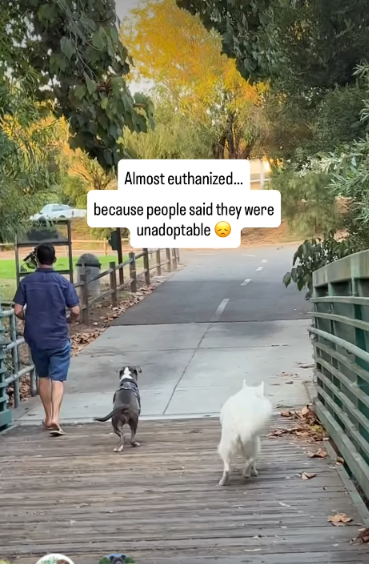
Their movements may be a little unsteady, with the occasional wobble or exaggerated step, but neither dog seems particularly concerned. They are simply having fun.
And that’s what makes the video so touching.
For Fenix and Ivy, there is no awkwardness or judgment. They don’t seem to notice that they move differently. They just recognize another dog who wants to play.
Cerebellar hypoplasia is a neurological condition that affects coordination.
Dogs with the condition may wobble, stumble or have exaggerated movements because the cerebellum, the part of the brain involved in coordinating movement, did not develop normally.
Although the condition can affect how a dog gets around, it does not define who that dog is.
Fenix is a perfect example.
His life may require some adaptation, but his condition hasn’t taken away his ability to enjoy the world. And meeting Ivy gave him an opportunity to share that experience with another dog who understands it firsthand.
Their friendship also sends an important message to people considering adoption.
Dogs with neurological conditions, disabilities or other special needs are sometimes overlooked simply because they don’t move or behave exactly like other dogs.
But a diagnosis doesn’t erase their personalities, their capacity for affection or their ability to experience happiness.
In fact, Fenix’s family hopes his story encourages people to look beyond appearances when searching for their next companion.
Special-needs dogs may need some additional accommodations and patience, but they can still have incredibly fulfilling lives.
And sometimes, they can even find a best friend who makes everything feel a little easier.
For Fenix and Ivy, their connection seems wonderfully uncomplicated. They don’t need to explain their differences to each other.
They simply play, move, communicate and enjoy being together.
Their movements might not be perfectly coordinated by traditional standards, but when the two pups are side by side, it looks almost like they have created their own special language.
And perhaps that’s the sweetest part of all.
Neither dog needed to be “fixed” before they could have fun.
They just needed a chance to be themselves — and each other.
Their joyful friendship is a beautiful reminder that sometimes the best companion is the one who understands exactly what it’s like to see the world from your perspective.
Related posts:
 After Surviving Alone, This Sweet Dog Found One Tiny Treasure He Won’t Let Go
 These Four Puppies Chose the Right Person to Ask for Help—And It Changed Their Lives Forever
 He Was Barely Hanging On—Now This Once-Neglected Street Dog Is Unrecognizable
 Stray Dog Went Door to Door Begging for Help—One Family Finally Changed Her Life
Best collection of slots I have seen in a while. Everything loads fast and the gameplay is very addictive. jili00games
I’ve tried a few sites lately but this one is surprisingly smooth. The payouts are quick and the interface is easy to navigate. Definitely worth a visit vx7775