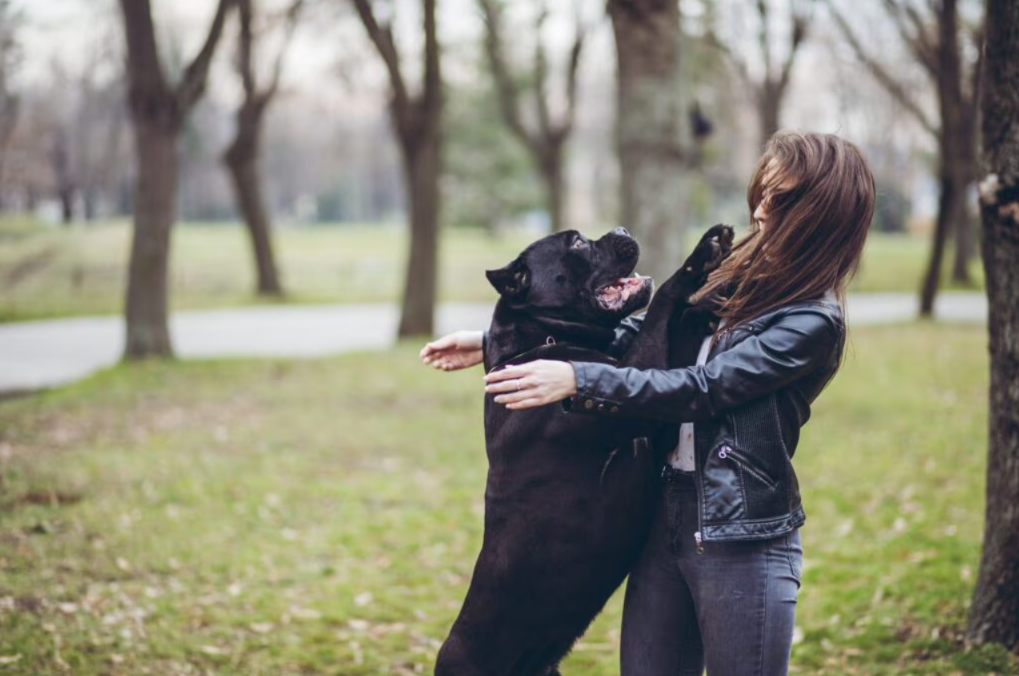
The door opens.
Your dog spots a visitor.
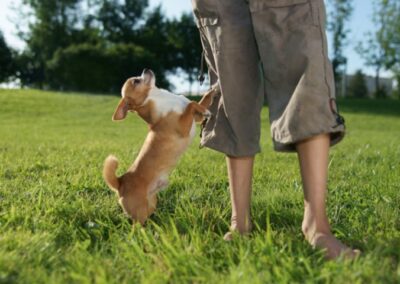
And before anyone can say hello, your enthusiastic four-legged greeter is already jumping, pawing, and leaving muddy prints on someone’s clothes.
Sound familiar?
If your dog turns every greeting into a full-body celebration, you’re certainly not alone.
Jumping is a common canine behavior, and while it often comes from excitement rather than aggression, it can quickly become a problem.
Large dogs can knock people off balance. Smaller dogs can scratch legs or damage clothing.
And guests who aren’t comfortable around dogs may find the whole experience overwhelming.
The good news? You don’t need to punish your dog to change the habit.
You need to teach a better way to say hello.
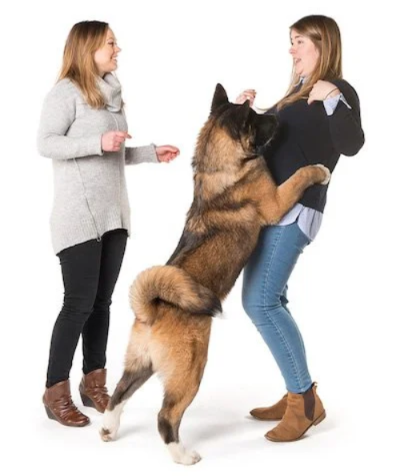
Why Dogs Jump on People
From your dog’s perspective, jumping makes perfect sense.
Dogs are social animals. They often greet one another face-to-face, and jumping helps them get closer to a person’s face.
There’s another reason the behavior sticks around: attention.
When your dog jumps, people may talk, laugh, touch them, or push them away. Even negative attention can feel rewarding to a dog who simply wants interaction.
In other words, your dog may have learned that jumping works.
The solution is to change what gets rewarded.
1. Stop Rewarding the Jump
When your dog jumps on you, resist the urge to push them away, grab their paws, or shout.
Those reactions can accidentally turn the greeting into a game.
Instead, calmly turn away or step back. Avoid talking to, touching, or making eye contact with your dog while they’re jumping.
The instant all four paws return to the floor, offer calm praise and attention.
Your dog begins learning a simple rule: jumping makes attention disappear, while standing calmly brings it back.
Everyone in the household needs to follow the same rule. If one person rewards jumping with excited petting while another ignores it, your dog receives mixed signals.
Consistency is essential.
2. Teach Your Dog to Sit for Greetings
Ignoring unwanted behavior is helpful, but teaching your dog what to do instead is even better.
A simple sit can become your dog’s new way of saying hello.
Start practicing when things are quiet. Ask your dog to sit, then reward them with a treat, gentle praise, or affection.
Once your dog understands the cue, practice approaching them while they sit. If they stand and jump, calmly stop the greeting and try again.
When they remain seated, reward them.
Gradually practice with family members and familiar visitors before trying more exciting situations.
Keep sessions short and make the behavior easy to succeed at. Your dog needs to learn the skill before being expected to use it when excitement is high.
3. Make Greetings Easier to Manage
Training takes time, so don’t give your dog unlimited opportunities to practice jumping while learning.
When visitors arrive, consider keeping your dog on a leash or behind a baby gate. You can also teach them to settle on a mat or in a designated spot.
Ask guests to enter calmly and avoid greeting your dog until they are following your chosen rule.
Treats can help, too. Toss a few onto the floor before your dog jumps. Sniffing for treats encourages them to keep their paws down while giving them something productive to do.
As your dog improves, gradually reduce the treats.
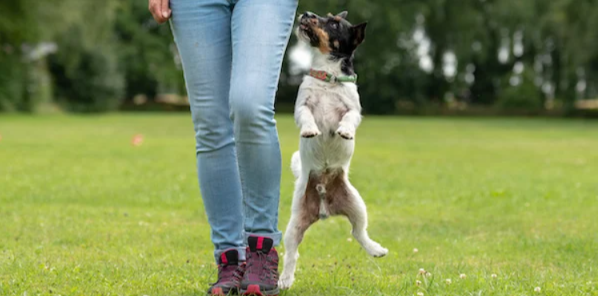
4. Practice Before the Excitement Starts
Don’t wait until the doorbell rings to begin training.
Practice calm greetings with family members in a quiet room or yard. Once your dog succeeds consistently, slowly add distractions.
You can also reward four paws on the floor during everyday moments, such as when you approach your dog after returning home.
The goal is to make calm behavior a habit, not something your dog remembers only when treats appear.
5. Avoid Punishment
Kneeing your dog in the chest, hitting them, stepping on their toes, or using harsh corrections can cause fear, frustration, or injury.
These methods don’t teach your dog how to greet people appropriately.
Positive reinforcement gives your dog a clearer lesson: calm behavior earns the attention they want.
If jumping persists, becomes difficult to manage, or appears connected to anxiety, consult a qualified, reward-based dog trainer or your veterinarian.
The Goal Is a Better Greeting
Your dog isn’t necessarily trying to be difficult. They may simply be excited and repeating a behavior that has worked before.
With patience, consistency, and clear rewards, dogs of all ages can learn more polite greetings.
The next time someone walks through your door, imagine a different scene.
Four paws on the floor.
A wagging tail.
A calm hello.
Your dog can still show their happiness. They just need to learn a safer way to express it.
You don’t have to stop your dog from loving people. You have to teach them how to greet them politely.
Five stars for the customer support! They helped me out with my account in minutes. krluckydayscasino is definitely my new favorite place to hang out.