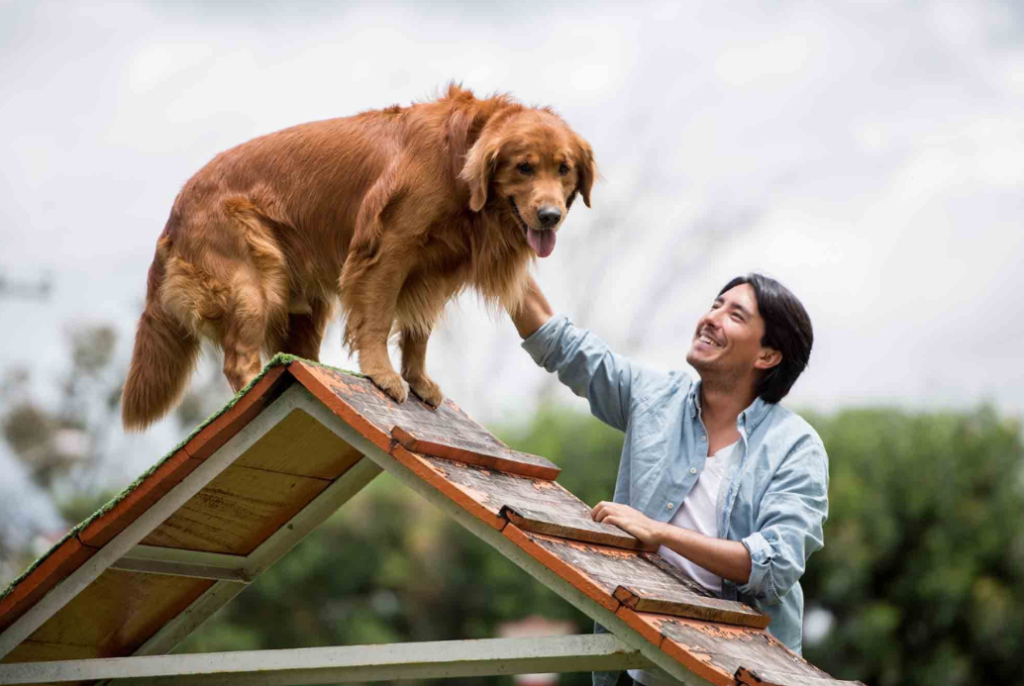
Aging does not mean a dog stops learning.
In fact, senior dogs can be remarkably capable students when training is adjusted to fit their pace, their body, and their needs.
The old “you can’t teach an old dog new tricks” line may be a catchy saying, but it is not how dogs actually work.
Older dogs can still learn new behaviors, polish old ones, and even pick up fun tricks well into their golden years.
That is the good news. The better news is that training an older dog often comes with advantages.
Senior dogs are usually calmer, more focused, and less easily distracted than puppies, which can make the process smoother once you understand how to work with them.
The key is not speed. It is structure, patience, and positive reinforcement.
Older dogs may need more repetitions than younger ones, but they are fully capable of making progress when the teaching is clear and consistent.
The first step is to take a good look at the dog you have in front of you.
Before teaching anything new, it helps to assess what they already know, how they move, and whether hearing, vision, or mobility issues might affect the plan.
A senior dog with arthritis, hearing loss, or reduced eyesight may still learn beautifully, but the training has to match what their body can comfortably handle.
That means observing how they get up, how they navigate stairs, how often they need bathroom breaks, and how they respond to visual or verbal cues.
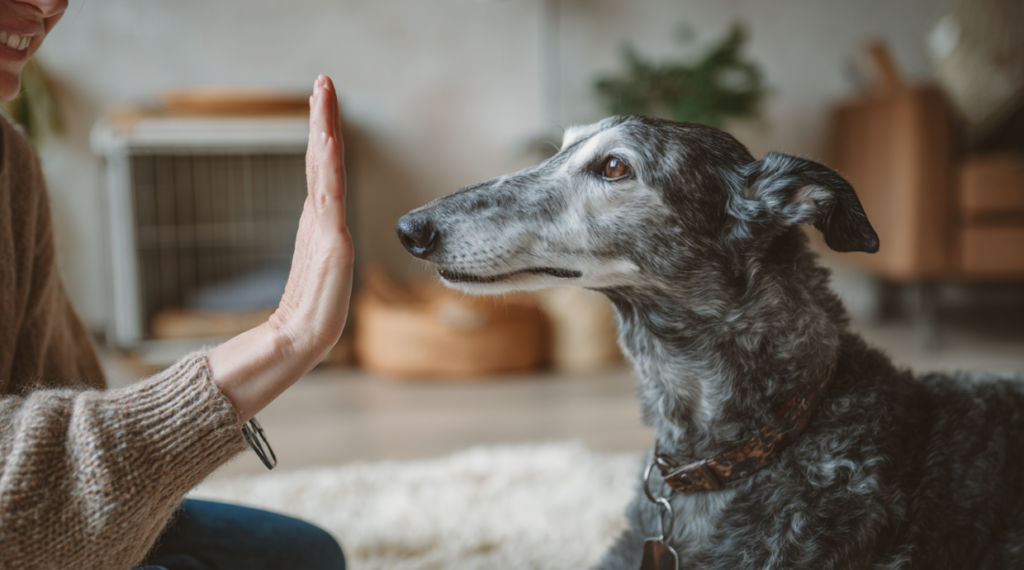
House training is one area where structure matters a lot. A predictable bathroom schedule helps older dogs understand what to expect and reduces accidents.
The same goes for crate training. The crate should be a safe, comfortable retreat, never a punishment.
Soft bedding, gentle encouragement, and positive associations keep the crate useful without turning it into a source of stress.
For senior dogs, comfort and calm are part of the lesson.
When it comes to actual training sessions, less is often more. Short, focused lessons of about 10 to 15 minutes work well for older dogs.
They process more slowly than puppies and can tire more easily, so brief sessions help keep them engaged without wearing them out.
Training at consistent times also helps.
Many older dogs do best when the lesson fits naturally into their daily rhythm, such as before breakfast or after dinner.
Rewards should come quickly, ideally within a few seconds, so the dog can clearly connect the behavior with the payoff.
Basic obedience still matters, even for a senior dog.
Commands like sit, stay, come, and leave it are useful for safety and day-to-day life.
For dogs with hearing loss, hand signals are especially valuable, and for dogs with limited vision, consistency in environment and cueing helps build confidence.
A reliable “come” can be especially important, and it should always lead to something positive so the dog does not learn to associate it with the end of fun or an unpleasant surprise.
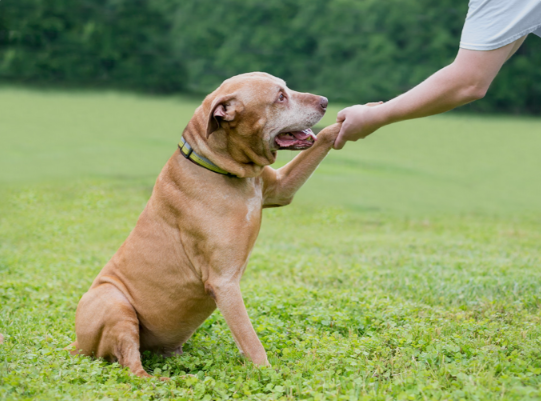
Walking manners also deserve attention. Older dogs often benefit from front-clip harnesses because they reduce pressure on the neck and make pulling easier to manage.
Loose leash walking can be taught in short indoor sessions before moving outside, and the goal is not perfection overnight.
It is gradual improvement. Add distance slowly, watch for fatigue, and keep the experience comfortable enough that your dog wants to keep trying.
Training an older dog is not just about obedience. It is also about keeping the mind active.
Scent games, simple trick work, hide-and-seek with toys, and low-impact puzzle activities all help prevent boredom and give a senior dog something fun to do.
These games can be especially helpful for dogs dealing with hearing or vision changes because they lean into the senses dogs already use best.
And if behavior problems get more serious, it is smart to bring in professional help.
Aggression, severe anxiety, house training regression, or fear that does not improve may need the attention of a certified trainer or veterinary behaviorist.
That is not a failure. It is simply the next level of support for a dog whose age, health, or past experiences are making things harder than they should be.
The bottom line is simple: old dogs can absolutely learn. They just need training that respects who they are now.
With patience, clarity, and kindness, a senior dog can learn new habits, build confidence, and enjoy the mental and emotional boost that comes from working with their person.


https://melodyua.com/song/sabrina-carpenter-tell-em/ — відмінний ресурс для тих, хто хоче завантажити музику безкоштовно. Регулярні оновлення каталогу, якісний mp3. Всім рекомендую спробувати.