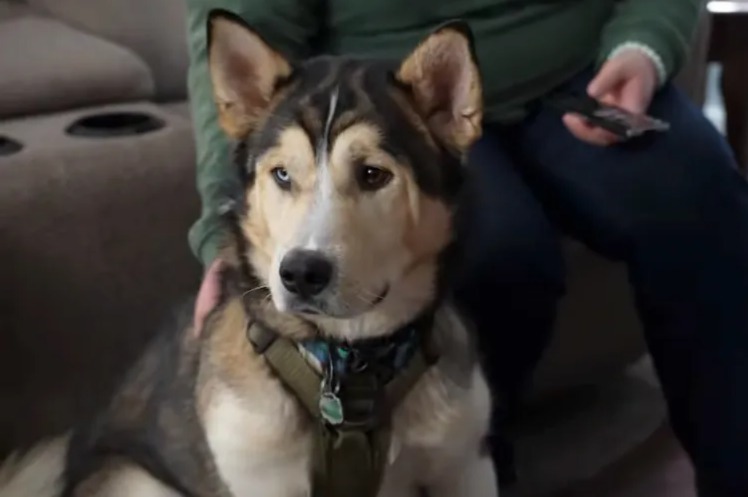
It was meant to be an ordinary outing — just a typical walk and dog park visit for a 2‑year‑old Husky named Nilak. But what happened next turned a peaceful day into a near‑tragedy, reminding pet owners everywhere that even the tiniest thing on the ground can spell danger for curious noses.
Nilak lives in British Columbia, Canada with his owner, Sara Bell, and like many Huskies, he loves sniffing around and investigating whatever he finds.
During a recent walk — one just before Christmas — he picked up a napkin off the ground and swallowed it whole, something he’d done before without incident.
At first, Bell didn’t think much of it because Nilak had a habit of grabbing things off the ground now and then. But partway through the walk, she noticed his behavior change — his head started bobbing, his balance seemed off, and he just didn’t look right.
When they got home, Nilak refused to get out of the car, and that’s when Bell knew this wasn’t normal. Alarmed, she rushed him straight to the veterinarian.
After tests, the shocking diagnosis came: the napkin he had swallowed was contaminated with cocaine, and Nilak was experiencing a drug overdose.
The news hit Bell hard. She later said she “was so certain” she might have to say goodbye to her beloved dog. But emergency care and quick veterinary intervention gave Nilak a fighting chance. He received fluids and supportive treatment, and gradually his symptoms eased. Today, he is thankfully recovering and expected to survive his terrifying ordeal.
Veterinarians and pet advocates say cases like this — while uncommon — are not unheard of. Dogs explore the world with their mouths and noses, and illicit drugs left behind in public spaces pose a real risk.
Even tiny amounts of substances like cocaine can affect a dog far more severely than they would affect a human because of differences in metabolism and brain chemistry.
That’s one of the key takeaways Bell now passionately shares with other dog owners. After what happened, she warns others to stay vigilant on walks — especially in areas where substances might accidentally or deliberately be discarded. Even a seemingly harmless piece of trash can hide something deadly.
Veterinarians urge pet parents to be aware of any sudden changes in behavior during or after walks — loss of balance, unusual lethargy, tremors, disorientation, or unsteady movement can all be signs that a dog has ingested something harmful.
In those situations, immediate veterinary attention can be the difference between life and death.
Nilak’s story struck a chord with other pet owners online, many of whom shared similar experiences of their own dogs picking up dangerous items during walks.
Some recounted their pets eating something off the sidewalk that made them violently ill, while others said they now walk their dogs with renewed caution, always watching every step.
For Bell and Nilak, the close call has been a stark reminder of how quickly everyday routines can turn risky — but also of how quick action and love can bring a pet back from the brink.
Nilak’s recovery offers hope to others facing similar emergencies, and his story encourages all pet owners to be aware, prepared, and protective when exploring the outdoors with their furry companions.
In the end, a simple walk that almost ended in tragedy turned into a powerful lesson in vigilance, love, and the deep bond between a pet and their person — one that refuses to give up, even in the face of danger.