At first, the staff thought it was just a habit.
A cute little quirk.
Something she might grow out of once she settled into shelter life.
But night after night, they realized it was something deeper.
This shelter dog wouldn’t go to sleep unless someone came to tuck her in.
Every evening, as the shelter quieted down and lights dimmed, she would wait. Not restlessly pacing. Not barking for attention.
Just waiting—calm, patient, and very sure of what she needed.
Because for her, bedtime wasn’t complete without that final moment of care.
A blanket. A gentle gesture. Someone staying long enough to make her feel safe.
And until that happened, she simply wouldn’t settle.
Once staff noticed the pattern, they began leaning into it. Instead of brushing it off as a strange behavior, they turned it into a small nightly ritual.
A moment of comfort in a place that can often feel overwhelming.
They would approach her kennel in the evening, bringing blankets with them. She’d perk up immediately, tail beginning to wag the moment she saw them coming.
That anticipation alone told them everything—they weren’t just meeting a need. They were building trust.
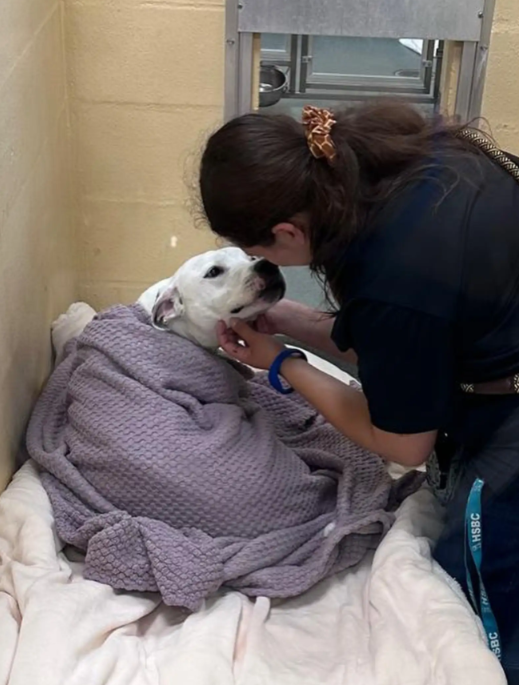
Slowly, the routine became consistent.
Each night, she would wait for her “tuck-in.”
A blanket carefully laid over her.
A soft moment of attention.
A quiet reassurance that, at least for now, she wasn’t alone.
And only then would she finally settle down to sleep.
Shelter environments can be stressful for many animals. The noise, the unfamiliar smells, the constant change of faces—it can make it hard for dogs to relax fully.
For some, that stress shows up in pacing or anxiety. For others, it shows up in habits that might seem unusual at first glance.
But this behavior wasn’t random.
It was comfort-seeking.
A learned routine that helped her feel safe enough to rest.
And once staff understood that, everything about the interaction changed.
What might have once been seen as a “quirk” became something meaningful.
A small act of care that helped bridge the emotional gap between shelter life and the stability she had once known—or hoped to know again.
Because tucked into that nightly ritual was something very simple:
connection.
The kind that doesn’t require words.
The kind that exists in repetition.
In consistency.
In showing up again and again in the same gentle way.
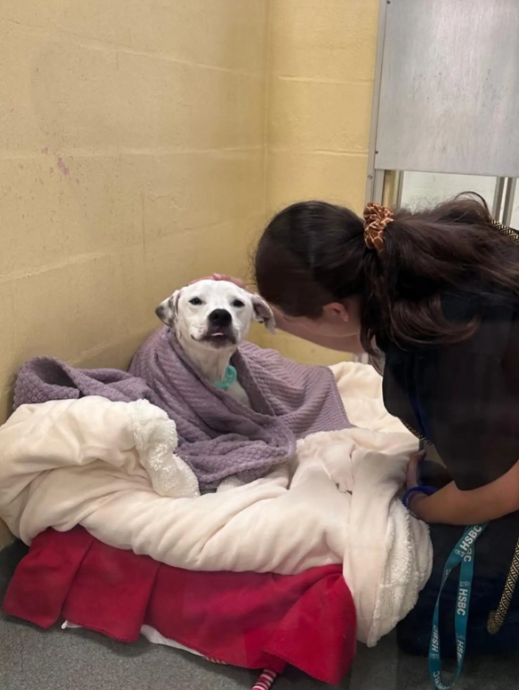
Over time, this routine did more than just help her sleep. It helped her feel seen.
Her body language softened. Her ability to settle improved.
The tension that often comes with shelter stress began to ease, even if only for those quiet nighttime moments.
And for the staff, it became one of those small but powerful reminders of why these gestures matter.
It’s not always the big interventions that make the difference.
Sometimes, it’s something as simple as a blanket placed at the right moment.
A pause in a busy day.
A few minutes spent showing a dog that they are safe enough to rest.
Stories like this resonate because they reflect something deeply familiar. The need for comfort. The need for routine.
The need for reassurance when everything around you feels uncertain.
For this shelter dog, that reassurance came in the form of a nightly tuck-in.
A ritual that turned an ordinary kennel into something closer to a safe space.
And while she may not understand why it matters so much, her reaction makes it clear that it does.
Because every night, she waits for it.
And every night, when it comes, she finally closes her eyes… and sleeps.