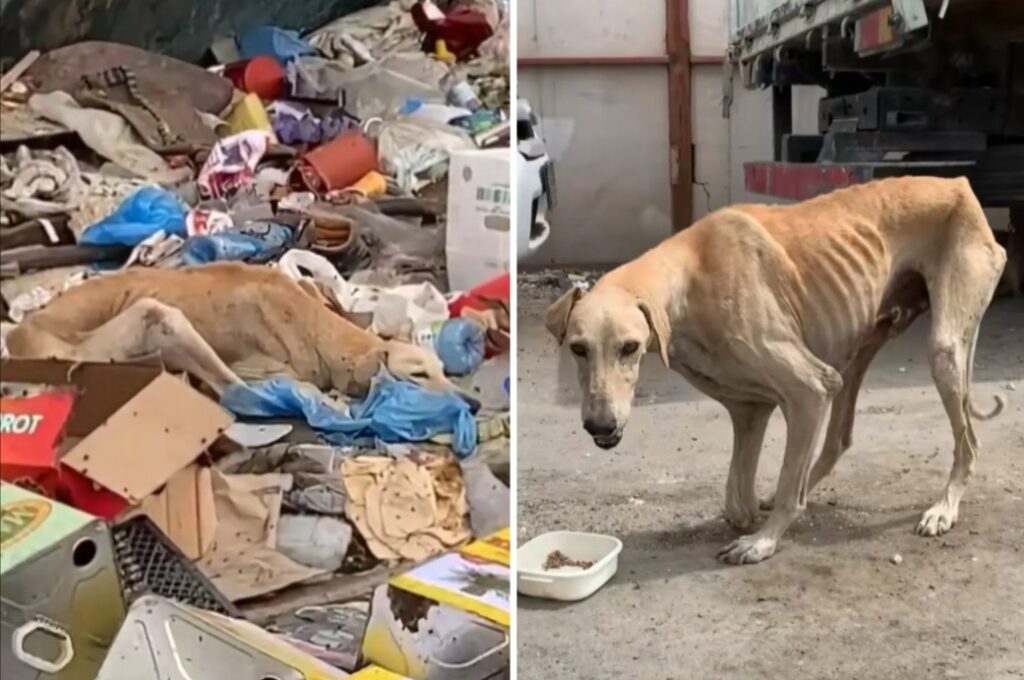
In the grey, desolate expanse of an industrial site, where the air is thick with the smell of oil and the sound of heavy machinery, a ghost lived in plain sight. For eight long years—nearly three thousand days—a dog named Bear survived on the fringes of existence.
To the workers passing by, he was just a fixture of the yard, a matted, trembling creature that blended into the gravel and the grime. He wasn’t a pet; he was a shadow, a “broken” soul who had forgotten what it felt like to be touched by a hand that didn’t intend to shoo him away.
Bear’s life was a testament to the endurance of the unwanted. For nearly a decade, he navigated the harsh winters and the blistering summers of the industrial lot, scavaging for scraps and sleeping in the dirt.
Over time, his fur became a heavy, painful shackle. The matting was so severe that it pulled at his skin with every step, a physical manifestation of the neglect he had endured. But the physical pain paled in comparison to his emotional state.
Bear was a dog who had completely withdrawn into himself. He didn’t bark, he didn’t play, and he didn’t hope. He simply existed in a state of perpetual fear, waiting for a life he didn’t know was possible.
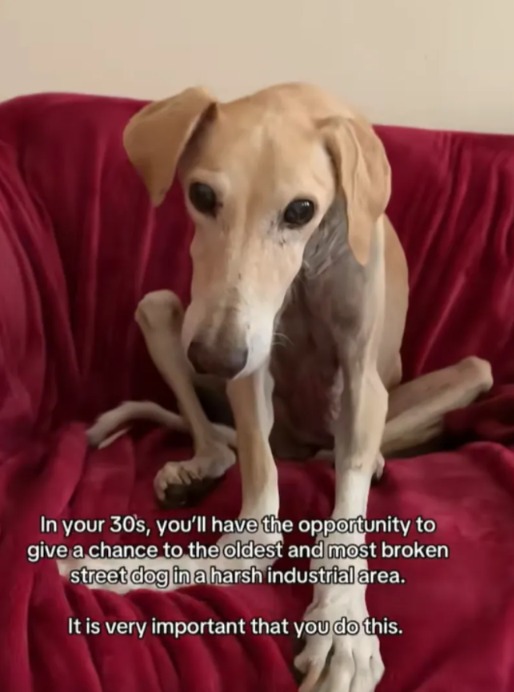
Everything changed when one woman refused to look past him. She didn’t see a “broken” stray or a nuisance; she saw a dog whose time was running out. The rescue was not an easy victory. After eight years of solitude, Bear viewed a leash as a trap and a human voice as a threat.
It took hours of quiet patience and a gentle, unwavering determination to finally bring him into the safety of a vehicle. For the first time in his life, the industrial site vanished in the rearview mirror, but the trauma of those eight years followed him like a heavy fog.
The transformation began at the veterinary clinic, where the physical weight of his past was literally shorn away. As the matted, filthy fur fell to the floor, a new dog began to emerge—a dog who was much smaller than anyone realized, and far more fragile.
But the most difficult work was the healing of his spirit. For weeks, Bear remained frozen, a statue of grief who would press his face into the corner of his kennel to avoid eye contact. He was a dog who had to be taught, one heartbeat at a time, that he was finally safe.
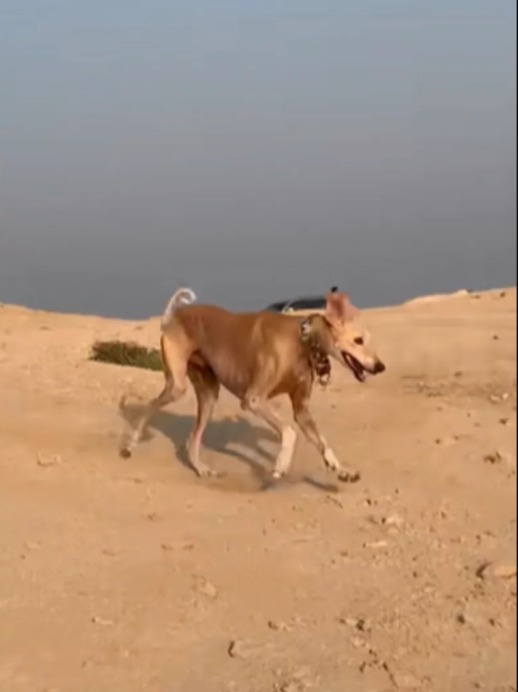
Slowly, the miracle happened. The tail that had been tucked for eight years began to offer a tentative wag. The eyes that had been filled with terror started to soften with curiosity.
The woman who saved him became his anchor, the first person to ever hear his “voice” and recognize his worth. Today, Bear is unrecognizable from the ghost of the industrial site.
He is fluffy, loved, and—for the first time—truly home. His story is a powerful reminder that no dog is ever too “broken” to be fixed. It proves that even after eight years of darkness, the light of a single person’s compassion can start a brand-new day.