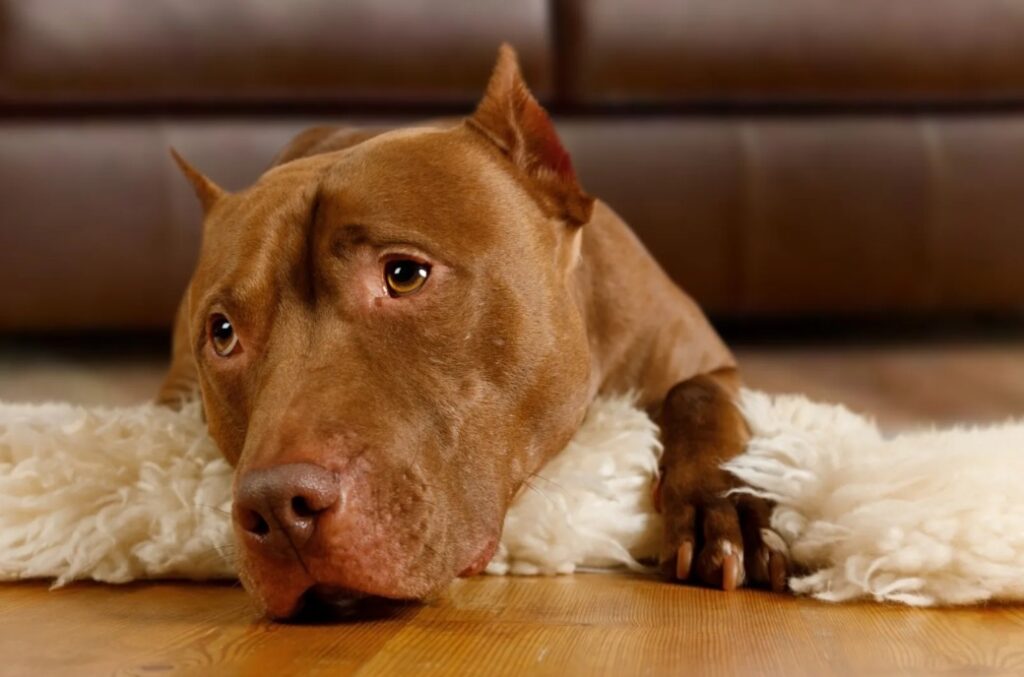
For many dog parents, the relationship between a pup and its human is built on trust, routine and comfort. But for Diva, a rescue dog whose emotional story has gone viral on TikTok, that bond also came with a deep‑rooted anxiety that’s left viewers around the world moved and heartbroken.
In a clip shared on social media in late January, Diva’s owner captured her unusual reaction when she changed her clothes — especially the kind described as “tomboyish.” Instead of wagging her tail or staying relaxed, Diva would stiffen, hesitate, and act nervous whenever her human shifted outfits.
That distressed behavior sparked questions from viewers: Why would a dog react so strongly to something as ordinary as changing clothes?
The answer lies not in fashion, but in fear and memory. Diva was a rescue with a past that her owner can’t fully explain — one filled with unknown trauma that has left emotional marks still shaping her behavior today.
In comments on the video, the owner explained that Diva bears scars around her neck and hip bones, consistent with past fighting or rough treatment, and that what she endured before being rescued is still “a gut‑wrenching mystery.”
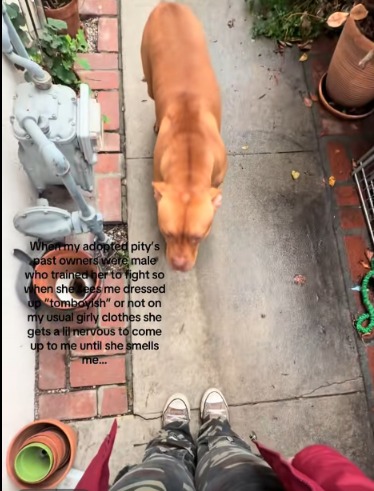
Even without knowing the specifics of that history, animal behavior experts note that dogs, like humans, can carry memories of past fear or danger — especially when events occurred during critical developmental periods or involved pain.
According to resources like PetMD, animals exposed to traumatic experiences develop responses that can linger for years, often triggered by sights, sounds, or situations that remind them of danger.
In Diva’s case, certain clothing styles — perhaps the way they feel, look, or move — might resemble clothing she once associated with a frightening experience.
For a dog who has lived through fear, these associations don’t come with explanations, only reactions. Instead of understanding the difference between past threats and present safety, Diva’s nervous system simply responds to a trigger in the moment.
Behaviorally, this kind of reaction isn’t unusual in rescue dogs. Early life experiences — especially those involving abuse, neglect or lack of socialization — can shape emotional responses long after the physical wounds have healed.
Dogs who have been mistreated may exhibit avoidance, freezing, trembling or other signs of fear in contexts that remind them of past harm, even when there is no real threat in their current environment.
Rescue advocates emphasize that understanding and patience are crucial for helping dogs like Diva build new associations and feel secure in their forever homes. Instead of forcing a fearful dog to confront triggers prematurely, gradual desensitization — paired with positive reinforcement — allows them to learn that previously scary cues are now safe.
For example, a dog who freezes when a person puts on certain clothes might be slowly eased into wearing those clothes in calm, predictable settings, earning treats or affection so that safe feelings replace anxious ones over time.
But simply knowing why Diva reacts the way she does is already meaningful for many viewers.
Her story has touched thousands online, not because it’s dramatic, but because it reflects a deeper truth about rescue animals: not all fear is visible on the surface. Some wounds are emotional, and they take time — and love — to heal.
In responding to the overwhelming reaction on TikTok, Diva’s owner reassured followers that she intends to help her dog recover at a pace that works for Diva — prioritizing comfort and trust over hurried progress.
That ongoing commitment serves as an example of what rescue dogs need most: consistency, compassion, and a human willing to walk with them through the healing process, not past it.
By the end of the video and follow‑ups, it’s clear that Diva isn’t just a dog reacting to clothes. She’s a reminder of how deeply dogs feel, how past experiences can linger, and how powerful trust and patience can be in helping them find peace.
Related posts:
 Scared of Humans, Burdened With Tumors — How One Dog Is Finally Healing
 Watch Giant Dog Make His Feelings Known About New Puppy Roommate
 The Heartfelt Story of a Dog Found in a Cage Who Finally Found Freedom and Family
 A Thousand Miles and Five Years Later: The Miraculous Return of Bella the Chihuahua