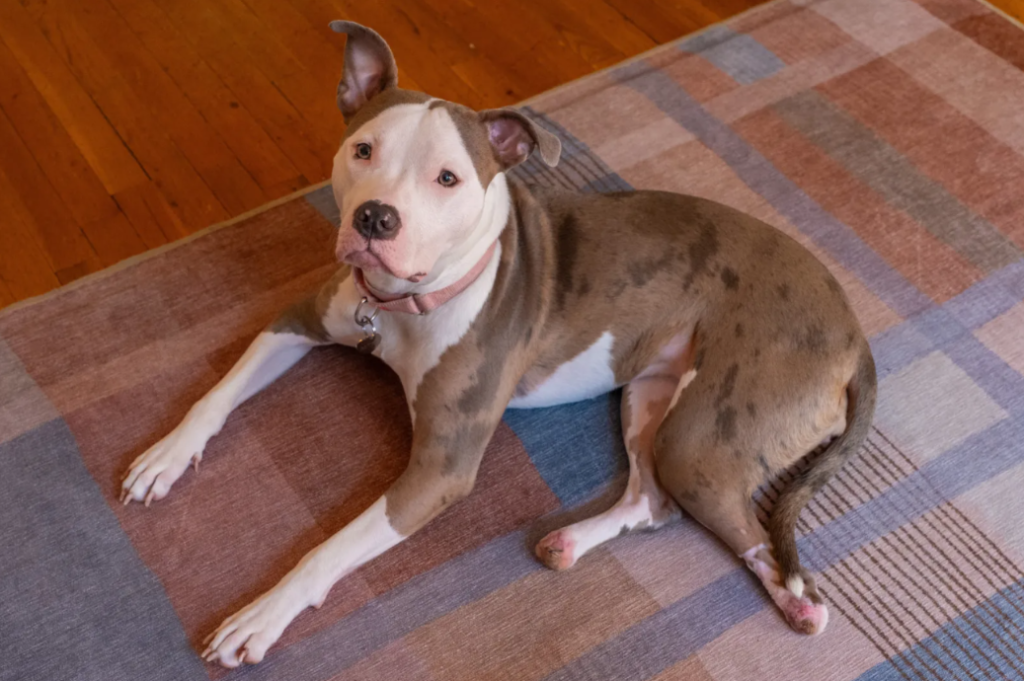
When Betty first struggled on three legs, her future didn’t look easy. But one moment with her brand‑new prosthetic leg changed everything — and showed just how resilient and joy‑filled dogs can be when given a second chance at mobility and happiness.
Betty’s new legs weren’t just medical gear — they were a ticket back to play, freedom, and a life many dogs never get to experience. After years of uncertainty, slipping and sliding on three limbs, she finally got the support she needed. But no one expected what happened next.
When her prosthetic was fitted for the first time, Betty didn’t just walk — she jumped. At that moment, she wasn’t just adapting to a new device; she was rediscovering joy.
Her back legs, which had only ever supported a tripod stance before, lifted off the ground in a spontaneous leap — something her family hadn’t seen her do ever.
For her humans, that leap wasn’t just about bouncing on new legs. It was a signal that Betty felt capable again.
Prosthetic limbs for dogs are more than replacements: they restore mobility, help build confidence, and allow pups to reconnect with instincts that might have been dormant for months or even years.
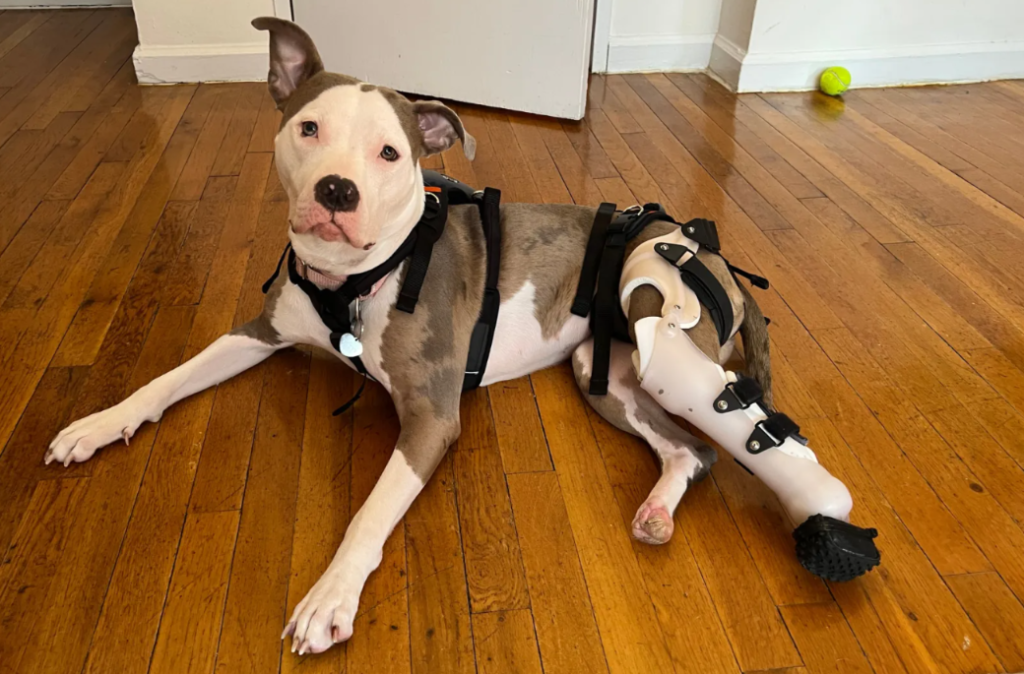
The science behind canine prosthetics is fascinating. Veterinary specialists often custom‑design devices tailored to each dog’s size, gait, and lifestyle. These prosthetics don’t just fit — they function.
They allow dogs to walk, run, and play more naturally, little by little encouraging muscle use that might have been lost after an injury or amputation.
But Betty’s reaction illustrates something deeper than biomechanics: happiness in motion. For animals who have lived with pain, fear, or limited mobility, the ability to run again isn’t just physical — it’s emotional liberation.
There’s something remarkable about seeing a dog rediscover the simple pleasure of movement, like a kid finally getting to run in open grass after months indoors.
Every dog’s experience with prosthetics is different, of course. Some take time to adjust, head‑tilting and testing their balance as they learn. Others find their stride almost instantly.
In Betty’s case, her first leap happened so naturally that it surprised even her caretakers — showing that sometimes the canine spirit soars ahead of expectations.
And that spirit matters. Dogs don’t just “put up” with prosthetics — many embrace them. Their instinctive drive to explore, to chase a scent, to play with a favorite toy doesn’t diminish just because they lose a limb.
If anything, that drive can be stronger: a testament to their adaptability and zest for life.
Stories like Betty’s have resonated far beyond her home. They remind people that tools like prosthetics aren’t about making up for loss — they’re about expanding possibility.
Whether it’s a day in the park, a romp with canine friends, or simply trotting happily across the yard, these moments are victories that go far beyond physical movement.
For the family who watched Betty spring into the air, that first jump with her prosthetic leg was a milestone they’ll never forget.
It wasn’t just a demonstration of balance or coordination — it was a clear, joyful statement from Betty that she was ready to live again.
And if one dog’s leap can inspire people to see the value of resilience, hope, and second chances, then Betty’s story stands as proof that with a little help, dogs can quite literally get back on their feet — and run toward the life they deserve.