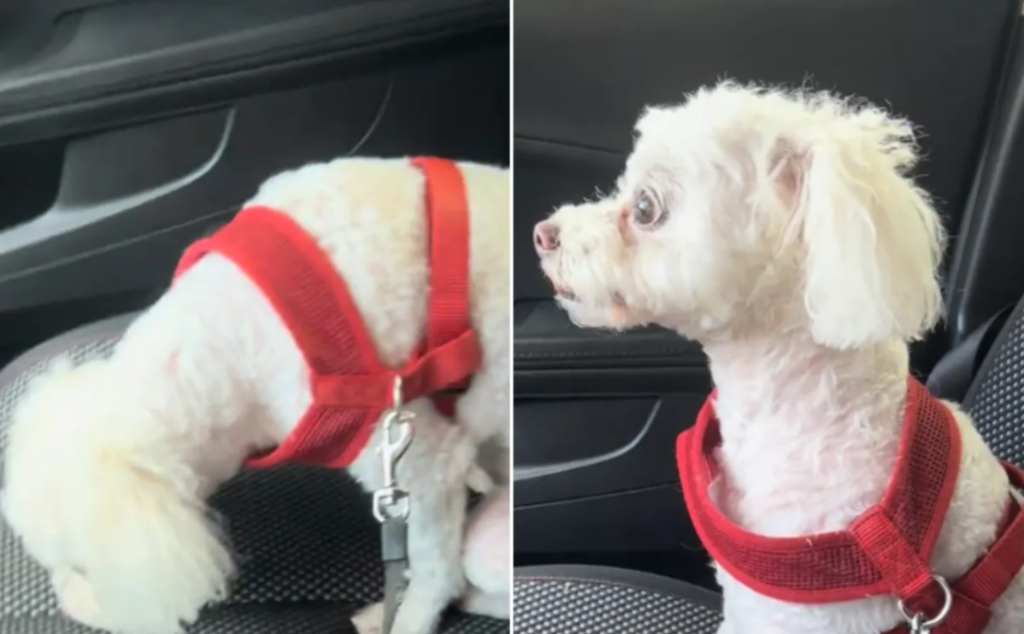
At first, it looked like loyalty.
A dog sitting quietly, eyes fixed on the door, waiting for someone who always came back.
Except this time… they didn’t.
For days, he stayed close to the places that still smelled like his person. The couch. The hallway. The familiar corners of a home that suddenly felt too quiet. Every sound made his ears perk up. Every passing moment carried a flicker of hope.
Maybe that was the sound of footsteps.
Maybe that was the door.
Maybe this time…
But it never was.
Dogs don’t understand death the way we do. They don’t grasp finality or permanence. What they understand is presence — the rhythm of a life shared. The routines. The voice. The touch. And when those things suddenly disappear, they don’t think in terms of “gone forever.”
They think in terms of waiting.
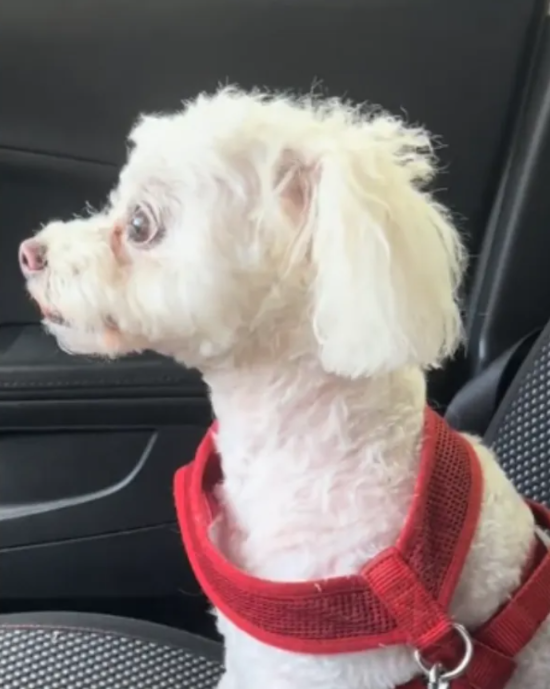
This particular dog had recently lost his owner — the person who had been his entire world. And like so many dogs in similar situations, he responded the only way he knew how: by holding on.
At first, it was subtle.
He lingered longer by the door.
He seemed more alert, more watchful.
Then it became something deeper.
He stopped engaging the same way. His energy shifted. The excitement that once defined him softened into something quieter, heavier. It wasn’t just that he missed his person — it was that he was trying to understand a reality that didn’t make sense.
Where did they go?
Why haven’t they come back?
What did I miss?
Moments like these reveal something profound about dogs: their emotional intelligence isn’t just instinct — it’s connection. Strong, unwavering, and deeply rooted in the bonds they form with their humans.
And sometimes, heartbreakingly, you can see the moment it changes.
The moment waiting turns into understanding.
It didn’t happen all at once.
There was no dramatic shift, no sudden realization like flipping a switch.
Instead, it came quietly.
A slower response to sounds.
Less urgency in his gaze.
A kind of stillness replacing expectation.
As if, somewhere deep inside, he began to accept what his heart had been resisting.
He wasn’t waiting anymore.
He was remembering.
It’s in these moments that the depth of a dog’s love becomes impossible to ignore. Their loyalty isn’t just about being by your side — it’s about carrying you with them, even when you’re no longer there.
Grief in dogs can look a lot like grief in humans. Changes in behavior. Loss of appetite. Withdrawal. A shift in personality. But at its core, it all comes back to one thing:
They loved someone.
And now that someone is gone.
For the people around this dog, witnessing that transition was both beautiful and devastating. Because while there’s pain in seeing a dog grieve, there’s also something incredibly powerful in recognizing just how deeply they’re capable of feeling.
It changes how you see them.
Not just as pets.
But as companions in the truest sense of the word.
Over time, healing begins — slowly, gently, in small moments. A wag of the tail returns. A spark of curiosity. A willingness to connect again.
But something always remains.
Not sadness exactly.
Something softer.
A quiet space where love used to live… and still does.
Because dogs don’t forget.
They don’t move on in the way we often try to.
They carry.
And in that way, maybe they understand love better than we do.
Not as something temporary.
But as something that stays — even after goodbye.