For many dogs, life begins with joy — toys, running, cuddles, snacks — all the simple pleasures most pups experience early on.
But for one older Golden Retriever named Bruce, life started very differently.
Bruce spent the early part of his life in isolation, confined to a shed and used as a breeding stud dog.
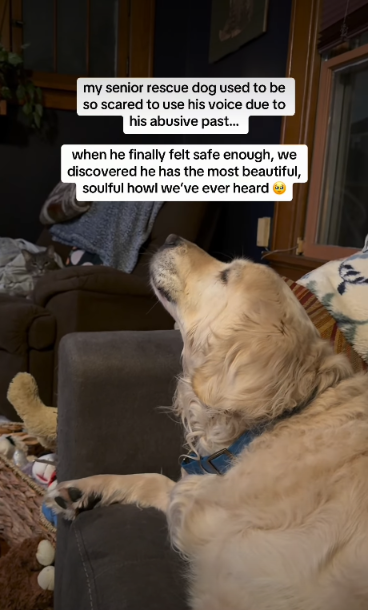
For almost a decade, he never knew the feeling of a true home, and he never learned one of the most basic expressions of doggy joy: his own voice.
Because of that past, Bruce didn’t bark or howl like most dogs. He couldn’t.
He had never experienced the reasons dogs make noise — the excitement of play, the surprise of greeting someone new, or even the simple interplay of emotions that comes from being heard.
For him, silence had been the norm.
But that all started to change the moment he found safety and care.
When Bruce was rescued, the first priority wasn’t just medical care — it was helping him feel secure enough to explore the world beyond pain, fear, and loneliness.
Every rescue dog responds differently to love and stability, but Bruce’s response was both remarkable and deeply emotional.
At first, caretakers noticed subtle shifts: a wag of the tail when someone entered the room, a curious glance instead of a fixed stare, small signs that a dog who had known little connection was beginning to feel safe.
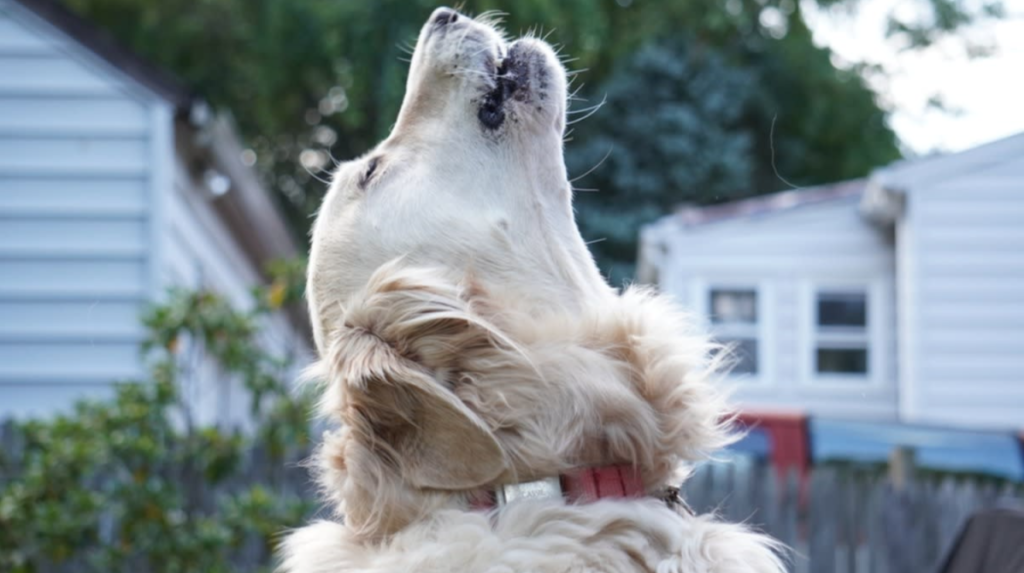
Then came the moment everyone had quietly hoped for — the moment Bruce started to use his voice.
At first, it was tentative. Soft. Almost unsure. But it was unmistakable. It was his first howl.
For some dogs, barking and howling are instincts — reflexive responses to sounds, commands, or stimulation.
But for Bruce, that first howl represented something deeper. It was an expression of confidence. A signal that he was starting to believe in his place in the world. It was joy, finally given form.
The transformation didn’t happen overnight. Healing almost never does.
But with patience, support, and a steady stream of positive experiences, Bruce was learning more than just how to vocalize — he was learning how to trust.
Dogs carry memory in ways we often overlook. Their bodies remember fear long after the threat is gone, and their emotions hold the echoes of past neglect.
Yet when given the chance to feel secure, so many of them respond with remarkable resilience. Bruce’s first howl wasn’t just sound — it was a release.
Now, in his new home, Bruce continues to discover life in ways most dogs take for granted. He’s learning how to play. He’s learning how to express himself.
He’s learning how to communicate the way dogs do — through joy, excitement, and even that first uncertain bark that turns into a confident song.
This kind of transformation isn’t just heartwarming — it’s a reminder of what rescue is really about.
It’s not just saving a life.
It’s helping that life be lived.
For Bruce, learning to use his voice wasn’t just adorable or uplifting. It was healing. A testament to what dogs can become when they finally know safety and love.
And as he lets out his newfound howl — whether it’s toward a loved person, a friend at the door, or simply because he feels it — it’s clear he’s not just making noise.
He’s expressing all he’s gained: confidence, comfort, and a sense of belonging he never had before.
That’s the true magic of rescue — giving a dog not just a second chance at life, but the voice to enjoy it.