At a residential children’s center in Georgia, one special dog is doing something powerful that goes beyond treats and belly rubs — she’s helping teens heal from deep emotional wounds.
The dog’s name is Robin, a rescue mini Australian shepherd whose calm, comforting presence is making a real difference for young people who’ve faced neglect, abuse, or abandonment.
The Murphy‑Harpst Children’s Center serves teens aging out of foster care and others who have experienced trauma that traditional therapy sometimes struggles to reach.
That’s where Robin steps in — not as a therapist, but as a friend: quiet, non‑judgmental, and always present.
What makes Robin’s role so impactful isn’t flashy or dramatic behavior. She doesn’t perform tricks or steal the spotlight. Instead, she sits beside a child, letting them talk, cry, or simply be quiet — whatever they need in that moment.
In a world where many kids have learned to expect disappointment from adults, Robin’s consistent presence has become a bridge to trust.
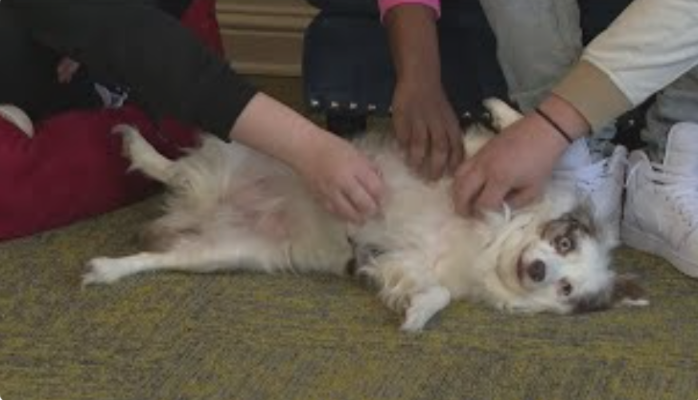
One teen, Jasmine, shared how much Robin means to her: when a dog trusts you, she said, “then I should trust her” — and that simple exchange of trust became a stepping stone toward opening up emotionally.
Another young person, Legend, who lost his mom, explained that Robin helped him carry forward a connection to his mother’s love, because she reminded him of the comfort she once gave.
There’s a scientific reason these connections feel so powerful. Research has shown that therapy dogs can reduce anxiety and fear, helping interacting children lower cortisol levels (the stress hormone) and improve emotional regulation.
Dogs also encourage social interaction, increase motivation, and can even reduce emotional outbursts in therapeutic settings.
Robin isn’t the only animal used at the center — the program also includes cats, horses, and even a snake — but her presence seems especially transformative for teens who have felt isolated or mistrustful.
Animals can reach emotional places humans sometimes can’t, offering unconditional acceptance.
For many of the teens, talking to adults can feel intimidating or guarded. But talking to a dog is different. Dogs don’t interrupt, judge, or lecture. They simply listen.
That quiet companionship makes it easier for young people to express thoughts and feelings they might otherwise hold inside. Over time, this can lay the foundation for deeper emotional work, improved self‑awareness, and a renewed sense of trust in others.
Therapy animals like Robin aren’t a substitute for professional counseling — but they are a powerful complement. They help create an atmosphere where teens feel safe enough to explore their emotions.
For many, this leads to breakthroughs in areas that standard therapy alone couldn’t reach.
And Robin’s story also highlights a broader truth: rescue dogs themselves know what it means to be given a second chance.
Just as Robin was saved from a shelter and given a life full of purpose and care, the kids she works with are being shown a new way of experiencing connection and trust.
In the quiet moments when a teen leans down to stroke her fur, or when Robin gazes up with patient eyes, something profound is happening. It’s not just comfort — it’s healing.
It’s a reminder that sometimes, the most profound therapy comes not from textbooks or talking sessions, but from a warm, gentle presence that says: I’m here. You are seen. You matter.