She was old enough that life should have been slow, soft, and familiar.
Instead, she was alone.
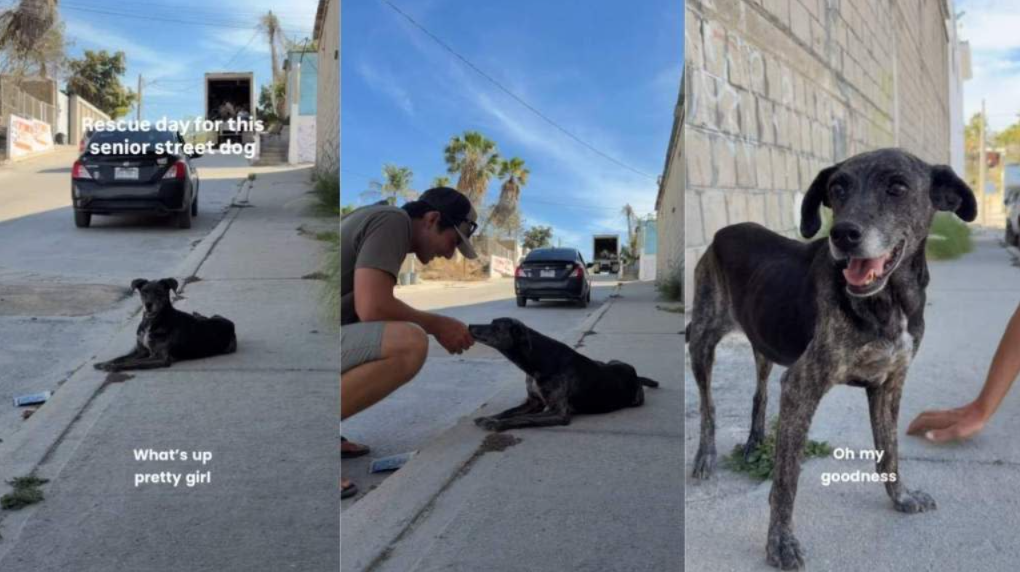
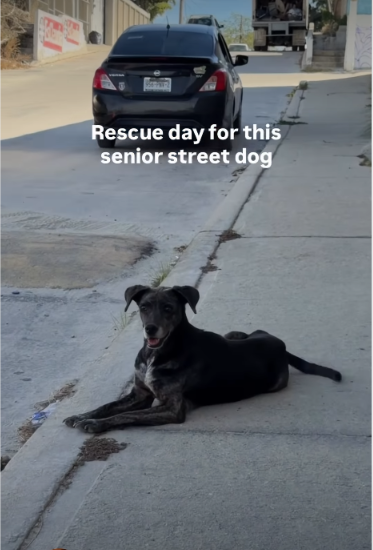
Wandering the street with tired steps and a body that had clearly carried her through too many unknowns, a senior dog was found abandoned and struggling — surviving the only way she knew how: one careful step at a time.
When rescuers first spotted her, it was clear she didn’t belong out there.
Her movements were cautious, her body showed signs of age and hardship, and her eyes carried that familiar expression seen so often in senior strays — not fear exactly, but exhaustion.
The kind that comes from simply enduring too much for too long.
She had likely been on her own for a while before help arrived.
But that moment of discovery changed everything.
The rescue team moved quickly but gently, understanding that older dogs need more than just physical care — they need reassurance.
The kind that tells them they are no longer invisible. No longer forgotten.
She was carefully secured and brought into safety, away from the streets that had become her temporary home.
For the first time in who knows how long, she could rest without scanning her surroundings for danger.
At the shelter, her transformation began in the smallest ways.
A soft bed instead of cold ground.
Regular meals instead of searching.
Quiet instead of chaos.
And most importantly — hands that weren’t rushing past her, but slowing down to meet her where she was.
Senior dogs often carry invisible histories.
No one always knows how they ended up alone — whether they were lost, abandoned, or simply left behind as life moved on without them.
But what’s consistent is what happens when they finally get help:
They don’t ask for much.
Just stability.
Just kindness.
Just time.
For this gentle dog, those first days of safety were about relearning something simple — that not every moment had to be about survival.
At first, she stayed quiet, observing her new environment with careful eyes. But slowly, that tension began to ease. Her body language softened.
Her pace slowed not from exhaustion, but from comfort.
She started to understand she wasn’t in danger anymore.
And then came the shift that every rescue hopes for.
Trust.
It didn’t arrive all at once. It rarely does with senior dogs. Instead, it built quietly — through repetition, through calm voices, through consistent care that never asked her to rush.
One day she leaned in a little closer.
Another day she stayed near instead of pulling away.
And then, without ceremony, she began to relax into the idea that she was safe.
What makes stories like this so powerful isn’t just the rescue itself — it’s what follows.
Because senior dogs don’t need dramatic transformations to show their resilience. They show it in subtle ways. In the way they begin to rest deeper.
In the way they follow a person from room to room. In the way they finally accept that food will come again tomorrow.
She may have started her journey alone on the street.
But she didn’t end it there.
She ended it surrounded by care, stability, and the possibility of something she may not have had in a long time — a future where she isn’t just surviving the day, but actually living it.
And sometimes, that’s the quiet miracle in stories like hers.
Not that she was rescued.
But that she was finally given the chance to be more than forgotten.