He wouldn’t stop looking for him.
Even though he was gone.
Even though no one could explain it to him.
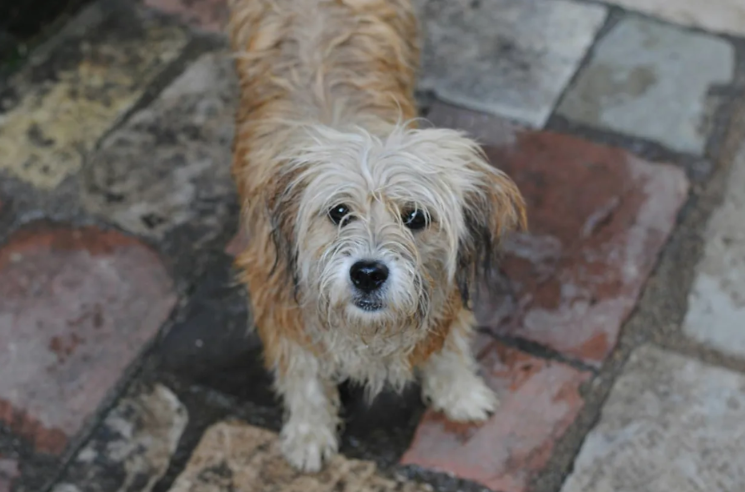
At 10 years old, a senior dog named Hunnit found himself in a place that already feels overwhelming to most animals—a shelter.
But his story carried something heavier than confusion or fear.
He had lost his brother.
The two had been found together on the streets, inseparable. But after arriving at the shelter, his brother passed away due to a medical issue, leaving Hunnit alone for the first time.
And he didn’t understand why.
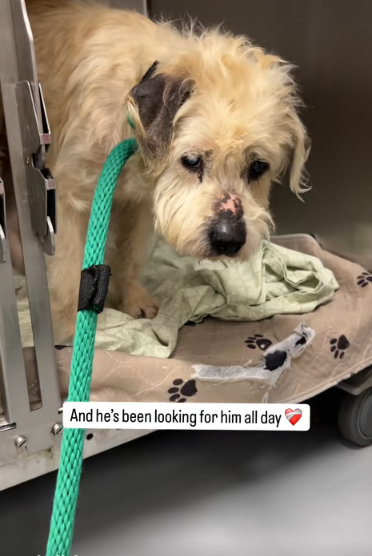
Blind and grieving, Hunnit spent his days doing the only thing that made sense to him.
Searching.
Waiting.
Looking for the one presence that had always been there.
Shelter staff described him as the “most depressed dog in the building.”
Not aggressive.
Not loud.
Just… shut down.
That’s when a volunteer named Rachel heard about him.
She had spent time helping shelter dogs before, but something about Hunnit’s story stayed with her. When she finally met him at ACCT Philly, the reality matched everything she had been told.
He wasn’t just quiet.
He was heartbroken.
Moments like that are difficult to witness.
A dog who isn’t reacting.
Isn’t engaging.
Isn’t even curious.
Just existing in a space that doesn’t feel like home, waiting for something that isn’t coming back.
But Rachel didn’t walk away.
She stayed.
At first, nothing changed.
Hunnit didn’t respond to attention the way other dogs might. He wasn’t ready for big gestures or overwhelming interaction. Even something as simple as a car ride proved to be too much for him.
So Rachel adjusted.
Instead of pushing, she slowed down.
Instead of expecting, she observed.
And eventually, she found something that reached him.
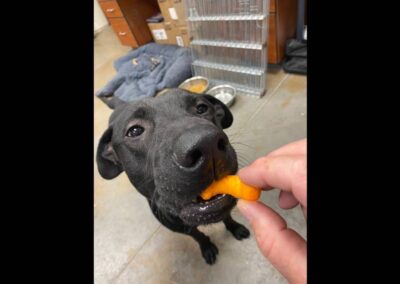
Treats.
It seems small. Almost insignificant.
But for Hunnit, it was the first crack in the wall.
The moment his nose picked up the scent, something shifted. He followed it. Investigated. Engaged—even if just a little.
And that “little” mattered more than anything.
Because it meant he was still there.
Still capable of responding.
Still reachable.
That day became less about fixing his sadness… and more about meeting him where he was.
Letting him move at his own pace.
Letting him feel something, even if it was brief.
Letting him have a moment that wasn’t defined by loss.
When Rachel shared his story, people felt it immediately.
Not just sympathy—but connection.
Comments poured in from strangers who saw something in Hunnit worth saving. Some begged for someone local to adopt him.
Others shared that they were inspired to visit their own shelters, realizing how much even a small act of kindness can matter.
Because that’s the truth behind places like this:
Most dogs don’t need grand rescues.
They need time.
Attention.
Someone willing to sit beside them without expecting anything in return.
And then, just days later, something incredible happened.
Hunnit was pulled from the shelter by a rescue organization.
It wasn’t the end of his journey.
But it was the turning point.
The same dog who had been described as the most depressed in the shelter was now one step closer to something better.
A foster home.
A quiet place.
A chance to heal.
His story isn’t loud.
There’s no dramatic rescue scene or instant transformation.
Just a grieving dog… and a person who refused to ignore him.
And sometimes, that’s enough.
Because healing doesn’t always start with big moments.
Sometimes it starts with a single act of patience.
A quiet visit.
A soft voice.
A treat held out gently… until a dog finally decides to take it.
And for Hunnit, that moment made all the difference.
Because for the first time since losing his brother…
he stopped searching—and started coming back.