Sometimes the right match doesn’t come from a long checklist.
It comes from a moment.
A glance.
A feeling that something just fits.
That’s exactly what happened when a family searching for a service dog for their young daughter made a decision that changed everything—not just for them, but for a shelter dog who had been waiting for a chance to be seen.
Their daughter needed a service animal due to her developmental needs, and like many families in that situation, they initially considered the “safe” path: a carefully bred, highly predictable service dog candidate, often a golden retriever or similar breed known for stability and training potential.
But something shifted.
Instead of choosing the dog themselves, they decided to involve their daughter.
Because ultimately, this wasn’t just about training.
It was about connection.
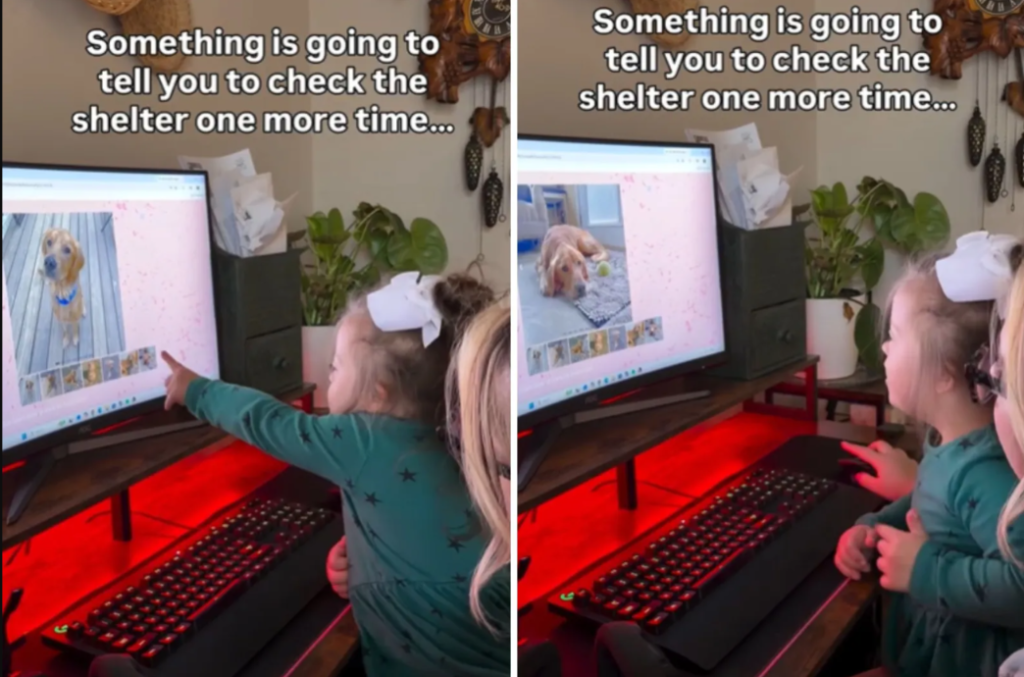
So they visited available shelter dogs, giving their little girl the chance to observe, react, and—most importantly—respond in her own way.
That’s when they saw him.
A shelter dog named Gus.
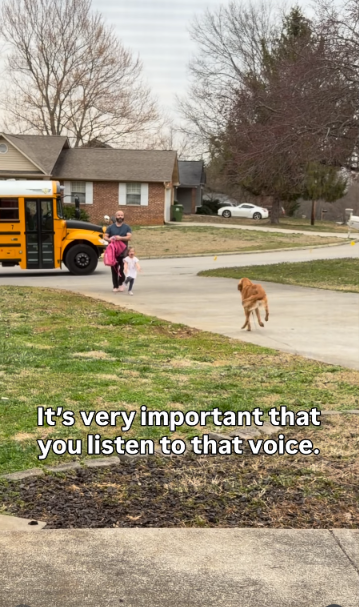
Gus had already been through a difficult start. He had been surrendered after testing positive for heartworm, not because he wasn’t gentle or loving, but because his previous family couldn’t manage the cost of treatment.
With help from a rescue organization, he received care and recovered, eventually becoming available for adoption.
But even after recovery, he was still waiting.
Still overlooked.
Until that day.
When the little girl saw Gus, something immediate happened.
No hesitation.
No confusion.
Just recognition.
She pointed at him and responded in a way that made it unmistakably clear—this was the dog she felt drawn to.
For her parents, it was a moment of pause. They had come prepared to evaluate structure, temperament, training suitability.
But their daughter’s reaction wasn’t analytical.
It was instinctive.
And that changed the direction of everything.
Instead of continuing the search, they focused on Gus.
They allowed time for bonding, watching how he responded not just to their daughter, but to the family as a whole.
And what they saw surprised them—not because he was perfect, but because he fit.
Calm.
Engaged.
Naturally gentle without needing constant correction.
The connection wasn’t forced through training or expectation. It formed through interaction. Presence. Time spent simply being together.
Eventually, the decision was made.
Gus would not just be adopted.
He would begin training as the girl’s future service dog.
But before formal training, something important was prioritized: relationship building.
They wanted Gus to understand his new environment, and more importantly, they wanted their daughter to feel safe and comfortable with him in everyday life.
That foundation, they knew, would matter just as much as any professional instruction later on.
And it did.
Early moments between them showed natural ease—shared calm, curiosity, and a growing sense of familiarity that didn’t need to be taught.
For the family, it became clear they hadn’t just found a service dog candidate.
They had found a companion.
Someone who already seemed to understand the rhythm of their home.
Gus is now beginning the structured path toward service training, but his role has already started in a much simpler way.
He is present.
He is steady.
And he is part of a bond that began not with a program or selection process—but with a child choosing the dog who made her feel something she couldn’t explain.
That’s what made this story resonate so widely.
Because sometimes, the most important decisions aren’t made with logic alone.
They’re made in moments where someone small… simply knows.