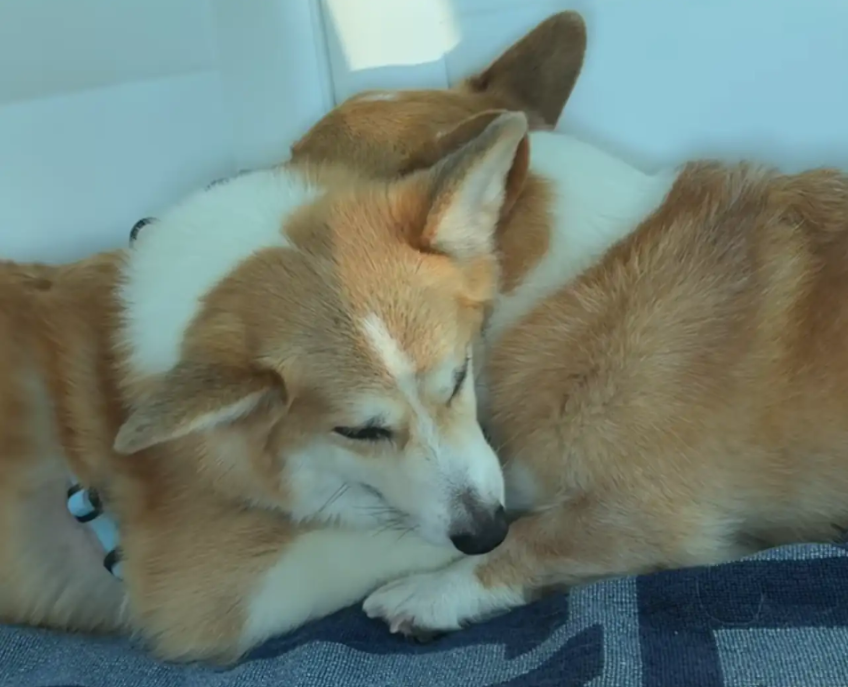
Angus has never been the affectionate type.
At nine years old, this corgi is known in his home for one defining trait: he values his space. Cuddles? Not really his thing.
Constant affection? He could do without it. Even with his younger brother, Jono, Angus is typically distant—tolerant at best, unimpressed at worst.
So when Jono came home from a difficult vet visit not feeling well, no one expected anything unusual from Angus.
But something did happen.
And it changed the way his family saw him.
Jono has been dealing with a serious medical condition that requires ongoing veterinary care and procedures.
After one of those visits—tiring, stressful, and physically draining for the younger dog—he returned home clearly uncomfortable and low in energy.
It was one of those quiet, heavy moments in a pet household where everyone can tell something isn’t right, even if nothing is being said out loud.
Jono settled in, trying to recover from the ordeal. And Angus, as usual, kept his emotional distance at first.
That’s what he always did.
He wasn’t known for stepping in. He wasn’t known for soft gestures.
In fact, his family often described him as “grumpy,” a dog who preferred independence over interaction, even when his younger brother eagerly tried to engage him.
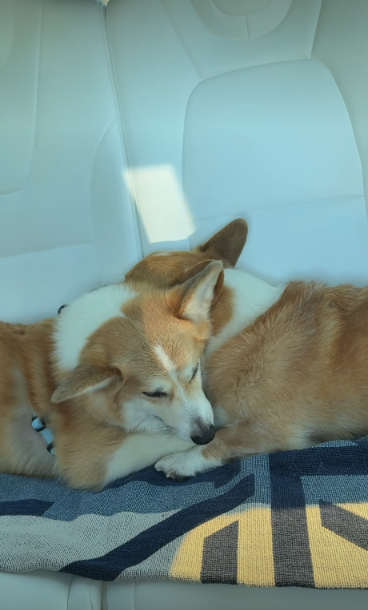
Jono, on the other hand, is the opposite. He’s affectionate, social, and constantly looking for connection.
He follows Angus around, tries to share his space, and repeatedly attempts to get closer—even when Angus acts annoyed.
It’s a classic older-sibling, younger-sibling dynamic, just in dog form.
Most of the time, Angus responds with disinterest. Sometimes he grumbles. Sometimes he moves away.
But even then, there’s a pattern of quiet coexistence rather than rejection.
Still, no one expected what happened after that vet visit.
As Jono rested, visibly unwell from his condition and treatment, Angus suddenly changed his behavior. Instead of keeping his usual distance, he approached his younger brother.
And then he did something he had never done before.
He leaned in and comforted him.
It wasn’t dramatic. It wasn’t loud. It was a simple, deliberate moment of closeness—an act that his family immediately recognized as something completely out of character.
Their mom, Marian Phan, later shared how emotional it was to witness.
She said she had never seen Angus initiate affection like that before, especially not toward Jono. It caught her off guard in the most emotional way possible.
Because in that moment, the “grumpy” corgi wasn’t grumpy at all.
He was present.
He seemed to understand, in his own quiet way, that something was wrong.
That Jono wasn’t just tired—he was recovering from something difficult. And instead of stepping away like he normally would, Angus stayed close.
Jono, for his part, accepted it completely. The younger dog, who usually seeks out affection from his brother, seemed to settle into the moment without hesitation.
No resistance. No confusion.
Just calm.
What makes this moment so powerful isn’t just the hug itself—it’s the contrast.
A dog known for avoiding affection chose, in a vulnerable moment, to offer it anyway. Not because he was trained to.
Not because he was asked to. But because something in him responded to his brother’s condition in real time.
Jono continues to manage his health challenges, including a condition that affects his chest and breathing and requires ongoing care.
His journey is not an easy one, but he doesn’t go through it alone.
He has a family that cares deeply for him.
And, unexpectedly, he has a brother who doesn’t always show love in obvious ways—but showed it exactly when it mattered most.
Angus may still prefer his space.
He may still act like the “grumpy” one.
But moments like this reveal something important underneath it all: even the most reserved hearts can recognize when someone they care about needs them.
And sometimes, they show up in the simplest way possible.
Just by staying close.