If your dog has energy to burn, curiosity to satisfy, and a habit of turning your living room into a racetrack, agility training might be exactly what you’ve been missing.
Dog agility isn’t just a sport reserved for competitions or professional handlers.
At its core, it’s a structured obstacle course designed to challenge your dog physically and mentally while strengthening the bond between you.
And the best part? You don’t need a fancy training facility to get started—you can build a version right in your own backyard.
A DIY agility course works because it transforms everyday movement into focused play.
Instead of random zoomies, your dog learns to navigate jumps, weave through poles, crawl through tunnels, and respond to your guidance with intention.
It becomes teamwork in motion.
The first step is choosing the right space.
You’ll want a safe, open area where your dog can move freely without obstacles, hazards, or distractions.
A backyard is ideal, but any enclosed space with enough room to run and turn can work.
Safety matters more than size—smooth footing and clear boundaries help prevent injuries and keep your dog confident.
Once the space is set, you can start building simple obstacles using items you may already have at home.
Jumps are one of the easiest starting points.
Two stable objects like flower pots or cones can support a lightweight pole—PVC pipe, a broom handle, or even a pool noodle works well.
The goal is not height or intensity, but control. Your dog learns to judge distance, timing, and body awareness without pressure.
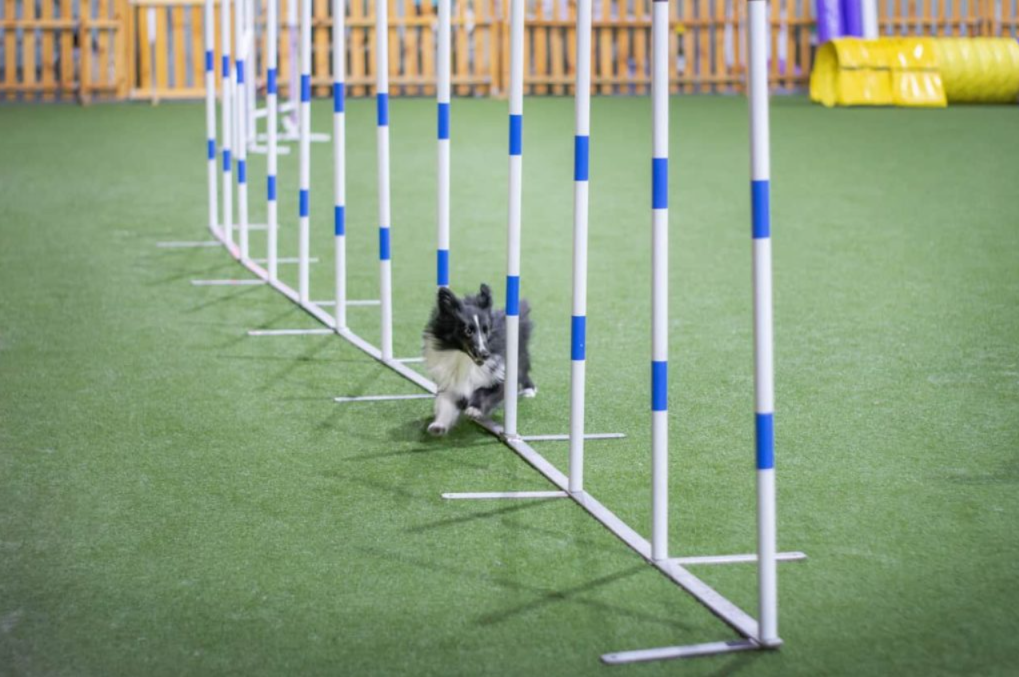
Weave poles come next. These can be made from cones, sticks, or even evenly spaced bottles planted securely in the ground.
At first, spacing should be wide and forgiving. The idea is to guide your dog through slowly so they understand the rhythm before speed ever enters the equation.
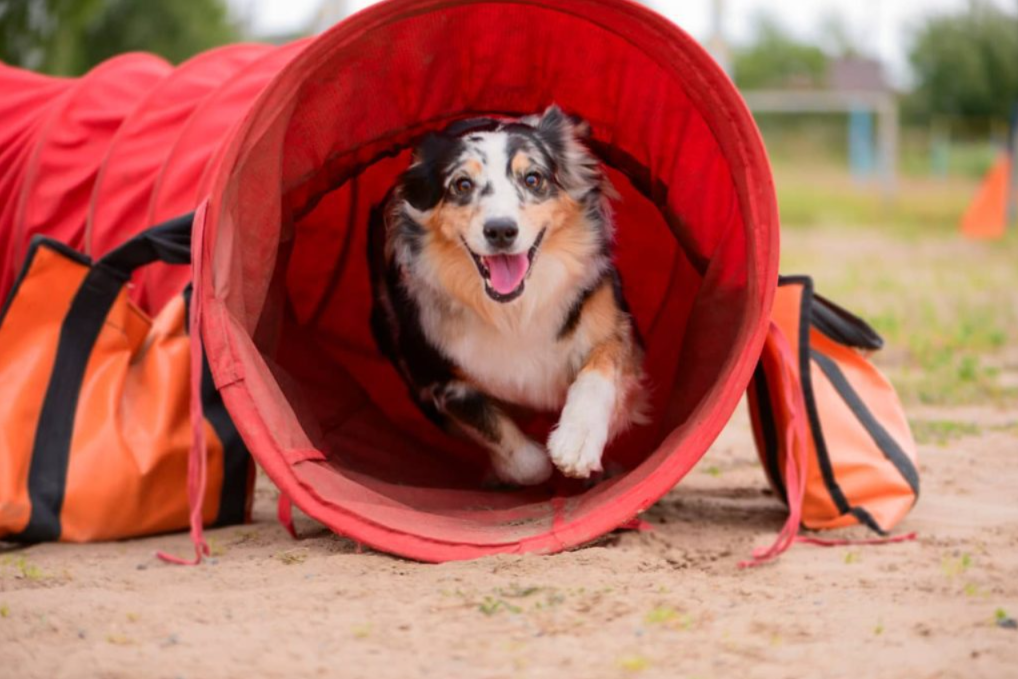
Tunnels are where things start to feel exciting for most dogs.
A collapsible play tunnel works perfectly, but even a homemade version using chairs and a blanket can introduce the concept.
Dogs naturally enjoy enclosed spaces that lead somewhere, so this obstacle often becomes an instant favorite.
Then there’s the tire jump, which adds coordination and confidence-building.
A hula hoop suspended safely at a low height can simulate this obstacle.
The key is ensuring nothing is rigid or unsafe—everything should give way easily if bumped.
If you want to go further, you can introduce a simple teeter-style balance element.
This is where trust becomes a major part of training. Slow introduction is critical here, allowing your dog to understand shifting surfaces without fear.
Confidence always comes before speed.
But building the course is only half the equation.
The real magic happens in how you train.
Agility is not about forcing performance—it’s about communication.
Dogs learn best through positive reinforcement, which means treats, praise, and encouragement guide every step.
Start with one obstacle at a time. Let your dog explore it. Reward progress immediately so the connection between action and reward stays clear.
Short sessions work best. Ten to fifteen minutes is often enough before attention fades.
Repetition builds understanding, but overload leads to frustration. The goal is steady progress, not perfection in a single day.
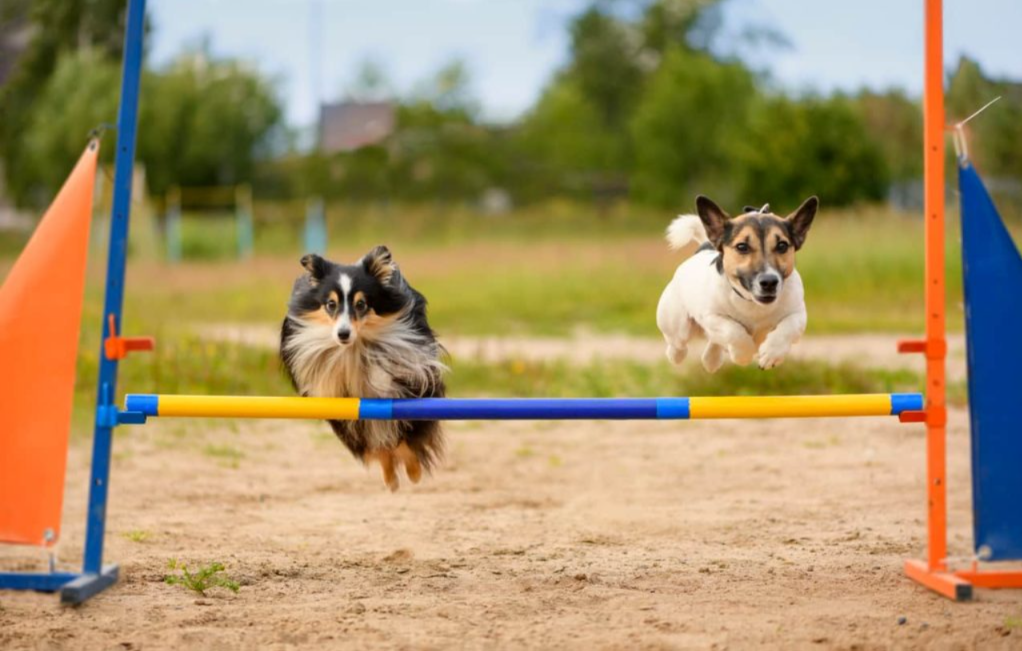
As your dog becomes comfortable, you can begin linking obstacles together. A jump followed by a tunnel. A weave through poles into a recall.
Each sequence builds confidence and strengthens your dog’s ability to follow cues even when excitement rises.
Agility training also has a deeper benefit that often surprises owners. It doesn’t just tire out a dog physically—it engages their mind.
Dogs thrive when they have a job to do, even if that job is simply navigating a homemade course with their favorite human.
It improves focus. It reduces boredom. It strengthens trust.
And perhaps most importantly, it creates shared language between you and your dog that goes beyond basic commands.
Of course, not every dog should be pushed into high-impact activity.
Puppies, senior dogs, or dogs with joint issues need modified versions of obstacles or slower pacing.
The best agility course is always the one tailored to your dog’s ability, not an ideal standard.
In the end, a backyard agility course is less about equipment and more about connection.
It’s about watching your dog solve problems, gain confidence, and light up when they realize they’ve done something right.
A few simple objects. A little patience. A lot of encouragement.
That’s all it takes to turn your backyard into a place where your dog doesn’t just run.
They learn.
They grow.
And they come back to you—ready for the next challenge.