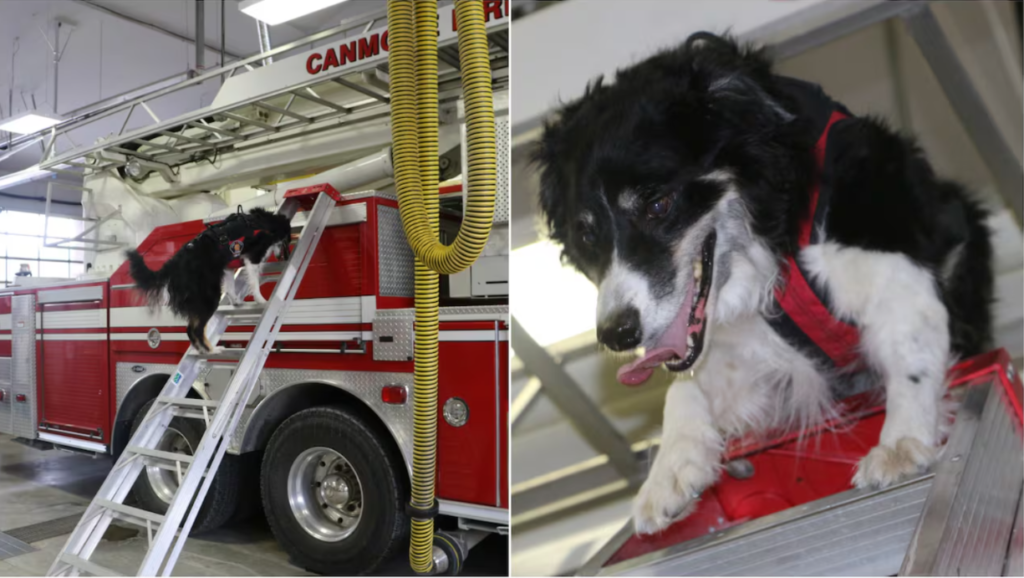
One moment, Baillie is calmly walking beside her handler.
The next, she hears a command and springs into action.
“Find it!”
For this remarkable Border Collie, those two words aren’t an invitation to play. They’re the beginning of serious work that could help save someone’s life.
Baillie was already a highly trained search-and-rescue dog when she arrived at a major disaster risk conference in Montreal in 2017.
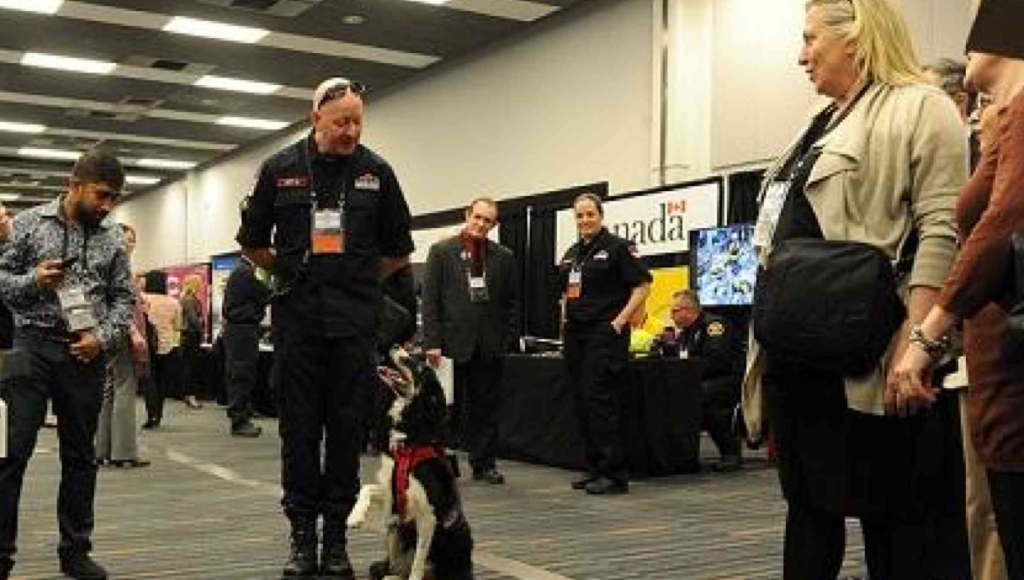
But while the conference brought together thousands of people from across the Americas to discuss how communities could better prepare for disasters, it was the four-legged conference attendee who quickly captured everyone’s attention.
People spotted Baillie walking through the conference center and immediately wanted to say hello.
Photos were taken. Heads turned. Delegates stopped to give her a pat.
Baillie, meanwhile, seemed completely unfazed by all the attention.
She was used to being around people — and she had a much more important job waiting for her.
She Wasn’t Supposed To Be A Rescue Dog
Baillie’s story didn’t begin with a carefully planned career in disaster response.
She was originally chosen simply to become a beloved family pet.
Her handler, Kit Huffer, had previously owned a Border Collie named Loki, who had died from cancer. When Huffer eventually chose another puppy from a litter of seven, he picked Baillie because she was the first one to approach him.
That simple moment would change both of their lives.
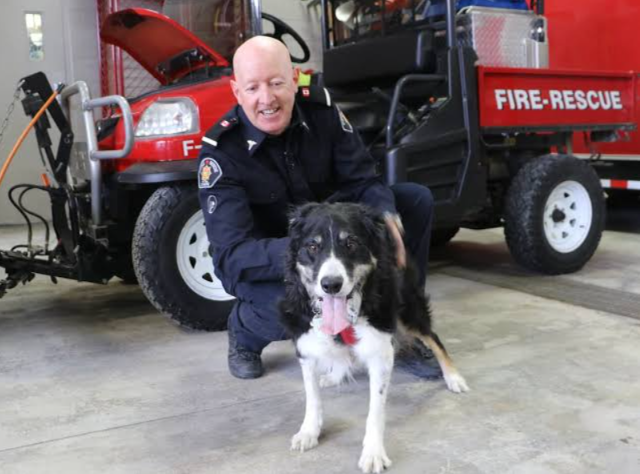
A veterinarian encouraged Huffer to expose Baillie to plenty of people while she was young. Since he was retraining for work in emergency response, he began taking the young dog to a fire station where she could meet dozens of different people.
It didn’t take long for her potential to become obvious.
In fact, Huffer later joked that Baillie seemed to become part of the task force before he did.
What Makes A Great Search-And-Rescue Dog?
Not every dog has what it takes to work in disaster zones.
Handlers look for specific qualities, including curiosity, confidence, social behavior and strong hunting instincts. Baillie had those traits in abundance.
She also developed an impressive vocabulary.
She could distinguish between commands that meant searching for an object, locating something carrying a human scent and searching specifically for a person.
That level of training isn’t something that happens overnight.
It can take roughly 18 months for a dog to become nationally certified as a search-and-rescue worker. A Border Collie’s working career can then potentially continue for many years.
And Baillie wasn’t waiting until graduation to put her skills to work.
From Floodwaters To Collapsed Buildings
Before she became a conference celebrity, Baillie had already experienced real emergency situations.
She gained field experience during the 2013 Southern Alberta floods.
Then, in 2015, she was called to a gas explosion in Canmore, Alberta, where buildings had been severely damaged.
Baillie searched seven of the most heavily affected buildings.
Fortunately, nobody was found trapped beneath the debris that day.
But that doesn’t mean her work was unnecessary.
Search-and-rescue dogs can help emergency crews determine which areas have been thoroughly checked. If a trained dog clears a building, responders can move on to another location with greater confidence.
In a disaster, where every minute matters, that can be incredibly valuable.
Her Handler Found A Way To See What She Sees
Baillie’s work also inspired some fascinating technology.
Huffer developed a system involving a camera mounted on Baillie’s back and linked to a smartwatch. The setup allowed him to see what his canine partner was seeing while she searched.
Imagine sending a dog into a dangerous or unstable area while being able to watch the search from the handler’s perspective.
Baillie’s equipment eventually became important enough to be featured as part of a museum exhibition.
But perhaps the most unusual part of her training was something even more unexpected.
She Could Carry Help To Someone Trapped
Baillie wasn’t only trained to find people.
She could also carry items to them.
That meant that if someone trapped in a disaster zone needed something small and essential, such as medication, Baillie could potentially deliver it.
The idea came from an older piece of history: dogs had been used to transport supplies to soldiers during World War I.
Huffer adapted that concept for modern search-and-rescue work, giving Baillie another unusual skill that set her apart.
More Than A Cute Face
At the conference, Baillie may have looked like the perfect dog to stop and admire.
And she certainly was.
But behind that friendly Border Collie face was an exceptionally trained working dog capable of entering places humans might struggle to search safely.
Her story is a powerful reminder that dogs aren’t simply our companions.
Their intelligence, senses, courage and willingness to work alongside people can make them invaluable partners when disaster strikes.
Baillie may have stolen the spotlight at the conference, but she earned it in the field — one search, one command and one brave step at a time.
And for the people waiting to be found, having a dog like Baillie on their side could mean everything.