It’s the kind of story that moves fast—and turns serious even faster.
A small Boston Terrier named Neville is fighting for his life after a sudden, violent encounter with a rattlesnake that left him critically injured and in emergency care.
What started as a normal moment outdoors quickly became a medical emergency that would change everything for him and his family.
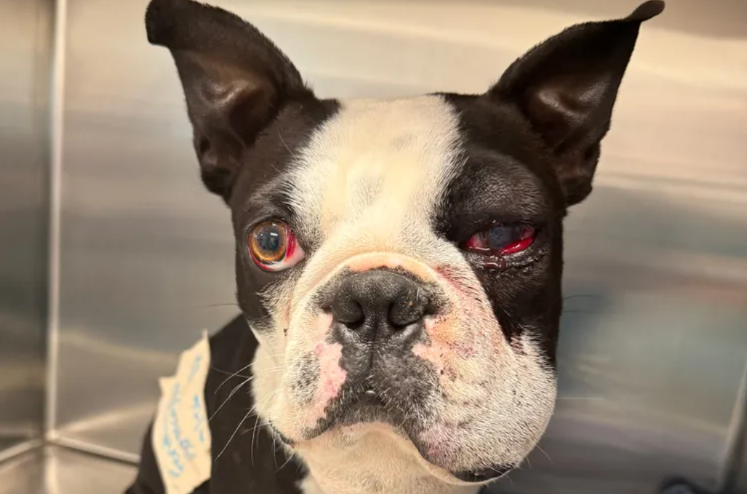
Neville was bitten twice by the snake—once on the tongue and again near his eye.
The injuries were not just painful.
They were dangerous in a way that escalated almost immediately, triggering severe swelling and threatening his vision and overall stability.
By the time he arrived at emergency veterinary care, his condition was critical.
His family faced a heartbreaking decision.
The cost and complexity of treatment were overwhelming, and they ultimately made the choice to surrender Neville so he could receive lifesaving care rather than face euthanasia.
It wasn’t a decision made from lack of love—it was made in the middle of crisis, when survival became the only priority.
A rescue organization stepped in immediately.
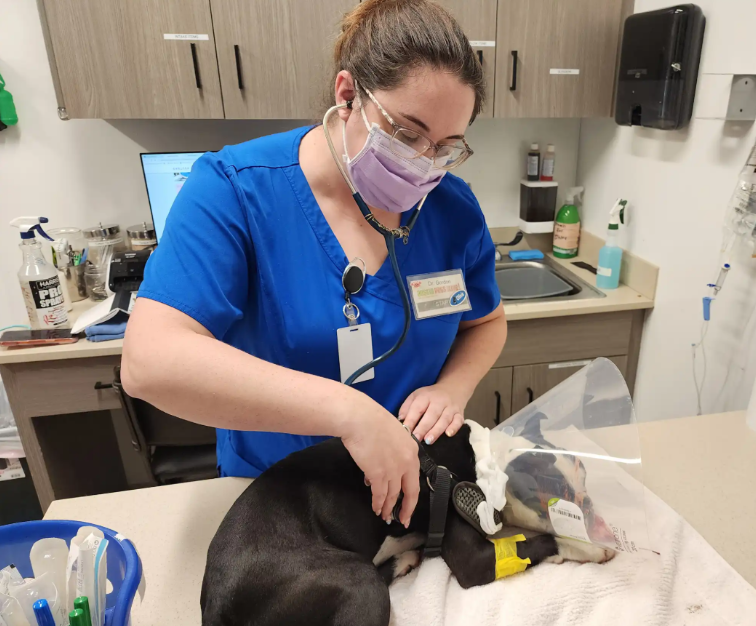
Veterinary teams began intensive treatment, including antivenom, IV fluids, antibiotics, and pain management to stabilize him and counter the effects of the venom.
In cases like Neville’s, speed is everything. Snake venom can disrupt blood clotting, damage tissue, and affect vital organs within hours.
And Neville’s body was already under severe stress.
One of the most alarming complications was the swelling.
His face became so inflamed that medical staff initially struggled to even locate the exact bite wounds.
In snakebite cases, this level of swelling isn’t unusual—but it is serious. It can continue to progress for hours, sometimes extending into deep tissue damage if not controlled quickly.
Even in intensive care, Neville’s fight is far from over.
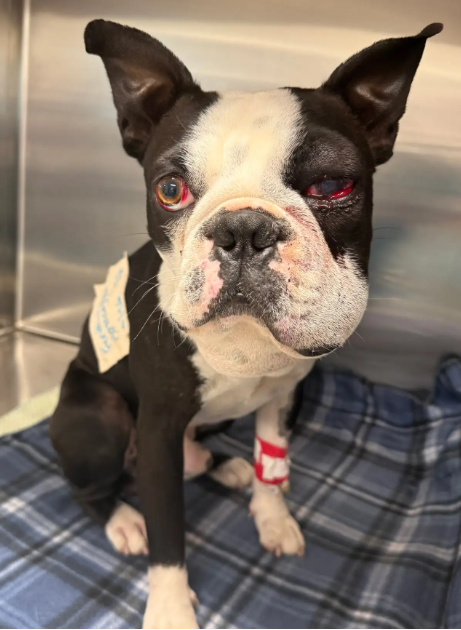
He is still experiencing complications, including gastrointestinal issues and bleeding concerns around the eye area.
But there are signs of progress.
His swelling has begun to reduce, and veterinarians have been able to get a clearer view of his eye again—a small but meaningful step in the right direction.
Despite everything, Neville’s personality hasn’t completely disappeared.
Even while heavily medicated and recovering, he’s shown moments of awareness—whining for attention and responding to care from the medical team.
It’s a reminder that beneath the medical charts and treatment plans, there’s still a dog fighting to come back.
Veterinarians emphasize that snakebite cases like this are especially dangerous in regions where rattlesnakes are active during warmer months.
Pets can be bitten in yards, on trails, or anywhere snakes are hiding from heat—often without warning.
And in many cases, owners don’t even realize what happened until symptoms begin to appear.
That’s why immediate treatment is so critical.
The difference between survival and tragedy often comes down to how quickly a dog receives antivenom and emergency stabilization.
Without it, venom continues spreading through the body, causing worsening systemic damage.
With it, survival chances improve significantly.
Neville’s road to recovery is expected to take time.
He will likely remain under hospital care for at least one to two weeks, possibly longer, depending on how his body responds to treatment and whether complications continue to improve.
Even after leaving the hospital, recovery from snakebite is rarely instant.
It often requires continued monitoring, medication, and gradual rebuilding of strength.
But for now, the focus is simple.
Keep him stable.
Keep him comfortable.
And give him the best possible chance to heal.
Stories like Neville’s are difficult because they sit in that in-between space—between fear and hope, crisis and recovery.
Nothing about it is guaranteed.
But nothing about it is over yet either.
And right now, that is enough to keep fighting for.