There’s a moment every dog owner knows.
You call your dog.
“Come!”
Your dog looks at you.
Then turns around…
…and runs in the opposite direction.
Maybe he’s chasing a squirrel.
Maybe he’s sniffing something fascinating.
Maybe another dog is playing nearby.
Or maybe he has simply decided that whatever he’s doing is a whole lot more interesting than listening to you.
It can be frustrating.
But here’s the thing:
Your dog probably isn’t being stubborn.
He may simply have never learned that coming to you is the best possible choice.
And that distinction can make all the difference.
Because a reliable recall isn’t just a cute trick.
It can be a lifesaving skill.
Why “Come” Is So Hard
Think about what you’re asking your dog to do.
He’s sniffing a trail.
He’s chasing a ball.
He’s playing with his favorite dog.
He’s investigating something new.
And suddenly you expect him to abandon all of that and sprint back to you.
That’s a pretty big request.
The American Kennel Club recommends teaching recall as a positive, rewarding behavior rather than expecting your dog to obey simply because you said the word.
The goal is to make coming to you so rewarding that your dog wants to do it.
And that starts somewhere surprisingly boring:
Your living room.
Start Where Your Dog Can Win
Don’t begin recall training at the dog park.
Don’t begin in a busy park.
And definitely don’t begin when your dog is already chasing something exciting.
Start somewhere quiet.
A few feet away from your dog, say their name followed by your recall cue—such as “come” or “here.”
Then make yourself interesting.
Pat your legs.
Use an enthusiastic voice.
Move backward.
Encourage your dog toward you.
And the instant they arrive?
Celebrate.
Praise them.
Give them a favorite treat or toy.
Make coming to you feel like they just won the lottery.
The AKC recommends gradually increasing distance and difficulty rather than jumping immediately into distracting environments.
That matters because dogs learn through repetition.
If your dog succeeds 10 times in the living room, you’re building a habit.
If you immediately test that habit beside a squirrel, you may be asking for more than your dog is ready to handle.
Never Make Coming to You a Bad Deal
Here’s one of the biggest mistakes dog owners make.
They call their dog.
The dog comes.
And then…
Fun’s over.
The leash goes on.
The trip ends.
Or something unpleasant happens.
Pretty soon, your dog figures out the pattern.
“Come” means the good stuff disappears.
So why hurry?
Instead, practice calling your dog during fun activities and then let them return to what they were doing after receiving their reward.
Call them.
Reward them.
Praise them.
Then release them back to play.
The AKC specifically recommends practicing recalls during enjoyable activities so the dog doesn’t learn that coming when called always means the end of the fun.
You’re teaching your dog something powerful:
Coming to you doesn’t mean the party is over.
Sometimes it means the party gets even better.
Try These Three Recall Games
Training doesn’t have to feel like training.
It can be a game.
Catch Me
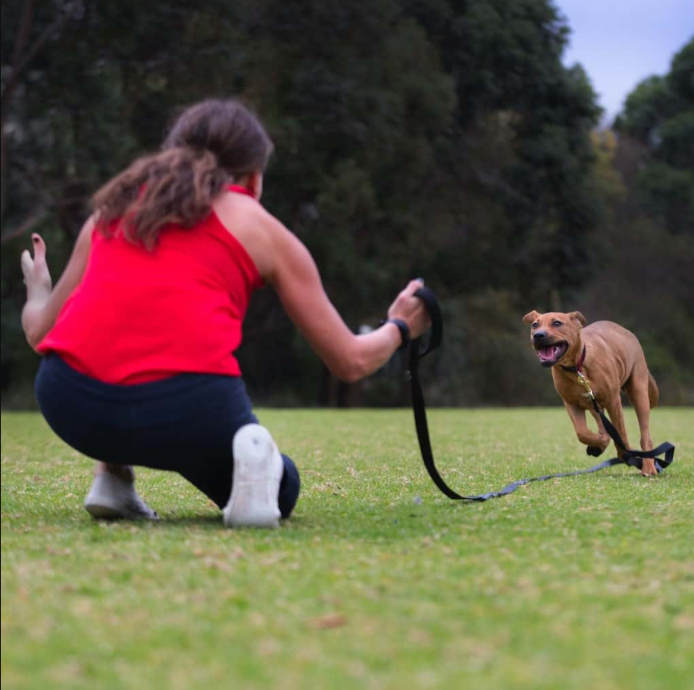
With your dog safely on leash, get their attention and move away from them. When they follow, give your recall cue and reward them when they reach you.
Find Me
Go into another room and call your dog.
When they find you, make a huge celebration out of it.
This turns coming to you into a fun little adventure.
Hot Potato
Have several family members stand apart.
One person calls the dog.
The dog comes.
That person rewards them.
Then another person calls.
Back and forth.
Your dog starts learning that responding to the recall cue always pays.
And Whatever You Do, Don’t Chase
If your dog gets loose and starts running, chasing can turn the situation into a game.
The AKC advises against chasing a loose dog. Instead, try moving away from your dog so they become interested in following you.
And there’s another rule worth remembering:
Never punish your dog for finally coming back.
Even if you’re furious.
Even if they ignored you for five minutes.
Even if they just scared ten years off your life.
When they finally reach you, praise them.
Why?
Because you want your dog thinking:
“When I hear that word, I should run to my person.”
Not:
“When I hear that word, something bad happens.”
Then Make It Harder
Once your dog reliably comes indoors, slowly introduce distractions.
A different room.
A backyard.
A quiet outdoor area.
Then more distance.
A long-line leash can give your dog more freedom while still allowing you to maintain control.
The AKC recommends building recall skills gradually and keeping dogs on leash or in secure areas until their recall is reliable enough for the environment.
Because here’s the truth:
No dog is a robot.
Even a beautifully trained dog can make a mistake.
That’s why reliable recall isn’t about finding a magic word.
It’s about building a habit.
You want your dog to hear you…
Turn around…
And think:
“That’s my person.
And something good happens when I go to them.”
That response could one day mean the difference between a scary situation and a safe ending.
So start today.
Just a few minutes.
A few treats.
A little patience.
And one very important lesson:
Coming when called should always be worth it.