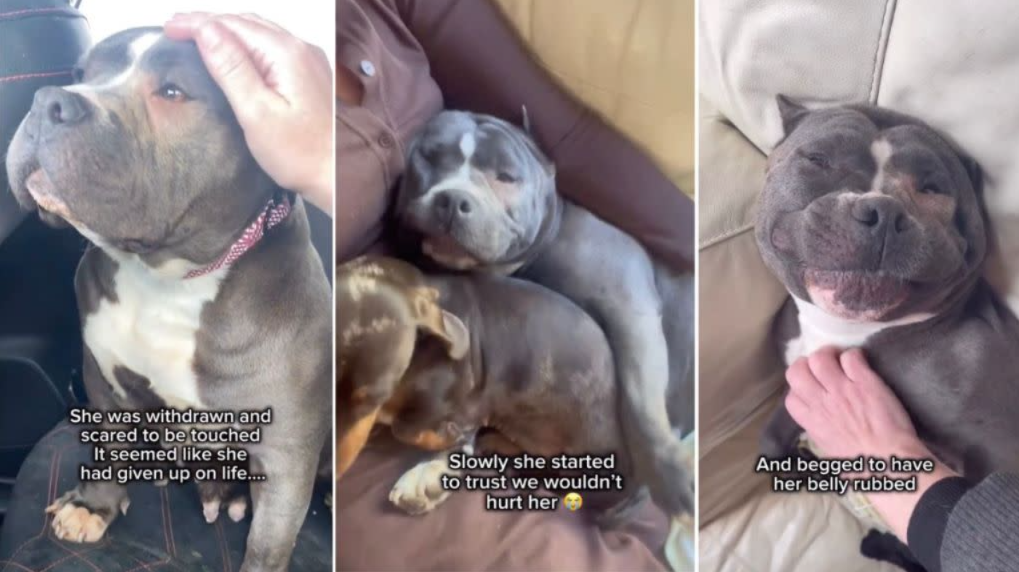
At first, even the smallest touch felt like too much.
Not painful.
Not aggressive.
Just… unfamiliar.
That’s what made it so hard.
This rescue dog hadn’t learned what affection was supposed to feel like. Hands didn’t mean comfort. Movement didn’t mean safety. And closeness? That felt like something to avoid, not seek.
So when people reached out, he pulled away.
Every time.
It wasn’t stubbornness.
It was memory.
Dogs don’t need words to remember what hurt them. Their bodies do it for them. The flinch. The hesitation. The instinct to step back before anything even happens.
That’s where he lived—on that edge between wanting connection and being too afraid to accept it.
When he first arrived in care, everything about him reflected that fear. He kept his distance. Watched from afar. Stayed alert in a way that never really relaxed.
Even kindness didn’t register right away.
Because when a dog has learned that humans aren’t always safe, it takes more than gentle intentions to change that belief.
It takes time.
And consistency.
And someone willing to move slower than the fear.
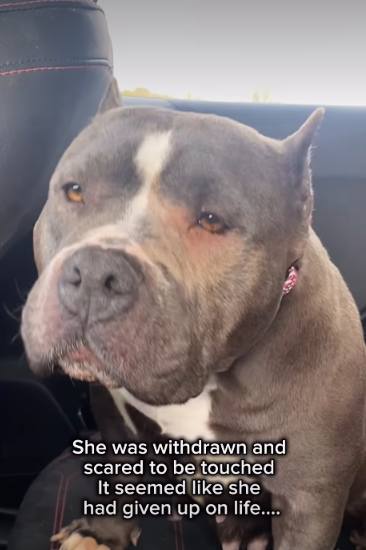
So that’s what they did.
No rushing.
No forcing contact.
No overwhelming energy.
Just quiet presence.
The kind that doesn’t ask for anything back.
At first, nothing changed.
He still stepped away. Still avoided hands. Still carried that invisible wall around him like protection.
But something subtle started to shift.
Not in big, obvious ways.
In small ones.
He stayed a little closer than before.
Paused instead of retreating immediately.
Watched without backing away.
These moments are easy to miss.
But they matter more than anything.
Because for a dog like him, progress isn’t measured in leaps.
It’s measured in inches.
And then one day…
It happened.
A hand reached out.
And this time—
He didn’t pull away.
Not immediately.
There was a pause. A moment where instinct and curiosity met right in the middle.
And instead of choosing fear…
He stayed.
The touch was gentle. Light. Careful.
And for the first time, he felt it.
Not as a threat.
But as something else.
Something new.
Something safe.
You could see the confusion at first—like he didn’t quite understand what was happening. But then, slowly, his body softened.
The tension eased.
The resistance faded.
And just like that, the dog who once avoided every hand… leaned into it.
Not dramatically.
Not all at once.
But enough.
Enough to show that something inside him had changed.
That moment doesn’t just happen physically.
It happens emotionally.
Because what you’re seeing isn’t just a dog accepting a touch.
You’re seeing trust being built in real time.
And trust, for a dog who’s lived with fear, is everything.
From there, things didn’t suddenly become perfect.
That’s not how healing works.
There were still moments of hesitation. Still times where old instincts came back. But now, there was something else alongside them:
Understanding.
That not every hand hurts.
That not every approach is dangerous.
That some people stay gentle… every time.
And once a dog learns that, even a little, everything begins to change.
Because affection stops being something to fear.
And starts becoming something to seek.
That’s the quiet transformation.
Not loud. Not instant.
But powerful.
The shift from flinching…
To leaning in.
From avoidance…
To connection.
And in that space between fear and trust, a new life begins.
One soft touch at a time.