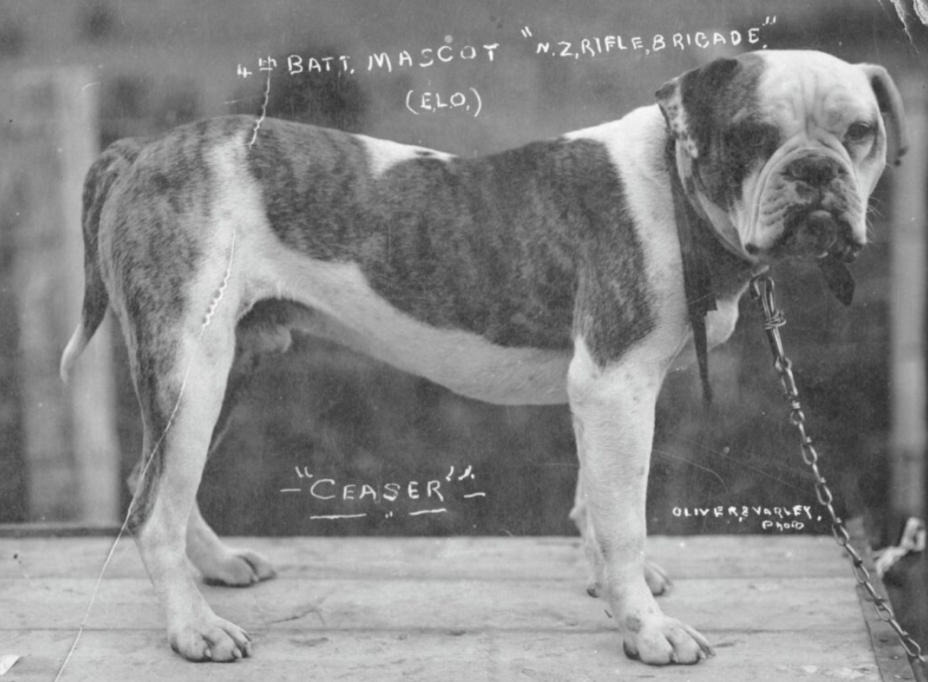
When people think of war heroes, they often picture brave soldiers charging into battle under impossible conditions. But some of history’s greatest heroes walked on four legs instead of two.
One such hero was a bulldog named Ceaser—a courageous dog whose loyalty, determination, and bravery earned him a place in military history.
While he couldn’t wear a uniform or carry a weapon, he served alongside soldiers in one of the world’s deadliest conflicts, helping save lives when hope seemed lost.
Ceaser’s journey began as the official mascot of a New Zealand rifle brigade during World War I. Before departing for overseas service, he proudly marched with the troops during a farewell parade, quickly becoming a beloved companion among the men he would soon accompany into war.
But his role would become far more important than simply boosting morale.
After arriving in Egypt with his handler, both underwent specialized training.
While his human companion learned to serve as an ambulance driver, Ceaser was trained as a Red Cross rescue dog—a demanding job that required intelligence, courage, and unwavering focus.
Training was designed to prepare dogs for the chaos of the battlefield.
Obstacle courses simulated bomb craters, fallen trees, broken wagons, tangled debris, and other hazards they would eventually face in combat.
The dogs learned to remain calm amid explosions, gunfire, and confusion while searching for wounded soldiers desperately waiting for help.
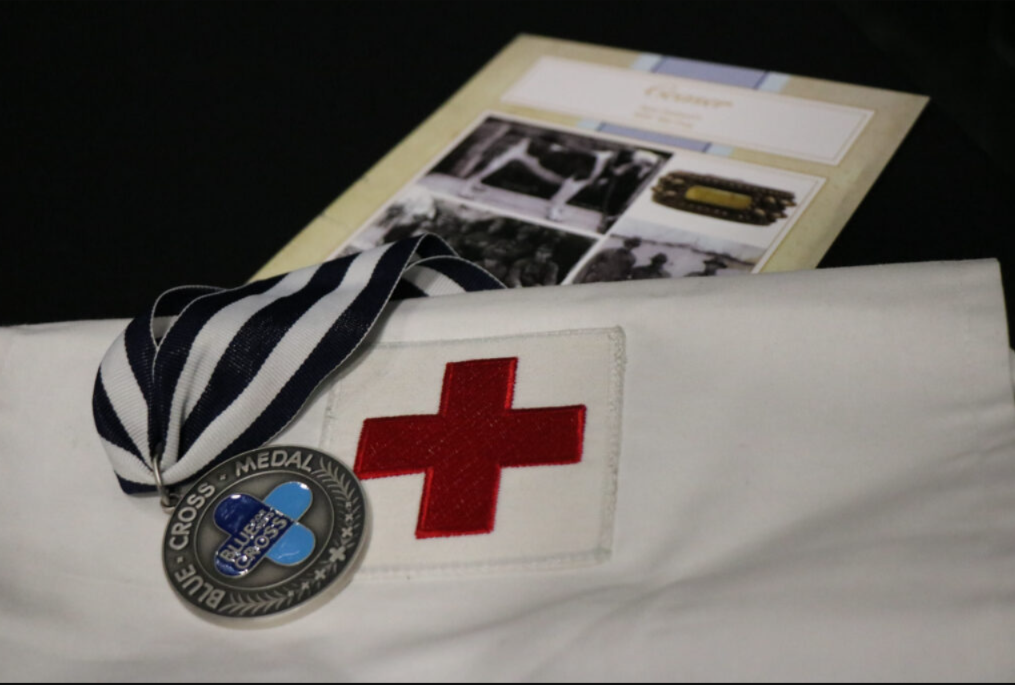
Once his training was complete, Ceaser was deployed to France, where the brutal conditions of the Somme awaited him.
The battlefield was unlike anything imaginable.
Mud stretched for miles. Shell craters scarred the landscape. Barbed wire covered the ground, and every step could mean danger.
Yet this determined bulldog ventured into “No Man’s Land” carrying supplies strapped to his harness, including water, bandages, and materials that could aid injured troops until rescuers arrived.
His mission was simple—but incredibly dangerous.
Using his powerful sense of smell, Ceaser searched for wounded Allied soldiers who were unable to return to safety on their own.
Once he located someone in need, he would either guide rescuers to their location or help lead injured soldiers back toward friendly trenches.
His work often meant the difference between life and death.
One of Ceaser’s most remarkable rescues involved a soldier who had been buried beneath dirt after a nearby artillery explosion.
Unable to move or call for help, the soldier was trapped and running out of air.
Ceaser discovered him, dug around his face so he could breathe, and then raced off to alert his handler and nearby stretcher bearers. Thanks to the bulldog’s quick actions, the trapped soldier was found before it was too late.
Stories like this highlight the extraordinary role dogs have played throughout military history.
Long before modern technology, specially trained dogs delivered messages, located wounded soldiers, guarded camps, and detected approaching danger.
Their keen senses often allowed them to accomplish tasks that humans simply couldn’t perform under battlefield conditions.
For the soldiers fighting far from home, dogs also provided something equally valuable—comfort.
In the middle of fear, exhaustion, and uncertainty, the companionship of a loyal dog offered a reminder of peace and normal life. Many military mascots became trusted friends whose presence lifted morale during the darkest moments of war.
Sadly, Ceaser’s remarkable service came to a heartbreaking end.
While carrying out his duties on the battlefield, he was killed in action, believed to have been struck by enemy fire while beside a fallen soldier.
His sacrifice mirrored that of countless human heroes who gave everything in service to others. He was buried near the battlefield alongside the soldier he was found with, forever linked by their shared courage.
Although many decades passed, Ceaser’s heroism was never forgotten.
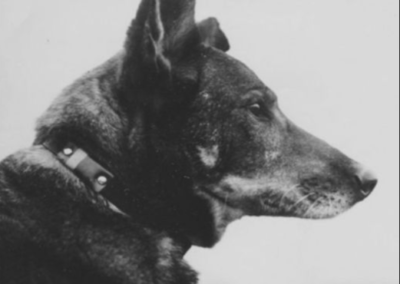
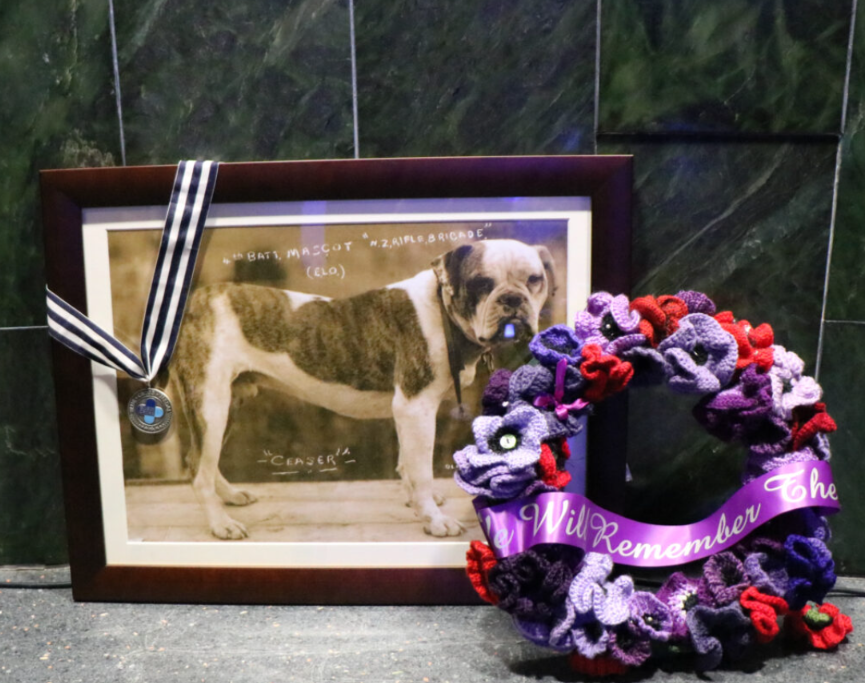
His collar was preserved as a treasured historical artifact, and years later he was posthumously awarded the Blue Cross Medal for his service and bravery.
The honor recognized not only his extraordinary actions but also the countless animals whose contributions to wartime history have often gone unnoticed.
Ceaser’s story serves as a powerful reminder that courage isn’t measured by size, species, or rank.
Sometimes, the greatest acts of bravery come from those who ask for nothing in return.
His unwavering loyalty, fearless determination, and willingness to put himself in harm’s way saved lives and inspired generations that followed.
More than a century later, his legacy continues to remind us why dogs have earned the title of humanity’s best friend—not only in our homes, but also on history’s most dangerous battlefields.
Ceaser may never have spoken a word, but his actions told a story of courage that will never be forgotten.